The camera was an entry-level model, paid for in installments. The office was small enough that its purchase date remained worth remembering: 10 September 2016. For Arun Prabhudesai, these were the practical beginnings of a second act. He had already spent years writing about Indian business and technology. Now he wanted to explain the devices themselves, on camera, to people whose purchase decisions would be shaped by what they understood. A phone was no longer just another item in a news feed. It was someone’s savings, a commute companion, a camera for family occasions, perhaps a work tool. The stakes of a review lived in ordinary life.
That premise helps explain why Trakin Tech’s story is larger than a subscriber count. Prabhudesai has said the first months of video were full of errors and adjustment. The team learned presentation, editing and timing while publishing. Early videos could attract only a few hundred views. He did not arrive at a polished format so much as work toward one in public, with each upload offering another chance to make the explanation clearer. The incremental method is familiar to anyone who has ever learned a new craft; on YouTube, the evidence of the apprenticeship remains visible.
Before the camera, a browser tab
Prabhudesai grew up in Pune. He trained as a civil engineer and worked as an IT consultant in the United States; he has also spoken about time in the United Kingdom. Living abroad exposed him to digital businesses at a moment when the Indian internet offered a great deal to watch and explain. In 2007 he started Trak.in, a blog about Indian business, startups and technology. The name would outlive its first medium. It is still a publishing site, while the newer Trakin Tech name carries the video operation that followed.
The blog years gave him a useful habit: translate industry news into a reader’s question. What does a telecom decision mean for a customer? Why does a new device feature matter? What makes a startup worth following? At a 2013 WordCamp Pune event, he was introduced as the creator of Trak.in and a co-founder and CTO of My Open Campus. That old speaker biography also listed an unusually broad set of interests, from amateur photography to Formula 1. It reads like the calling card of someone who was happy to explore the internet long before he became a familiar face on it.
By 2016, he saw that the habits of the audience were changing. In a later interview, he described the move to YouTube as a response to the way people increasingly consumed content. A blog post could be precise, but a video could show the screen, the finish, the camera result and the person asking the question. The medium also demanded a voice. Prabhudesai had once imagined being a radio jockey; the fascination with radio presenters, he told Exhibit, had been with him all his life. In that light, the leap from page to microphone seems less abrupt.
“Look at your analytics. It tells you what appeals to your audience and what does not.”Arun Prabhudesai, speaking to Exhibit in 2020
The office with a date
He remembers 10 September 2016 because that was the day he bought his first office. In a reflection a decade later, he called it an expression of belief in the project. The room did not have to look impressive. It had to give the project a place to happen. Technology videos need a surprising amount of unglamorous coordination: a device arrives, research is done, footage is shot, an editor finds the shape of the answer, and the publishing clock continues. The young channel had to learn all of it while keeping up with the next announcement.
Pratik Thakur became an important early collaborator on the production side. Accounts of that period describe a lean routine: Prabhudesai worked on presentation while Thakur developed the editing. The volume of early uploads was high, but the initial view counts were modest. This is the part of a creator story most accounts hurry past. There is no pleasing chart in which every new video points neatly upward. The more honest line zigzags through experiments, awkward deliveries and ideas that fail to hold attention. Prabhudesai’s own description of those years is unusually plain: mistakes were routine because the team was figuring things out.
A change in language widened the audience. Prabhudesai has described himself as more comfortable in Marathi and English, then learning to present in Hindi. A Hindi video about the OnePlus 5T became an early signal that a different audience could be reached. The decision was more consequential than adding subtitles. It changed the rhythm of explanation, the jokes available, and the sense that a viewer was being addressed directly. For a gadget buyer, feeling included in the conversation can matter as much as hearing a specification correctly pronounced.
A review has a price tag
Tech channels live next to product launches, brand campaigns and an endless supply of attractive boxes. Prabhudesai’s stated test is more grounded. His team, he wrote, helps people decide whether a smartphone, laptop or gadget is worth their hard-earned money. That responsibility changes the meaning of accuracy. A tiny error about battery life or a missing limitation in a camera review can cost a viewer more than a few minutes of attention. It can send them to a checkout with the wrong expectations.
In interviews, he keeps returning to honesty and transparency. He has also argued for watching analytics closely, because the numbers show what viewers respond to. Those two instincts can pull a creator in different directions: the dashboard rewards attention, while a careful review may need a slower sentence or an unwelcome verdict. Prabhudesai has presented the balance as ongoing work. He experiments with editing formats, hooks and studio setups, while insisting that trust rests on useful information. The point is not that every video succeeds. It is that the audience can see the effort to improve.
His 2020 list of desert-island gadgets was wonderfully practical: an iPad Pro, the biggest power bank he could find and a smartwatch. The imagined island apparently had charging anxiety. In the same interview, when asked to define success, he talked about changing a person’s life for the better - inspiring them, perhaps, or helping them save money through better guidance. The answers are from different registers, but they fit together. The gadgets are interesting because someone has to live with them.
More voices, more rooms
The flagship channel became only one part of the operation. Armoks Media, based in Pune, developed channels and publishing work across technology and other subjects. Trakin Tech appeared in English and Marathi as well as Hindi; a Tamil edition followed. Ershad Kaleebullah has recalled Prabhudesai asking him, almost casually, in October 2022 whether he wanted to start Trakin Tech in Tamil. By 2025 the Tamil channel had reached one million subscribers. The casual question required a serious team to answer it.
Prabhudesai has been explicit about what he thinks regional expansion requires. It is not enough to translate the same script. A team has to understand how its audience speaks, what it laughs at, what assumptions it brings to a purchase, and how technology fits into daily life. That is an editorial claim as much as a business strategy. It lets a media company grow without pretending that every audience is interchangeable. In 2026, after a magazine feature on creators and entrepreneurship, he again pointed to regional audiences and the creators who know them as central to the next stage of Indian media.
The expanding operation also made collaboration visible. At India’s Biggest Tech Roundtable in 2024, Prabhudesai and Kaleebullah appeared with fellow creators including Shlok Srivastava, Devinder Maheshwari and Sanchit Shokeen. Prabhudesai later reported millions of views across the event’s YouTube and Instagram output. The gathering made sense for someone whose career had followed India’s tech conversation from blog comments to studio sets and shared stages.
The translation in the earpiece
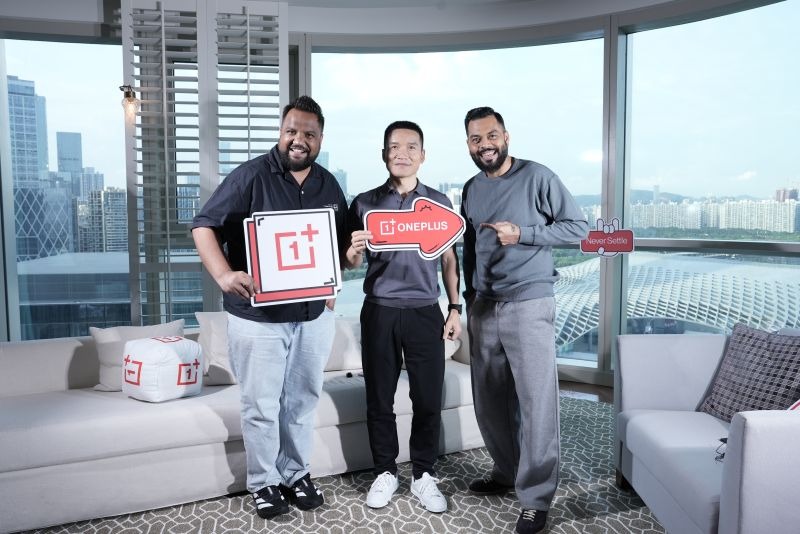
One project shows what a team of that size can attempt. For a 2025 conversation with OnePlus founder Pete Lau, the questions were asked in Hindi. Lau answered in Chinese. An interpreter translated his replies into English, which the hosts heard through earpieces before responding. That was merely the live part. Afterward, the team had to turn the Chinese answers into Hindi without making the exchange sound assembled from unrelated pieces. Arjun Kamble and Sajid Khan worked on the translation and dubbing, then corrected pronunciations by hand. Prabhudesai said the finished production took about a week.
There is something almost comic about the circuit: Hindi into Chinese, through English, then back into Hindi. Yet it illustrates the editorial ambition behind the regional channels. The interview had to be available in a form that made sense to the viewers it was meant for. The translation was not a decorative layer added at the end. It was the condition for the conversation to exist in that audience’s language at all.
“Accuracy isn’t optional anymore; it’s the foundation of trust.”Arun Prabhudesai, reflecting on Trakin Tech
When the team celebrates without you
In 2025, Prabhudesai announced that Trakin Tech had reached 15 million subscribers. The team celebrated in Pune; he happened to be in Barcelona. He made a joke of missing the party and promised a proper celebration when he got back. It is a revealing scene. A channel associated with one presenter had grown into an organization capable of enjoying a milestone while its founder was elsewhere. A few months later, he described Trakin Tech and Armoks Media as a team of more than 120 people, a long way from the first small room.
He remains interested in the mechanics of that organization. His LinkedIn description begins, “Operator first. Creator always.” There is a useful tension in the order. The on-camera explanation still matters, but so do hiring, editorial routines, meetings and the shared judgment of colleagues. In a reflection on a team offsite, he wrote about the value of stepping away from deadlines to spend time together. In another post, he described office celebrations and the memories they create. These are small observations, but they belong to the person who has learned that a media company is made of people between uploads.
The next upgrade in this story is therefore unlikely to be only a better camera or a larger studio. Prabhudesai’s enduring project is the translation of technology into a decision someone can live with. The language may be Hindi, Marathi, Tamil or English. The form may be a phone review, a roundtable or an interview requiring three languages and an earpiece. The question at the center stays admirably unromantic: does this help the viewer understand what they are about to buy? The camera paid for in installments was an early tool for answering it. The larger operation is another.