At NHS Shared Business Services, the trouble with electronic invoicing was that suppliers did not particularly want it. An earlier initiative had attracted little enthusiasm. Suppliers faced awkward software and charges for issuing invoices. The buyer wanted less paper; the seller wanted fewer chores. Those desires should have been compatible. Somehow, the system had made them rivals.
- What it does: connects enterprise buyers and suppliers, turning invoices into data that finance systems can process.
- Why it matters: adoption, validation and country-specific compliance belong to the same transaction.
- The catch: supplier participation has a price. The current free tier covers 30 documents per quarter.
Tradeshift approached the NHS problem by making the supplier’s side easier. Its historical case study describes a service then free to suppliers, with checks that caught incomplete invoices before submission. That detail is more revealing than a promise about automation. A buyer can buy software. It cannot buy the willing participation of every company that sends it a bill.
The lesson travels well beyond accounting: when a process crosses an organisational boundary, the person outside your company becomes part of your implementation team. Give that person an unpleasant task and the old process will find a way to survive.
The PDF has excellent manners. Its data does not.
An invoice arriving by email feels like progress. It has escaped the envelope, the stamp and the filing cabinet. But a PDF can still leave someone copying quantities, tax information and purchase-order references into another system. The document has moved. The work has stayed put.
Tradeshift sells the next step. Its cloud platform captures invoices from different channels, converts their contents into structured data, validates them, matches them against purchasing information and routes them for approval. The finance system remains the accounting destination; Tradeshift handles much of the traffic approaching it.
- 01CaptureNetwork, PDF or EDI
- 02CheckFields, rules, matching
- 03RouteApproval and compliance
- 04RecordConnected finance system
Consider a missing purchase-order number. Discover it after an invoice reaches a processing queue and the correction becomes correspondence. Catch it at submission and the sender can fix it while the transaction is still in front of them. The same information is missing in both cases. The timing changes who has to chase whom.
For the supplier, visibility matters too. Knowing whether an invoice has arrived, been rejected or progressed through processing can replace a round of emails. A network earns its usefulness in these ordinary moments. Nobody sends a thank-you card to a validation rule, but perhaps somebody should.
The network began before the company
Tradeshift’s founders, Christian Lanng, Mikkel Hippe Brun and Gert Sylvest, came out of Danish and European e-invoicing work. The company’s own history begins with a Danish public-sector project in 2005, describes EasyTrade, and dates Tradeshift’s launch to 2010. Sylvest worked on the technical design of EasyTrade/Nemhandel and Peppol infrastructure.
That background helps explain the company’s interest in interoperability. An enterprise network has to accommodate participants with different software, habits and resources. Expecting every supplier to acquire the same technology would make expansion rather tedious.

The ambition was to connect every company in the world. The practical question was more modest: how do you make the next trading relationship work? In its present form, the company combines invoice automation, supplier connectivity and compliance services, with a broader history in procurement, marketplaces and finance.
DHL’s test was at the supplier’s desk
DHL’s published customer interview gives the proposition a useful test. Its goals included going paperless and onboarding suppliers automatically. The interview described implementation in 15 European countries and positive supplier feedback, with few returning to paper.
“It’s easy for our suppliers to connect to Tradeshift.”DHL customer interview, published August 2020
Ease sounds like a small feature until it must be repeated across thousands of trading relationships. Each extra instruction creates another opportunity for someone to postpone the change. A supplier network grows through those individual decisions, not through a procurement presentation.
There is independent customer-side evidence for the broader mechanism. NHS SBS’s Bromley Healthcare case reports that electronic invoices were ready for processing within 24 hours, compared with ten days for paper. It also reports an average 15% reduction in supplier queries. These are outcomes from a particular deployment, rather than a timetable every new customer can expect.
Translation became a product advantage
In December 2018, Tradeshift acquired Babelway, a Belgian cloud integration business founded in 2007. Babelway moves documents between partners using different formats and transfer methods. For an invoice network, that is a useful skill to own.
A Tradeshift integration account describes a seller whose old ERP could not supply all the data its buyer required. The workaround assembled the information from different systems. The significance is architectural: keep the supplier’s existing environment where possible, and translate at the boundary.
Tradeshift’s REST API also lets integrators manage documents and retrieve sender and receiver information. There is a public developer centre and a GitHub organisation. The platform therefore offers more than a portal where somebody types a bill; it provides ways to connect the transaction to software already doing the work.
That does not make integration effortless. Buyers still need to map data, decide approval rules and assign responsibility for exceptions. A connector is a route into a system, not a substitute for knowing what the system should accept.
Then compliance moved to the front of the queue
Today, Tradeshift’s public pitch puts global e-invoicing compliance prominently alongside AP automation. It reports roughly 70 countries covered for compliance and ten million invoice documents processed monthly. Its network’s geographic reach is a separate measure: having users in a country does not establish support for every tax requirement there.
The distinction matters when a buyer has subsidiaries, several ERPs and different invoice routes. The purchasing decision becomes a country-by-country examination of what the platform handles, how it integrates and who maintains the connection when requirements change.
Mike Cowles, appointed CEO in February 2025, framed incoming government mandates as making the core solution essential to customers’ operations. That describes a shift in the sales conversation: efficiency can justify a project; an external requirement can put a date on it.
There are alternatives. SAP Business Network provides supplier relationships and invoice transactions, while Basware offers AP automation and e-invoicing services. Tradeshift’s case rests on combining its network, integration expertise and international compliance layer. Those ingredients are useful only if they fit the buyer’s actual suppliers and jurisdictions.
The uncomfortable elegance of charging the seller
The early supplier-friendly proposition faces a contemporary economic test. Tradeshift revised seller pricing from November 2025. The first 30 invoices or credit notes per quarter remain free; charges apply above that allowance, with published volume bands. The company attributes the change to higher operating costs and more complicated clearance and compliance requirements.
| Quarterly volume | Published rate |
|---|---|
| First 30 documents | Free |
| 31-300 | $0.80 |
| 301-3,000 | $0.60 |
| 3,001-15,000 | $0.30 |
| Highest volumes | Custom |
Rates per chargeable transaction; first 30 excluded. Invoices and credit notes count. Confirm the applicable billing terms for your account.
Enterprise buyers negotiate their arrangements. Supplier fees and optional integration maintenance deserve attention in the same business case: a saving in one organisation can become a cost in another. The historical appeal of free participation makes this tension particularly revealing. The network must fund the work that makes it useful without making participation burdensome enough to discourage it.
An invoice can become a financial doorway
Capital has helped fund the ambition. In May 2018, Tradeshift announced a $250 million Series E led by Goldman Sachs and PSP Investments, valuing the company at $1.1 billion at that time. In August 2023, HSBC announced a two-stage $35 million investment as part of a round expected to raise at least $70 million.
The HSBC partnership led to SemFi, launched in October 2024, with embedded-finance offerings including invoice financing and virtual business cards. The logic is understandable: a platform where trade is recorded is a place to offer financial services associated with that trade. Financing remains a separate proposition with its own eligibility and commercial terms; submitting an invoice is not a promise of credit.
Tradeshift’s newer AI features tackle different friction. The company describes Claude-powered document suggestions through Amazon Bedrock, conversational reporting and AskAda for seller questions. Its payment predictor forecasts likely payment timing with confidence information. Those functions should be judged by how much rework they remove.
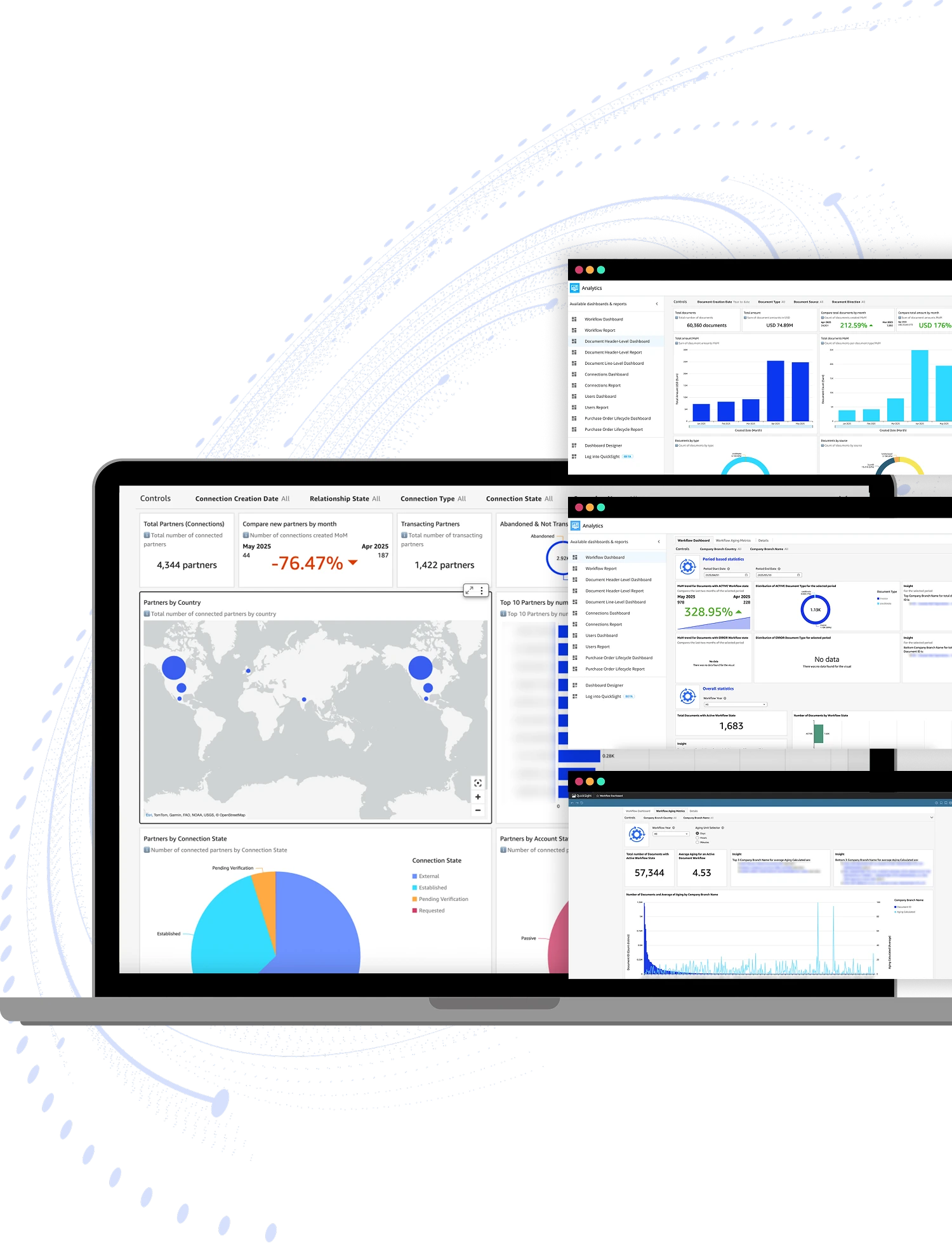
The useful thing to copy is the sequence of attention. Start with the sender’s effort. Catch mistakes before they become queues. Connect existing systems. Measure adoption and exceptions as well as processing speed. Then count everybody’s costs.
For a small business with one domestic invoice route, an enterprise network may be excessive; Tradeshift itself positions Babelway as a simpler option for some Belgium-only needs. For a complicated international buyer, the appeal is stronger, provided integrations, coverage and supplier participation hold up. The invoice is modest. Getting everyone to agree on it is the business.