Before a bank can help someone struggling with repayments, it usually wants a budget. That sounds reasonable until the budget becomes another ordeal. In an early NatWest project, customers faced a financial questionnaire that took well over 25 minutes. Paylink, a technology business in Totemic’s portfolio, helped bring that down to around five. The innovation was refreshingly unglamorous: stop making people type information their bank already holds.
That little form is a useful introduction to Totemic. The Grantham group grew from debt advice into a collection of financial services and technology businesses. Its work sits close to the awkward end of the household balance sheet: missed payments, uncertain affordability and customers whose circumstances do not fit neatly into a standard application. There is a business in understanding those complications, then making them easier for someone else to handle.
A business built at the kitchen-table scale
Totemic dates its beginning to 1992. Its corporate history describes a small operation at the founder’s home, helping police officers and members of the British armed forces who were having money problems. The starting point was a recognisable group of customers with a specific need. Relationships subsequently spread to employers, trade unions, creditors, government and money-advice organisations.
The practical expertise accumulated around debt advice became part of the group’s commercial identity. Totemic describes itself as a holding company for financial services and IT providers. That structure matters: a consumer seeking help with a debt, a bank buying software and an intermediary arranging insurance are buying different things, even when the businesses share a history.
PayPlan is central to that history. But the ownership story has moved on. Palladian announced in January 2026 that it had completed its acquisition of PayPlan, following an agreement announced the previous September. Its portfolio description says it partnered with management shareholders to buy the business from its non-operational founder. PayPlan remains essential to explaining Totemic’s development; its new ownership belongs in the present tense.
The borrower gets help. The creditor contributes.
The debt-management model has an interesting answer to the obvious question: who pays? Totemic’s description of its debt business says credit-industry donations support fee-free debt management plans. The client’s regular payment goes entirely toward repaying debts. The service has a payer, but the fee does not come out of that payment.
For a struggling household, the distinction is consequential. Citizens Advice explains that fees charged by a debt-management provider leave less of each payment available for creditors and can lengthen a plan. It lists PayPlan alongside other routes to free help. StepChange and National Debtline are alternatives in this market; free access alone does not make a provider unique.
Nor does free advice mean every proposed solution is free. PayPlan’s materials distinguish its advice and debt management plans from insolvency solutions that may carry fees. Its range includes individual voluntary arrangements and Scottish Trust Deeds. A DMP is an informal arrangement, and creditors do not have to freeze interest or charges. It also depends on money being available after essential living costs. A smaller payment is only useful if it is sustainable.
Illustrative fee-free DMP payment. Credit-industry contributions fund the service separately; insolvency solutions have different fee arrangements.
The internal tool finds an outside buyer
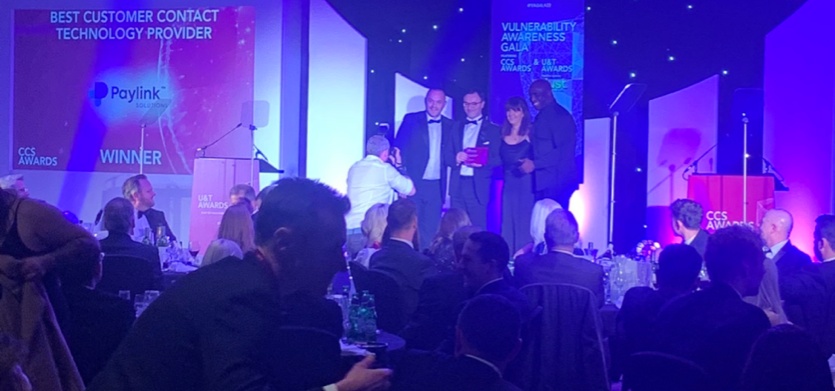
Paylink’s affordability software was originally developed for PayPlan. That is the decisive commercial turn in this story. The team had been building around conversations that debt advisers actually needed to have. Other organisations wanted those conversations to become faster, more consistent and less dependent on repeated manual entry.
Embark collects information about income, spending and debts to help establish what a customer can afford. It can draw on Open Banking and credit-reference information, connect with existing customer-management software and support electronic signatures. A customer may complete the process independently or work through it with an agent. Paylink sells institutions a way to organise a difficult interaction and move the information into their existing operations.
The NatWest example gives that proposition a human scale. Its earlier process asked customers to enter hundreds of pieces of information. The replacement could flag suspicious entries, including a misplaced decimal point, before the customer discussed next steps with a specialist. The reported improvement concerns completing the form, not eliminating debt in five minutes.
“We’re using open banking technology to take the time, effort and stress out”
Dave Lowe / NatWest, quoted by Paylink
Paylink’s early NatWest case study. Bars illustrate the approximate comparison; outcomes vary by implementation.
For another service business, the transferable idea is specific: examine the work your staff repeat because customers cannot easily do it themselves. If that work also burdens other organisations, an internal tool may have an external market. The evidence has to come from actual use. A tidy demo says less than a form people finish.
One person should not need several budgets
Virgin Money presented a different headache. Its combination with Clydesdale and Yorkshire Bank left multiple customer-management systems across products and brands. Customers with several accounts had historically needed separate affordability assessments. According to Paylink’s case study, Embark introduced a shared view and removed that repetition.
The deployment covered internal teams and outsourced collections work at Arrow Global. Paylink reports an eight-week implementation, training for more than 250 colleagues and over 5,000 digital assessments in the first four months. It also reports a 40 percent fall in average assessment handling time and a six-figure reduction in operating costs within six months. Those are supplier-reported results from a particular project, rather than a savings promise for the next buyer.
E.ON Next brought the same problem into energy bills. Previously, household budgets arrived through different channels, making consistent responses harder. Paylink’s account describes a common process connected to the supplier’s Kraken customer-service platform. Customers could propose payments and reach debt advice by chat, telephone or a scheduled callback. Its case study recorded more than 23,000 completed assessments, with over 84 percent proceeding to a digital payment proposal.
The commercial appeal is visible across those cases: institutions need usable financial information, and people need a tolerable way to provide it. A proposal is not evidence that a debt has been repaid. The useful achievement is getting both sides far enough through the conversation to decide what happens next.
Experian buys the repayment step
Another Paylink product tackled a peculiarity of debt consolidation. A lender assessing a new loan cannot simply assume the borrower will use it to clear existing balances. Counting both the old debt and the proposed replacement can make an applicant look unable to afford the transaction intended to improve their position.
ReFi addressed that uncertainty by settling existing creditors directly, with previous accounts closed once paid off. Experian announced its acquisition on January 9, 2025, bringing the technology into its consumer marketplace. The mechanism gives the new lender greater confidence about where the money goes. It does not remove the need to assess creditworthiness or whether the replacement borrowing is affordable.
Paylink said the sale proceeds would support growth and further development of Embark. That is a concrete explanation of the next move: sell one proposition and invest in another. It also means ReFi should be understood as a product Paylink built and sold, rather than a continuing Totemic offering.
Insurance, lending and a changing portfolio
Totemic’s other activities stretch beyond debt administration. It lists Building Block, a Malta-based protected cell insurer offering capacity for specialist insurance schemes. Its listed product areas include pet insurance, rent guarantees, vehicle breakdown and mobile-device cover. The customers here include businesses providing insurance to their own customers, with underwriting capacity sitting behind the product they sell.
The group also describes lending services designed for difficult credit circumstances. That history needs dates, too. In December 2024, Mortgage Solutions reported that Oak Mortgages and BB Mortgages had acquired the Clever Mortgages brand from Totemic in October. James Carpenter also purchased Clever Lending. The breadth of an old brand list is a poor substitute for understanding who owns a business today.
Seen together, these activities place Totemic between consumer financial services and the specialist suppliers that make those services possible. The household sees advice, a repayment arrangement or an insurance policy. The institutional customer sees software, administration or capacity. The group’s most instructive move was finding a market for expertise first developed close to consumers.
The frog in the company handbook
There is an unexpected menagerie in Totemic’s account of its culture. An eagle represents success; a hare, vitality; a dog, belonging; a frog, doing good; and a monkey, being active. The company says its values developed from an employee listening project in 2019. Corporate values are often forgettable. At least the frog gives the reader something to picture.
The more testable details concern benefits. Totemic describes mental-health support available to employees’ friends and family, facilities for active commuting where offices permit, and past staff events involving rowing and windsurfing at Rutland. Its charitable programme allows two paid days a year for employees to support a cause. The company reports cumulative donations above £1 million.
For businesses handling financial hardship, the quality of the next conversation matters. PayPlan’s collaboration with Refuge illustrates why: money problems can involve economic abuse, illness or other circumstances that a balance alone cannot explain. Their 2025 partnership publication describes specialist support and work with creditors to explore debt write-offs for people affected by economic abuse.
That puts a practical boundary around Totemic’s software story. Faster information gathering can give an adviser more room to understand a person’s circumstances. It cannot make insufficient income sufficient. The useful standard for this kind of financial technology is whether it helps someone reach an appropriate decision, with a route to human support when the form has reached its limit.
Follow the businesses
Explore Totemic, Embark’s product features and demo request, PayPlan’s debt advice and BudgetSmart.
Company updates: Totemic news, Paylink’s blog and Palladian’s PayPlan announcements.
Social: LinkedIn · X / recruitment · Facebook / recruitment.