The Ex-Vibram Boss Who Bet Runners Wanted Room to Wiggle Their Toes
Tony Post spent 30 years selling other people's shoes. Then he built one shaped like an actual foot - and turned a run-specialty cult following into a DSW acquisition.
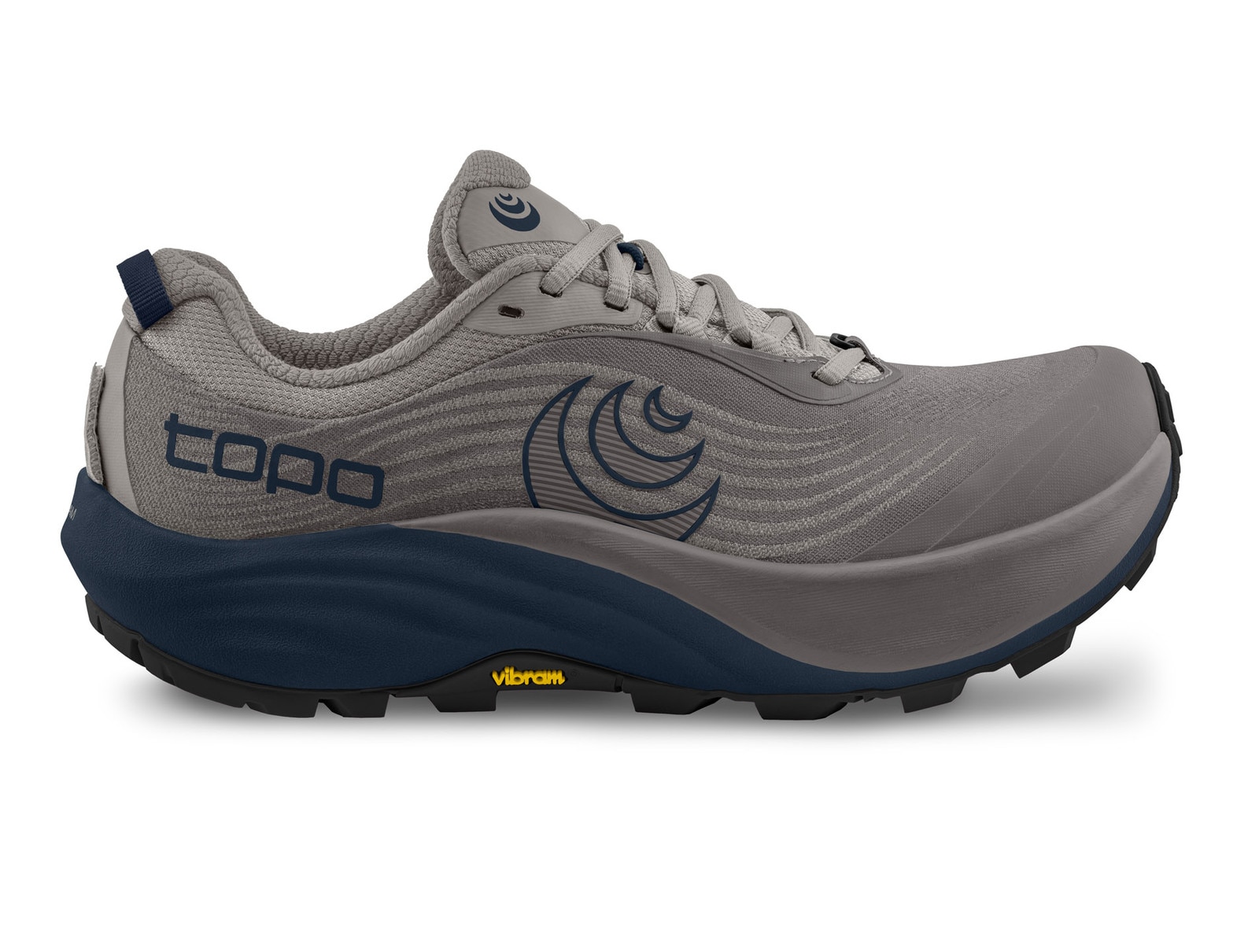
Pull almost any running shoe off almost any wall and the toe box narrows to a point, like the shoe is trying to make your foot look elegant instead of work. Tony Post spent three decades inside that industry before he decided the point was the problem. In 2013 he launched Topo Athletic on a single, slightly stubborn conviction: a shoe should be shaped like the foot inside it. Toes should have room to spread. The heel should stay locked. The ramp from heel to toe should be low and honest. Everything Topo has built since is a variation on that one sentence.
It is not the loudest idea in footwear, and Topo is not the loudest brand. It is a roughly 46-person company headquartered in Framingham, Massachusetts, that grew the slow way - one independent running store, one convert with wide feet, one pair at a time. That patience is exactly what got noticed. In December 2022, Designer Brands, the parent company of DSW, acquired Topo Athletic outright. Post stayed on as chief executive.
A footwear lifer, not a first-timer
Post did not arrive at running through a lab or an MBA. He took it up as a freshman at the University of Tulsa in the late 1970s, ran Division I track and cross country, and ended up captain of both teams. The competitive habit stuck. So did the shoes. He learned the actual craft of shoemaking at Rockport, one of the first casual brands to borrow athletic-shoe technology, and then rose to president of Vibram USA - the company whose rubber soles sit under a long list of premium boots and, famously, under the Vibram FiveFingers.
Those glove-like toe shoes became a mid-2000s phenomenon and helped push "natural running" from fringe theory into a genuine movement. Post had a front-row seat to both the hype and the hangover. FiveFingers asked runners to give up almost everything - cushion, structure, protection - in exchange for a more natural stride. Plenty of people loved the idea and hated living in it.
Post's insight was subtraction with a floor: keep the roomy, foot-shaped feel of natural running, but put the cushion back in.
That is the gap Topo was built to fill. Not barefoot. Not the tapered, jacked-up traditional trainer either. Something in between that most runners could actually live in every day. Topo, incidentally, was Post's own college nickname - a small tell that this was a personal project, not a spreadsheet exercise.
Three rules, printed on every shoe
Topo describes its design language as "the Topo Difference," which sounds like marketing until you realize it is really just three fit rules the company refuses to break. Every model, road or trail, obeys them.
Roomy toe box
A foot-shaped last that lets the toes splay for balance, control and power - not a tapered point.
Low drop
Heel-to-toe drop of 0 to 5mm, versus the 8-12mm baked into most conventional trainers.
Secure heel
Roomy up front, snug through the midfoot, locked in the heel - so the freedom never feels sloppy.
The drop number is the one worth sitting with, because it is the clearest way to see how Topo differs from the wall of shoes next to it. Drop is the height difference between where your heel sits and where your toes sit. Traditional running shoes prop the heel up. Topo lowers the ramp, which encourages a more level, natural landing.
Heel-to-toe drop, compared
None of this is exotic engineering. It is a point of view held consistently for more than a decade, which in a trend-chasing category is its own kind of moat. Runners with wide feet, bunions, or a history of cramped toe boxes tend to try one pair and then quietly refuse to shop anywhere else.
The people who won't go back
Topo's customer is not really a demographic; it is a discovery. Road runners and trail runners, day hikers, nurses and teachers on their feet all day, and people slowly transitioning toward more natural movement without wanting to give up cushioning. The common thread is anatomy - feet that are wider or more sensitive than the average shoe assumes - and the common story is relief.
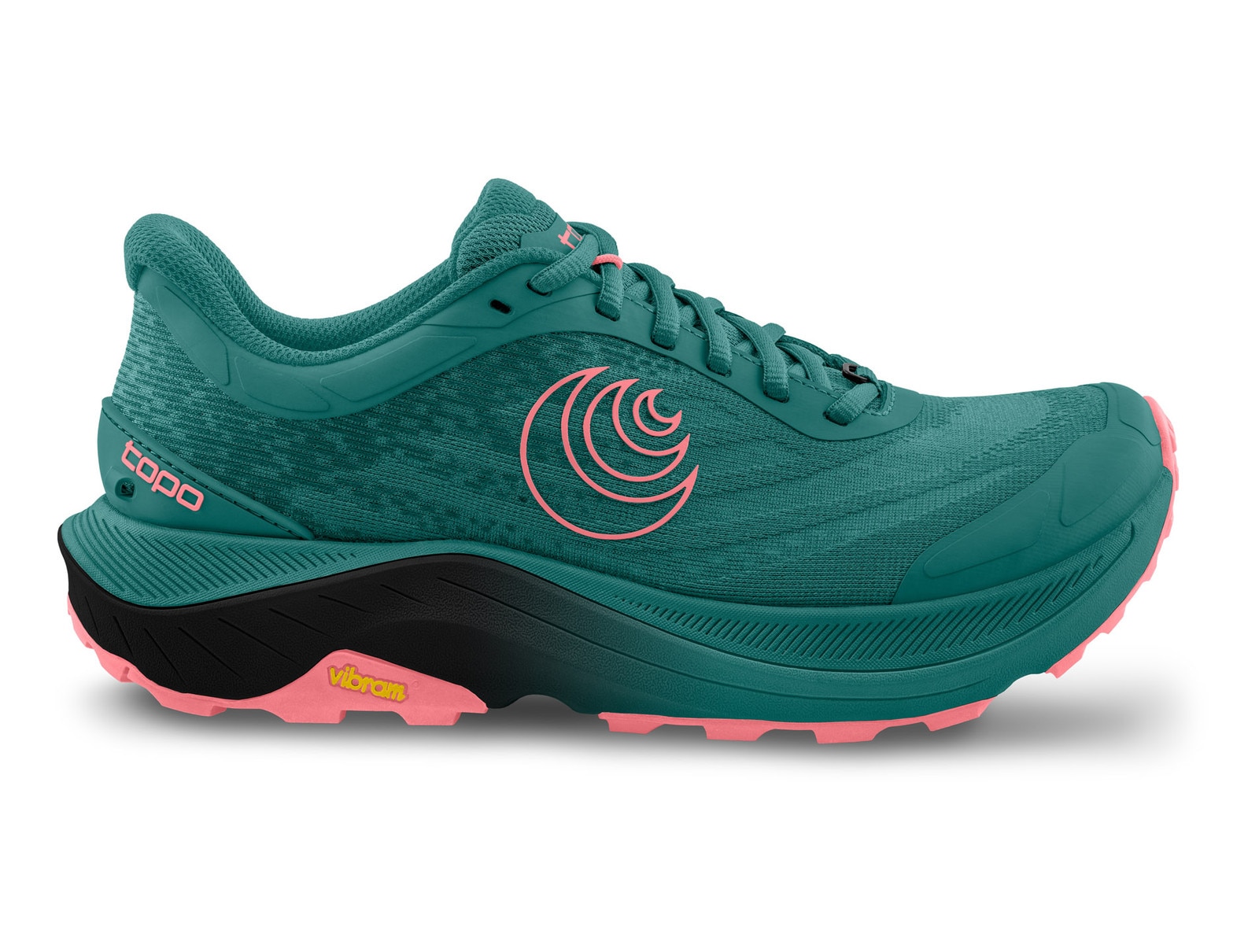
That word-of-mouth grew up inside run-specialty stores - the independent shops where a staffer watches you walk and hands you the pair that fits, not the pair with the biggest ad budget. It is a slow channel and a shrinking one, but it rewards products that solve a specific problem. Topo fit the slot exactly, then extended it: from road models like the fast Cyclone and the cushioned Atmos daily trainer, out to a deep trail line, and onward into waterproof hiking boots that carry the same roomy, low-drop fit onto rougher ground.
The quiet war over the shape of your foot
Topo does not have the wide-toe-box category to itself. Its closest rival is Altra, the brand that arguably made "foot-shaped, zero-drop" a mainstream running phrase. Where Altra planted its flag hard on zero drop, Topo took the more moderate road - most of its performance shoes sit at 3 to 5mm, with real cushioning - which turns out to be the version a lot of runners can adopt without an injury-prone adjustment period.
Altra was first to the idea. Topo built the version more runners could actually live in.
Beyond that direct duel, Topo competes for the same feet as Hoka, Brooks, Saucony, On, Merrell and New Balance - giants with marketing budgets Topo cannot match. Its counter is not spend; it is consistency and fit. When the whole pitch is "your foot, but comfortable," you do not need a celebrity. You need the shoe to keep its promise.
Small brand, big new parent
For most of its life Topo sold the way it grew - through run-specialty and outdoor retailers, wholesale partners, and its own site at premium prices, generally $100 to $180 a pair. Then the phone rang. In December 2022, Designer Brands acquired Topo Athletic as one of its Owned Brands, folding a niche performance label into the company best known for DSW's big-box shoe floors.
On paper it is an odd couple - a mall-scale retailer buying a run-specialty cult brand. The logic is distribution. Designer Brands had publicly set a goal of doubling its Owned Brands sales by 2026, and athletic footwear is the category pulling the industry. Topo brought a credible, differentiated performance product; Designer Brands brought reach. Post kept the CEO seat and, crucially, kept product control, which is the part that could have gone wrong and didn't.

What can a founder actually steal from this? Pick one uncomfortable, specific product truth - feet are wider than shoes - and refuse to compromise on it, even when the market rewards the trend of the season. Sell first through the channel that rewards fit over noise. Let loyal customers do the marketing you cannot afford. And build a franchise, like the Ultraventure, that you iterate rather than reinvent, so each new model deepens trust instead of resetting it.
Where it would not work: this is not a shortcut. Topo's edge took a founder with 30 years of relationships and a decade of patient, unglamorous retail work to compound. If you need scale next quarter, "the shoe is shaped like a foot" is a slow moat, not a growth hack. It rewards the people willing to wait for word of mouth - which, in the end, is exactly who Topo attracts as customers, too.