Tony Post’s first great piece of product research arrived without a clipboard. It was the late 1970s, and he was a University of Tulsa student who had taken up running on a classmate’s suggestion. He won the mile and two-mile at an intramural meet, took a year away from school, drove an old MG around the country, and returned with a sharper sense of direction. A regional victory caught the track coach’s attention. The coach’s verdict was wonderfully specific: Post had won the mile, but he might be a better 5K runner.
Post walked onto Tulsa’s Division I team, earned a partial scholarship, and eventually captained both track and cross-country. His 3:49 over 1,500 meters made him credible without making him famous. That distinction matters. He learned what it was like to care deeply about speed while still having to study the machinery beneath it.
After graduating in 1981 with a degree in rhetoric and American literature, he moved to Boston. The city was thick with serious runners. Post trained among them and recognized the practical boundary between a fine regional competitor and a world-class one. Rent, as it so often does, clarified the plot. In 1984 he joined Rockport in customer service.
The apprentice at lunchtime
Rockport was trying to bring athletic-shoe logic into brown shoes: lighter materials, functional construction, comfort that did not require surrendering to a sneaker. Post moved from the phones into brand marketing and became the company’s first product manager for men’s footwear. He visited factories and questioned last makers, mold makers, engineers, and suppliers. He studied skiving, heel lasting, heat setting, and the small manufacturing choices that determine whether a shoe feels considered or merely completed.
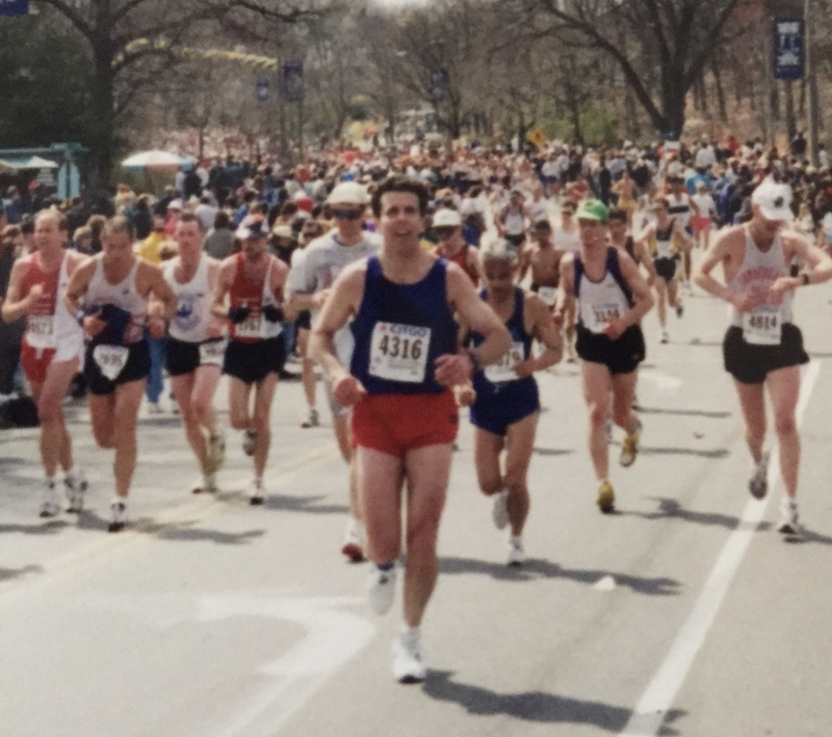
He also took prototypes running at lunch. This was product management with sweat in the minutes. When Rockport developed its DresSports line, Post carried the demonstration to comic extremes: he ran the New York City and London marathons in dress shoes, finishing London in 2 hours 49 minutes in 1992. The stunt earned attention because the underlying claim held. A brown shoe could borrow the intelligence of an athletic one.
Rockport’s shoes were not always objects of universal aesthetic devotion. Post came to see that as useful. A product could be polarizing and still inspire loyalty if it delivered a better experience to a clearly defined customer. Trying to please everyone, he learned, was a rather elegant way to be essential to no one.
“Focus on a particular customer and find ways to deliver a better experience to those people so they can become passionate about your brand.”Tony Post
Eleven years on the sole
In 2001, after 15 years at Rockport, Post became president and CEO of Vibram USA. The Italian company was known for rubber outsoles and a long view of craftsmanship. Because it supplied many footwear brands, the role gave him a wide-angle education in how different companies designed, sourced, and sold shoes.
Then came a product that looked like a dare. Vibram FiveFingers placed each toe in its own pocket above a thin, flexible sole. Post helped lead its introduction into running in 2005. The shoe became a visible emblem of the minimalist movement and proved that an entrenched category could still be surprised. It also gave Post a close view of the distance between a useful principle and a product that every customer would want to wear.
The fit, in three movements
The Topo proposition is visible before it is technical: space at the front, security through the middle and rear, and a platform designed to keep the shoe from dictating the entire stride.
Post appreciated cushioning, protection, and the familiar grammar of a running shoe. What he wanted was a synthesis: a broad anatomical front, a secure middle and heel, lightweight materials, and low heel-to-toe drop. In 2012, driven by what he called entrepreneurial curiosity, he left Vibram to build it.
A clever toe meets the customer
The company’s name was already personal. “Topo” had been Post’s college nickname, assembled from the opening letters of Tony and Post. Its first products were personal too. He and a small team spent months developing a new last shape. The three debut models, launched in 2013, used a split-toe construction that separated the big toe from the others. It was rooted in function and backed by precedent. Japanese tabi footwear had done it for ages. Consumers nevertheless declined the lecture.
The shoes received credit for being light, cushioned, and low to the ground. The split toe remained a tax on adoption. Post later admitted that he should not have placed every egg in that particular shoe box. Topo sold the inventory and retooled around a conventional toe shape.
This is the most useful chapter in the founder story because it avoids the narcotic neatness of destiny. Post had almost three decades of experience. He had helped make an odd-looking product culturally unavoidable. He still got the opening bet wrong. Expertise had not granted immunity; it did give him the vocabulary to diagnose the miss. He separated the company’s durable principles from their first, overly literal expression.
Three numbers, one long education
The redesigned line kept the roomy front, secure waist and heel, and low-drop options. It discarded the visual hurdle. Dealers who had survived the opening stumble stayed with the company. The team listened to accounts and customers, encouraged competing views inside the business, and improved model by model. The result was not a retreat into ordinary shoes. It was a sharper distinction between being different and making the customer work too hard to appreciate the difference.
Independents as infrastructure
Topo grew through road, trail, hiking, and recovery footwear, but its operating preference remained conspicuously human. Post has repeatedly called premium independent retailers the backbone of the business. A specialist shop offers what he describes as a sit-and-fit experience: education, comparison, and someone watching how the product behaves on an actual person.
That choice can look old-fashioned beside frictionless commerce. It is also a sensible distribution match for a product whose advantage becomes obvious through fit. In 2025, Post said Topo had passed 1,200 domestic distribution points by the end of the first quarter. REI had expanded the brand from roughly 50 stores to all 190, while independent running and outdoor shops remained central. Growth was spread across men’s and women’s products, wholesale and direct sales, and domestic and international markets.
- 1984Joins Rockport and begins learning footwear from customer service through product management.
- 2001Becomes president and CEO of Vibram USA.
- 2005Helps bring Vibram FiveFingers into running.
- 2012-13Founds Topo Athletic, then launches its first three models with a small team.
- 2022Stays on as CEO after Designer Brands acquires a majority interest.
- 2025Leads channel growth and announces a larger Framingham headquarters.
Designer Brands acquired a 79.4 percent interest in Topo in December 2022 for $15.1 million. Post retained a stake and remained CEO. The arrangement gave the brand access to a larger footwear organization while preserving its leadership and specialty strategy. By September 2025, Topo reported year-to-date sales up 62 percent. Later that month it announced an expanded headquarters at 39 Grant Street in Framingham.
Scale brought less romantic work too. Tariff shifts in 2025 pushed Topo to move more United States production to Vietnam, certify factories, repeat fit trials, and reposition materials. By December, Post said the company had dual-sourced production between Vietnam and China. The job of a modern shoemaker, it turns out, includes geopolitics, logistics, and the stubborn millimeters of fit.
The next shoe
Post’s answer to the favorite-product question is “the next one.” It is a neat line, but it rests on an operating habit. Each season, the company asks what it learned from the last. The first launch made that ritual expensive enough to remember. Every successful model could otherwise become an excuse to stop looking.
His career has moved through three memorable silhouettes: Rockport dress shoes moving at marathon pace, Vibram soles divided into five toes, and Topo shoes rounded generously at the front. The connective tissue is not eccentricity. It is an interest in what a product permits the wearer to do - plus a willingness to demonstrate the claim, sometimes with his own race number pinned on.
“I’m always focused on ‘the next one,’ but I am also proud of the shoes we make today.”Tony Post
There is a useful founder’s discipline in that sentence. Pride keeps the work worth doing. “Next” keeps pride from hardening into certainty. Post began as a late-blooming runner whose coach redirected him toward the distance that suited him. Decades later, the market performed a similar service on his split-toe shoes. Both corrections led somewhere more interesting than stubbornness would have.
Topo Athletic’s roomy toe box may be its signature, but the company’s deeper advantage was learning what to leave around the idea: enough space for criticism, adjustment, and another season. The foot wants room. So does the product.