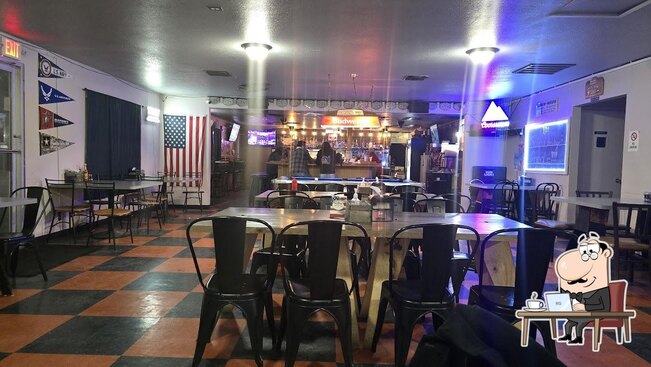
The revealing sentence in Top Shelf Entertainment's public record is not a mission statement. It is a casual invitation from owner Dustin Crump: Thursday night, Roadhouse 95, karaoke, and “Judy and I will be your host.” It contains almost everything a customer needs. There is a time. There is a place. There are two human beings. There is permission to come sing.
This sounds almost too small to count as a company story. That is precisely why it is one. Business databases prefer firms with tidy categories, unique domains and officers who use the same title everywhere. Top Shelf Entertainment arrives as the opposite: a Los Angeles company record tagged “graphic design,” an employee estimate of 24, no attributable website, and an owner whose visible work points to karaoke around Mohave Valley, Arizona.
The temptation is to average these facts into a vague “creative services” business. Resist it. The most concrete evidence is the recurring event. Dustin and Judy host. Roadhouse 95 supplies the room, the food and the regulars. Singers supply the unpredictable part. Top Shelf supplies the evening's structure.
The product is not the song
Every song in karaoke already belongs to somebody else. The venue could buy a machine. The customer could sing in the car. What remains for the operator to sell?
Social permission. A competent karaoke host runs sound, maintains a queue and keeps the show moving, but the scarce skill is lowering the cost of embarrassment. The room must feel organized without feeling stern. A first-timer needs encouragement without becoming a spectacle. A confident regular needs airtime without annexing the stage. The gap between those two people is where the host works.
A familiar neighborhood room.
The same night, easy to remember.
Names instead of anonymous production.
The crowd becomes the cast.
That last part explains why the phrase “Judy and I” does useful commercial work. A company can rent speakers. A person welcomes you. Named hosts turn a listing into a promise of continuity: the person who helped last Thursday's nervous singer will probably be there next Thursday too.
“Judy and I will be your host.”Dustin Crump, promoting karaoke at Roadhouse 95
A category error with a beat
The graphic-design label is more than an amusing database wrinkle. It is the first thing that fails. A potential bar manager looking for a karaoke host is unlikely to search a design category. A person looking for a designer will be surprised by a Thursday-night singalong. The work may be perfectly good while the description sends both audiences down the wrong corridor.
There is a practical fix any small operator can copy. Lead with the recurring thing: “Thursday karaoke at Roadhouse 95, hosted by Dustin and Judy.” Then add a service area, a booking channel, three photographs of an actual night, and a simple line explaining what a venue receives. The company name can remain broad. The offer cannot.
One venue, one dependable weekly slot, two recognizable hosts. Consistency does the advertising that a large campaign would otherwise have to buy.
The overlooked middle of the market
Top Shelf sits in a useful gap. On one side is passive entertainment: televisions, playlists and jukeboxes. They are inexpensive and predictable, but they do not create much participation. On the other side are bands, touring acts and produced events. They can become the reason to visit, but they cost more and introduce contracts, stage needs and ticket risk.
Hosted karaoke occupies the middle. It gives a venue a programmed event while borrowing its performers from the audience. The business model is likely a venue or event fee rather than tickets or software subscriptions; no public rate card is attached to this operation. For a bar, the relevant calculation is not artistic prestige. It is whether a host can turn a quiet period into a dependable social habit.
That explains the customer set. The buyer is a neighborhood hospitality venue that wants a reason for people to arrive and linger. The user is the patron who may sing, applaud, bring friends or simply watch. One service has to satisfy both. The venue wants traffic and order. The room wants looseness and surprise.
Which nights has the host repeated successfully? Who supplies sound and licensing? How are singers queued? What happens when the room is empty, or when one regular wants every third song? The answers reveal more than a highlight reel.
Small enough to be remembered
The operation's public trail does not support a tale of venture funding, proprietary technology or national expansion. Its value is more local and more fragile. A recurring night works when the venue has enough repeat traffic, the host can read the room, and the calendar stays steady long enough to become a habit. It works less well when a transient audience never returns, when the venue changes nights constantly, or when the equipment is treated as the whole product.
It also depends on identity. “Top Shelf Entertainment” is used by unrelated wedding DJs, event producers, entertainers and even sports organizations. A generic name can sound established while making search results nearly impossible to own. The copyable lesson is not to choose a grander name. It is to attach a place, a face and a repeatable promise to whatever name you have.
Thursday night at Roadhouse 95 does that. The phrase is modest, but it resolves the company better than a category ever could. Top Shelf Entertainment, in its clearest attributable form, is the bit between silence and the first volunteer: the greeting, the queue, the volume check, and the gentle suggestion that somebody in the room knows the next verse.