A signed investment agreement is an expensive thing to lose inside a folder. Lawyers have negotiated it, investors have paid for it, and somebody has stayed late arranging the signatures. Then the deal closes. The document acquires the quiet dignity of an object everyone hopes never to read again. Tony Lewis helped build a company around the information still sitting inside it.
Lewis, the co-founder and former chief executive of Aumni, came to software through corporate law. His working material was the detail of technology financings and acquisitions. Aumni turned that detail into structured investment data. In May 2023, J.P. Morgan completed its purchase of the business. The fine print had acquired a rather substantial new landlord.
The route between those points includes a law degree, a move away from the Bay Area, a ski retreat in Utah and a growing operation in the Philippines. It also includes a founder who could write about investment analytics and end a company letter with “Yar.” A small word, perhaps, but a welcome disturbance in the vocabulary of corporate correspondence.
The documents had a second career
Lewis graduated from Boston University School of Law in 2012 and also attended the University of California, Berkeley. His legal career included Wilson Sonsini Goodrich & Rosati and Latham & Watkins. That placed him close to the machinery of technology finance: the agreements through which investors commit money and companies negotiate the conditions attached to it.
A deal document contains more than a record of money changing hands. It sets out rights and economic terms that continue to matter long after closing. A portfolio brings many such agreements together. Finding an answer across them requires the information to be comparable, accurate and accessible. A drawer full of completed transactions can still leave an investor with considerable homework.
Aumni’s proposition was to extract and structure that information. The company combined artificial intelligence with human expertise, giving private-market investors a way to examine their investments’ legal and financial position. Its audience included venture funds, family offices, university endowments and corporate venture firms. These were organizations accustomed to handling complicated investments, with every reason to want a clearer view of them.
Lewis built the company alongside fellow former corporate attorney Kelsey Chase. Their professional experience gave the venture a practical starting point. The agreements themselves supplied the raw material; the software made the terms usable beyond an individual transaction. In this business, understanding a clause was part of understanding the customer.
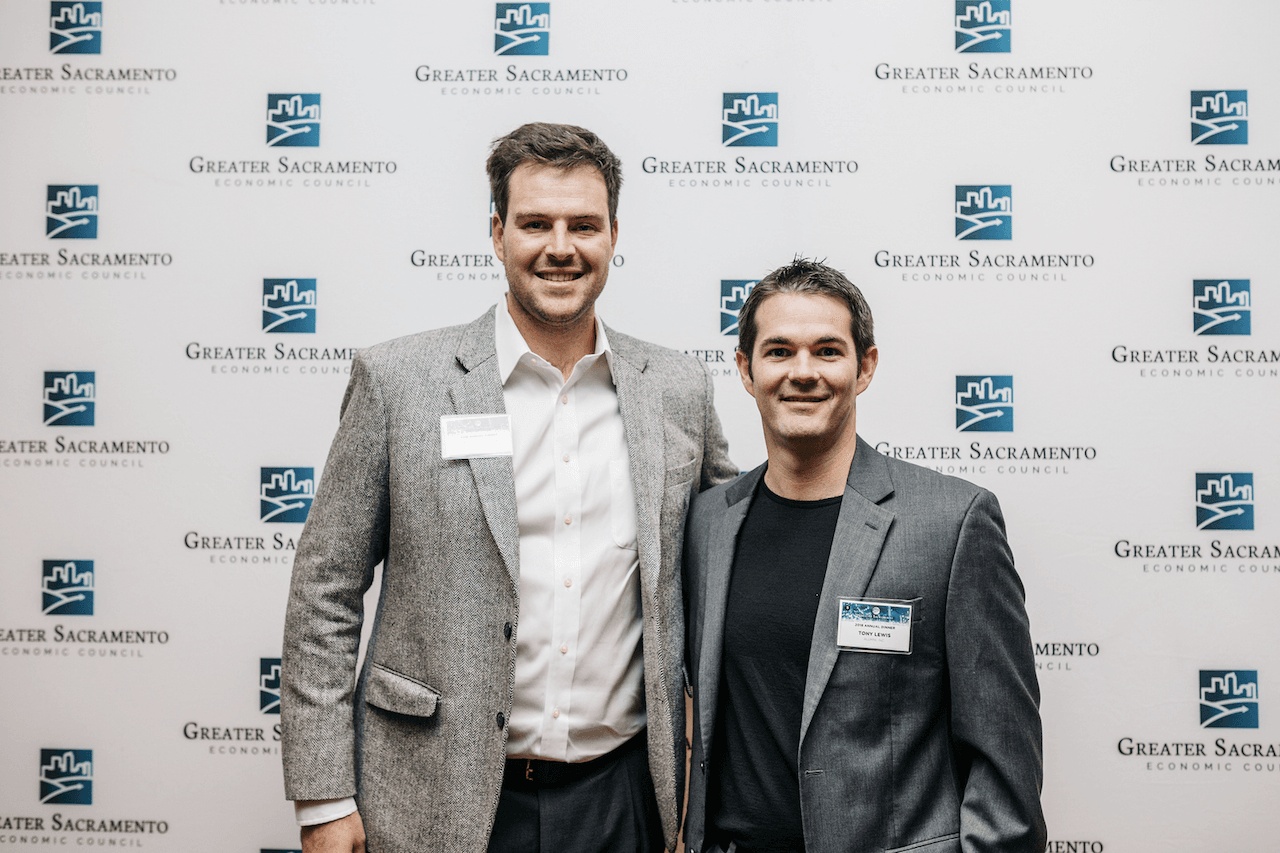
Chase has described their experience as lawyers as an influence on the company’s development. It exposed them to repeated transactions and to the difficulty of retrieving useful information afterward. There is an unglamorous familiarity to that problem. The answer may exist already; finding it again can nevertheless become a project. Aumni gave that recurring task a product and a business model.
The mountain made its argument
By early 2019, Lewis was considering moving the young company out of California’s Bay Area. Engineering talent and office space carried a cost premium. Traffic supplied its own daily invoice. He looked across the United States for an alternative, and the greater Salt Lake City area offered a combination of talent and lower costs.
The decision also had a less spreadsheet-shaped influence. A company ski retreat near Eden, home to Powder Mountain, helped persuade Lewis and his colleagues to move. He later described the choice as bringing business, life and family considerations together. Utah was somewhere to build a company and somewhere to raise children. The mountain had made a persuasive presentation without opening a slide deck.
In June 2021, Aumni announced a move to more than 20,000 square feet in Cottonwood Heights. Lewis described a team that had reached 120 in less than three years. The larger headquarters made the relocation tangible: desks, colleagues and room for a growing business. A place initially considered as an alternative had become the company’s base.
A related choice appeared in the Philippines. Aumni established its operations in Baguio, away from Metro Manila. Lewis pointed to an educated workforce, outdoor recreation, space for families and arts and culture. The resemblance to the Utah decision was deliberate. He saw an opportunity to offer talented professionals a different setting for their working lives.
Location, in this account, belongs in the operating plan. Recruitment is about the work on offer, but also the life surrounding it. Baguio’s universities and the possibility of avoiding the capital’s traffic gave the company reasons to look beyond the expected address. Building across countries did not require choosing the busiest city in each one.
An investor becomes the buyer
Aumni announced a $10 million Series A in January 2020, led by SVB Financial Group. Existing and new investors joined the round. For a business selling tools to private-capital investors, raising its own capital meant occupying another seat at a familiar table. Lewis had spent a legal career around transactions; now he was building a company that needed them.
The next major financing brought J.P. Morgan closer. In 2021, the bank led a $50 million Series B. Pelion Venture Partners and other investors participated. The financing was intended to support expansion of Aumni’s offering and its reach across the private-market ecosystem. The relationship with the bank therefore began well before the acquisition announcement.
- $10m Series AAnnounced in January; led by SVB Financial Group.
- $50m Series BLed by J.P. Morgan.
- Acquisition completedJ.P. Morgan closed the purchase on May 2.
On March 22, 2023, J.P. Morgan announced an agreement to buy Aumni. The bank was developing a wider group of private-market services, including Capital Connect and Global Shares. Aumni added investment data and portfolio monitoring to that effort. The fit rested on what the product could contribute to a larger set of services for companies and investors.
At the announcement, Aumni served more than 300 institutions and had evaluated over $600 billion in invested capital across more than 17,000 private companies. These figures describe the reach of its analysis. They also suggest how far a business concerned with individual clauses had travelled. A useful answer in one agreement had become a service used across many portfolios.
The purchase closed on May 2. In a subsequent conversation with Rebecca Thornton and J.P. Morgan’s Michael Elanjian, Lewis discussed the role of data in private markets. The subject carried forward his stated ambition for more structure and transparency. The acquisition gave that ambition a new institutional setting, while the product remained concerned with the particulars of investments.
A founder with a different sign-off
There is another Lewis in the company’s public record: the chief executive addressing his own team. In December 2021, he reported that Aumni had tripled revenue and team size during the year. He also wrote about why people choose a workplace and why compensation alone cannot settle that decision indefinitely.
He saw advantages in the experience of joining a smaller, growing company: flexibility, a chance to contribute and the appeal of work people enjoy. It is an argument that sits comfortably beside the company’s geographic choices. A position comes with a salary, certainly, but it also comes with a daily routine and a set of people.
The letter ended with a word borrowed from a college professor’s inspirational correspondence. Lewis remembered it as having the spirit of a Viking call. His own closing was a single “Yar.” Corporate letters generally expire beneath a heap of worthy abstractions. This one departed with the faint suggestion that a boat might be involved.
“Yar”
Tony Lewis’s borrowed sign-off, December 2021
In 2023, NEXT Frontier Capital awarded Lewis its inaugural Michael FitzGerald Entrepreneurial Award. The investor described resilience, grit and persistence in recognizing his work guiding Aumni through difficult market conditions to a sale. It was praise for the conduct of building and running the company, alongside the transaction that marked a new chapter.
The fine print survives the party
Lewis’s comments on the venture market in June 2024 were more restrained than the celebrations surrounding a financing round. Looking back at the valuation surge, he described a market with more cash available than suitable companies. He was skeptical that founders could simply expect a rapid return to earlier peaks. Making existing capital last had become a pressing question.
“There was more supply of cash than quality companies.”
Tony Lewis, discussing the venture valuation surge in 2024
That perspective gives the Aumni story an apt final turn. A company built to clarify investment terms grew through an exuberant period and sold during a more difficult one. The terms continued to matter through both. Enthusiasm can change quickly; the agreement remains available for a more sober reading the following morning.
Today, Lewis’s Q4 Legal biography describes him as an investor, advisor and entrepreneur, and identifies him as Aumni’s former CEO. His work includes helping clients navigate capital raising and acquisitions. The underlying concerns are familiar: how a business is financed, what a transaction means and how legal detail connects to a practical decision.
His career has moved from working on deals to building software around them, then into advising with the experience of having run and sold a company. The connecting thread is unusually concrete. It is there in the agreement, beneath the signatures and beyond the celebration. Lewis found a business by giving that information somewhere useful to go.