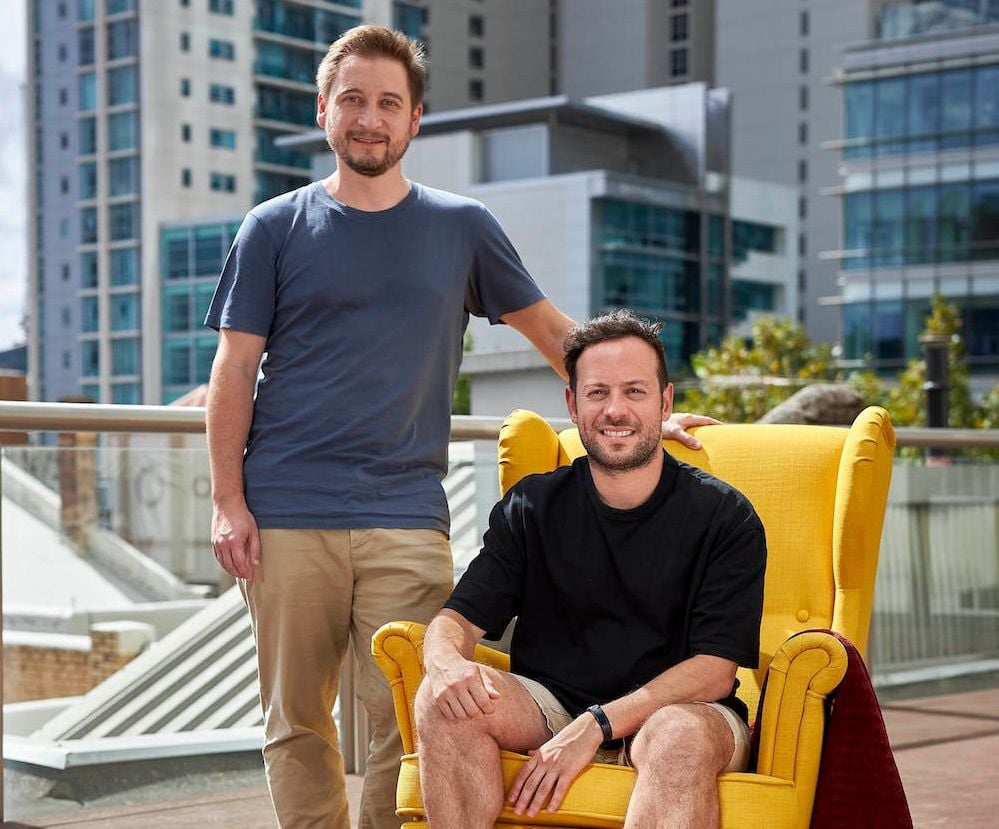
Tom Wright found a rather unusual way to get a new boss: he hired one. In 2025, after more than a decade running Cascade, he handed the chief executive role to Charlie Newark-French and became Chief Product Officer. The founder was staying with the company. He was changing where, inside it, he could be useful.
There is a pleasing complication here. Wright had built a business around helping organisations carry out their decisions. Now he was making a consequential decision about his own place in the organisation. A title that once fitted the work was giving way to another. Founding a company, it turns out, need not mean keeping the same job forever.
He treated the handover with some humour. “Most people don't get to choose their own boss - but I did!” he wrote. Then he and Newark-French interviewed each other for a podcast. Succession acquired a conversational format: two people discussing the peculiar business of a founder recruiting his replacement, with the founder still very much in the room.
The distance between a slide and a working day
Before Cascade, Wright spent more than nine years in financial services, including senior roles at HSBC and Bank of America. His work gave him a close view of the distance between an organisation's stated ambitions and the way its people actually spent their time. That distance became the subject of his next career.
His banking experience included responsibility for consumer lending across Asia Pacific at HSBC. Large financial institutions gave him an education in the machinery of strategy: the targets, the management structures, the effort involved in getting decisions to travel through a business. He would later interview his former colleague Ryan Gonsalves about banking, purpose and the different ways institutions communicate with customers.
The problem that stayed with him was ordinary enough to be overlooked. An organisation could put considerable effort into deciding where to go, yet leave the connection between that decision and everyday work poorly maintained. The presentation survived. The relationship between the presentation and Tuesday afternoon was another matter.
For Wright, this suggested a software business. A strategic plan could become something people worked with: objectives linked to activity, progress measured, responsibilities visible. The opportunity lay in giving an intention somewhere to live after the meeting had ended. Anyone who has searched for the final version of a presentation may appreciate the appeal of a more permanent address.
A small subscription, a larger ambition
By the time Wright spoke with Nathan Latka in December 2018, he could describe a business that had adjusted its route to customers. Cascade sold software subscriptions, covering planning, day-to-day management and reporting. Its customers could use the same system to connect revenue goals, performance and the activities meant to produce results.
The original approach had aimed at bringing large numbers of people inside a big organisation onto the platform together. Wright described a subsequent approach that began with individual teams or divisions and grew from there. It made room for a smaller initial decision. A department could start using the product before an entire enterprise committed itself.
The prices he discussed also crossed a wide span, from modest subscriptions to enterprise contracts worth six figures or more. That range illustrates the practical challenge beneath his argument: making strategy accessible means accommodating very different kinds of organisation. A small team and a multinational might recognise the same problem while having quite different budgets, habits and buying processes.
Objectives connect to activity. Activity connects to measures. Measures help people decide what to change.
The patient years before the funding announcement
Cascade remained bootstrapped until June 2021. That detail puts the later funding headlines in perspective. Wright's company had spent years developing and selling its product before outside capital became part of its growth story. The sequence matters: the attempt to solve a recurring management problem came well before the sizeable investment round.
In March 2022, Cascade announced a Series A led by Telescope Partners, with participation from Five V and Carthona. Australian coverage put the round at A$40 million. The money was intended to support product development and expansion across Australia, North America and Europe. By then, organisations using the platform included American Express and the University of Sydney.
Wright's public language at the time emphasised a strategy that could change as the business environment changed. That is a less tidy proposition than an annual plan. It requires people to keep paying attention after the initial agreement, and gives them permission to revise their approach. The neatness of a finished document has to coexist with the untidiness of operating a company.
A product launch with a party attached
Later in 2022, Wright and Karim Zuhri signed off a markedly cheerful account of Strategy Palooza. More than 2,500 people had registered for the event, where Cascade unveiled a rebuilt platform. Wright described a year of development, with millions of dollars and thousands of hours invested. The launch was a public occasion for work that had largely happened out of view.
His account dwelt on customers and their ambitions as much as on the software. He described watching them gather online and share the moment of the reveal. There were sleepless weeks beforehand, then the peculiar release of seeing a long development effort become something other people could react to.
The name Strategy Palooza deserves a moment's appreciation. Management software is not usually accused of excessive festivity. Yet the event makes sense within Wright's larger interest: getting people involved in something that can otherwise feel remote and formal. A launch gave the product a social occasion, and gave the people using it a chance to appear in the story.
People are already thinking
Wright's writing about management starts from a generous premise. Employees already make assessments, weigh alternatives and revise decisions in their lives. In his account, leaders can create conditions that let those abilities emerge at work. The job involves giving people room to contribute, recognising what they contribute and helping them understand how it affects the business.
He also assigns responsibility to the person in charge when an idea goes badly. A leader who invites participation and then punishes a disappointing result makes the next invitation less convincing. His advice is to learn from the decision and change the approach. It is a practical argument for keeping people willing to think aloud.
Culture enters the picture here. After Cascade's Engage 2019 conference, Wright singled out a presentation by Regina Perkins of The Clearing about the relationship between strategy and organisational culture. He valued its practical treatment of a difficult subject: the habits and behaviours that can help a plan proceed or quietly prevent it from going anywhere.
His reflections on the session recognised that a strategy has to operate among the people who already work in an organisation. Their expectations, routines and tolerance for change shape what happens next. Software can make the work visible. Getting people to take part still involves leadership, conversations and the behaviour that follows those conversations.
“Strategy is what you do every day.”
Tom Wright, writing about strategy execution
Back to the product, with AI in the room
When Wright announced his move into the product role, he explicitly connected the choice to the pace of technological change. He wanted to work at the centre of Cascade's product development and engineering team. Newark-French brought experience across strategy, venture capital and software businesses. The arrangement gave the founder a different set of responsibilities while adding another person's experience to the leadership.
That return to product has a visible expression in his demonstrations of Cascade. A ten-minute tour features Wright explaining how teams can bring strategy frameworks into one platform, gather updates from their existing work and use Tapestry AI to examine risks. It places him close to the details of what a customer actually sees and does.
Those demonstrations bring his original concern into a changed technical setting. More information can be gathered from conversations, meetings and messages. The question remains how to connect that information to the decisions a business is trying to carry out. A faster summary is useful only if the underlying picture helps someone make a sound choice.
The founder who once spent his working life inside banks is now showing people how to use software built around a frustration he encountered there. He has changed jobs, industries and, most recently, his place in his own company. The recurring subject is still the same stubborn interval between agreeing to do something and discovering whether it happened.
His decision to hire a CEO gives that subject a personal scale. Wright wanted to work more closely on the product, and changed the leadership arrangement to make it possible. For someone who has spent years arguing that plans need to shape everyday activity, a different working day seems a fitting place to begin.