A communications campaign begins with a promise. Someone will understand an argument, see a company differently, or take an issue seriously. Before that promise reaches an audience, another set of questions needs answering. Who has time to do the work? What resources will it take? Can the organization keep its commitments when several deadlines arrive together? Tom Snedeker’s career belongs to this earlier conversation, where the message acquires a budget and the people acquire a plan.
At The Herald Group, Snedeker is a Partner. His place on the Executive Committee puts finance and operations in the same frame. A public affairs firm sells judgment, relationships and execution. Inside that business, the practical arrangements matter: work must be assigned, capabilities maintained and decisions made about what to invest in next. A persuasive sentence is pleasant company. It is less helpful when everyone who could deliver it is already booked.
There is an appealing change of perspective here. Public affairs is usually observed from the outside, through the statements, advertisements and debates it produces. Snedeker’s professional history invites a look through the other door. It passes through telecom, a digital communications agency and a consumer brand before arriving at a Washington firm. The connecting subject is the organization doing the communicating, with all the arithmetic that entails.
Before the message, the machinery
An earlier chapter took him into telecom government affairs and regulation. That setting brings commercial plans into contact with public institutions. Building a company and working within its regulatory environment are connected tasks; neither can simply be left until the other is finished. In Snedeker’s case, the work included contact with Capitol Hill and the Federal Communications Commission. The institutional setting was part of the business setting.
The distinction matters when following his later moves. A communications business has to understand what its clients are trying to accomplish. An operating business has to understand what can actually be accomplished with its available resources. A career that touches both allows the reader to examine the same question from two directions. How does a plan survive contact with the conditions under which it must be delivered?
That question is less theatrical than a slogan. It also has more places to go wrong. A business can agree on an objective while disagreeing about the timing, staffing or cost. Put those disagreements into a plan and they become visible. Leave them in the air and they remain excellent candidates for an unpleasant surprise. The unglamorous document has a useful social function: it makes everyone discuss the same thing.
A digital agency grows up
New Media Strategies forms the next communications chapter. Snedeker held chief-of-staff and finance responsibilities there. The company worked in a part of marketing that was gathering commercial attention: online conversations, brand monitoring and word of mouth. It provided a business around what people were saying and how organizations could participate. The audience was already talking. The company helped clients listen and respond.
In January 2007, Meredith acquired New Media Strategies. The buyer described the acquisition as an addition to its integrated marketing capabilities. ABC, Coca-Cola, AT&T, Ford, Sony and Unilever were among the digital agency’s clients named at the announcement. This gives the career episode a concrete setting: an agency working with recognizable brands became part of a larger media and marketing company.
A Meredith presentation in 2008 described two recurring services. One was research and intelligence drawn from online destinations to understand attitudes toward brands. The other was developing and executing campaigns within online communities. Both were supplied on a monthly retainer basis. That detail brings the business model into view. Listening and participation were services clients could purchase repeatedly, rather than simply a clever experiment with a new medium.
For a finance executive, such a model poses an ordinary but consequential problem. The thing being sold draws on people’s time. The agreement may recur each month; the work still has to be done each month. Staffing, financial planning and customer commitments meet at that point. Reading Snedeker’s agency experience alongside the acquisition makes this a story about a developing industry becoming an operating business as well as a communications service.
- 01TelecomGovernment affairs & regulation
- 02New Media StrategiesChief of staff & finance
- 03SCOUTConsumer-brand finance
- 04The Herald GroupPartner & executive committee
The consumer-brand detour
Then comes SCOUT, the business also known as Bungalow LLC. Snedeker served as CFO, with responsibility for financial planning. A consumer brand gives this career a different texture. The business is associated with products people buy, rather than advice they commission. A finance role sits behind that public identity, translating the enterprise into decisions that can be compared, funded and monitored.
His budgeting remit covered five business units. Five is a modest-looking number with a useful implication: the organization contained several parts that had to be considered together. A budget for one part of a business becomes more informative when it can be read beside the others. The whole enterprise needs a coherent plan, even when each unit has its own demands on money and attention.
The consumer-brand chapter broadens the story without requiring a dramatic reinvention. SCOUT and a public affairs agency offer different things to their customers. Both have to arrange their resources around what they intend to deliver. That recurring business problem gives the career its continuity. The public-facing product changes; the need to connect commitments with the organization’s capacity remains.
The people inside a public affairs firm
The Herald Group was founded in 2005. Its work spans public affairs and strategic communications for corporations, trade associations and nonprofits. The firm describes an approach that combines research, communications and advocacy. A client can need several disciplines at once, which makes the composition of a working team consequential. A list of capabilities becomes useful when people can bring them together around a particular assignment.
Snedeker’s current role includes the operating side of that arrangement. It is a revealing vantage point because the work has both a financial dimension and a human one. Time can be counted, but experience also matters. A team may have enough hours available and still need a particular kind of judgment. Organizing a professional services business means paying attention to both the quantity of work and the people equipped to do it.
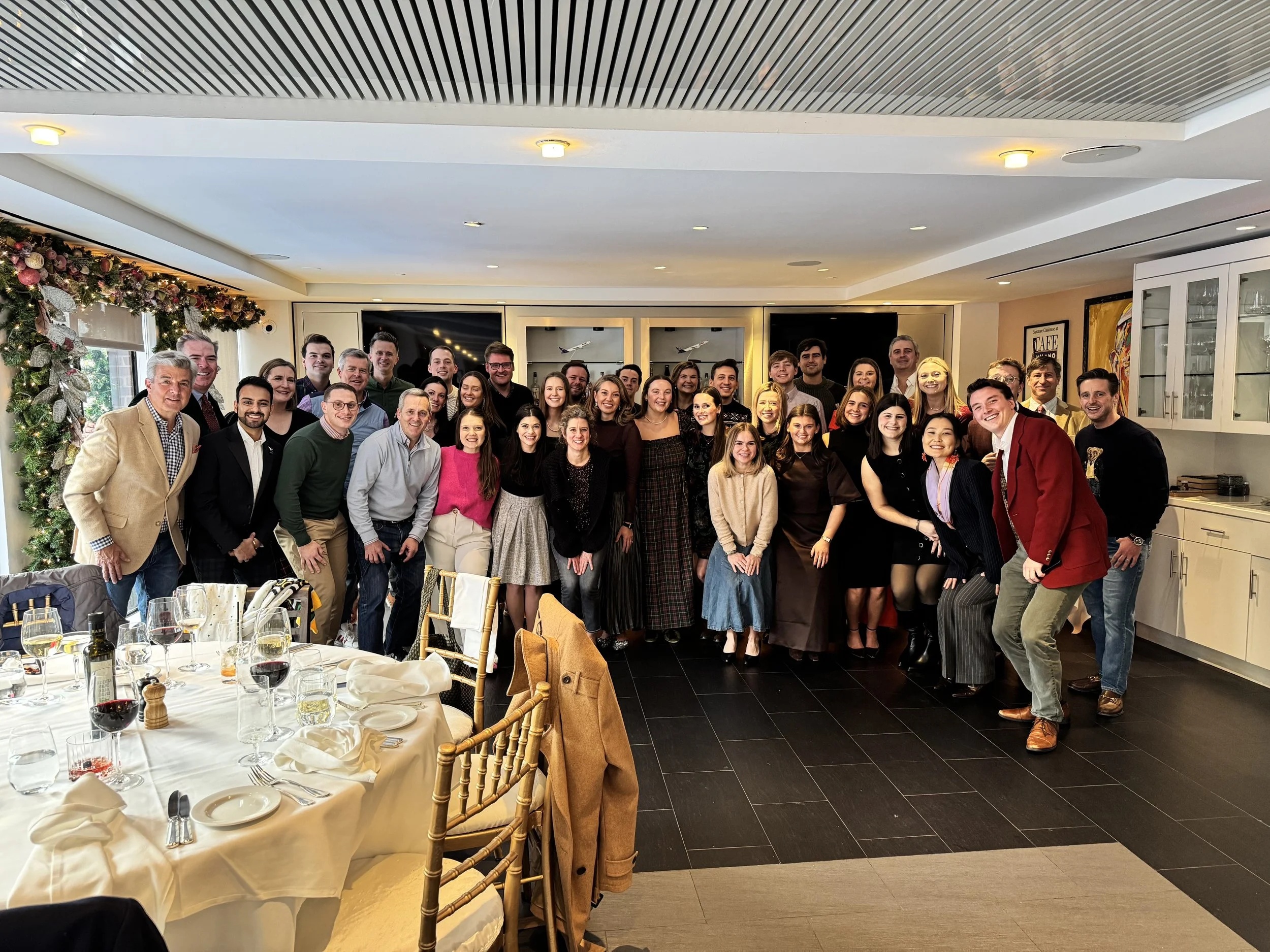
The wider professional setting appears in the Advocus Partners team directory, which lists Snedeker under The Herald Group. Advocus describes a bipartisan public affairs and advisory business, with services including federal, state and local government affairs, research and strategic communications. The listing places him within a broader collection of public affairs professionals. It is a documented connection, with the practical significance of an organization extending beyond a single office.
A workplace has its own arithmetic
In September 2026, The Herald Group announced recognition as a Top Agency Workplace in PR Daily’s awards. Its account included 17 new hires and 11 promotions in 2025. It also described peer-led training, workshops and mentoring. These are firm-wide developments. They give a current view of the workplace around Snedeker, without turning a collective award into an individual accomplishment.
Firm-wide figures reported by The Herald Group in its September 2026 workplace announcement.
There is a small, pleasingly human detail in the same account. Employees pass a “Dundee” award to a colleague each week. Recognition has acquired a ritual, along with the more formal machinery of professional development. A workplace can count appointments and promotions. It can also make room for colleagues to notice one another. The two forms of recognition occupy different places in the working week.
“The strength of this firm has always been its people.”
Hallie Neibauer, director of people and culture, The Herald Group
A life beyond the operating plan
Snedeker’s hometown is Summit, New Jersey. He studied business administration at Washington and Lee University. Away from work, his interests include live music, fishing and sports. Those details add a little ordinary life to a career described through organizations and responsibilities. They need no grand theory attached to them. A concert can remain a concert; a fishing trip can be allowed to escape the quarterly forecast.
The interesting feature of his working life is the movement between businesses while keeping a recognizable professional focus. The telecom office, the digital agency, the consumer brand and the public affairs firm each supply a different setting. Together they offer a story about the business arrangements beneath a public identity. Every organization has a version of those arrangements, however much attention its outward work attracts.
Look at a communications firm through this lens and another cast of characters enters the picture. Alongside the people shaping an argument are the people deciding how the work will be staffed and sustained. Snedeker’s career gives that part of the organization a name. The promise still goes out into the world. Inside the business, someone has to make sure there is a plan for keeping it.