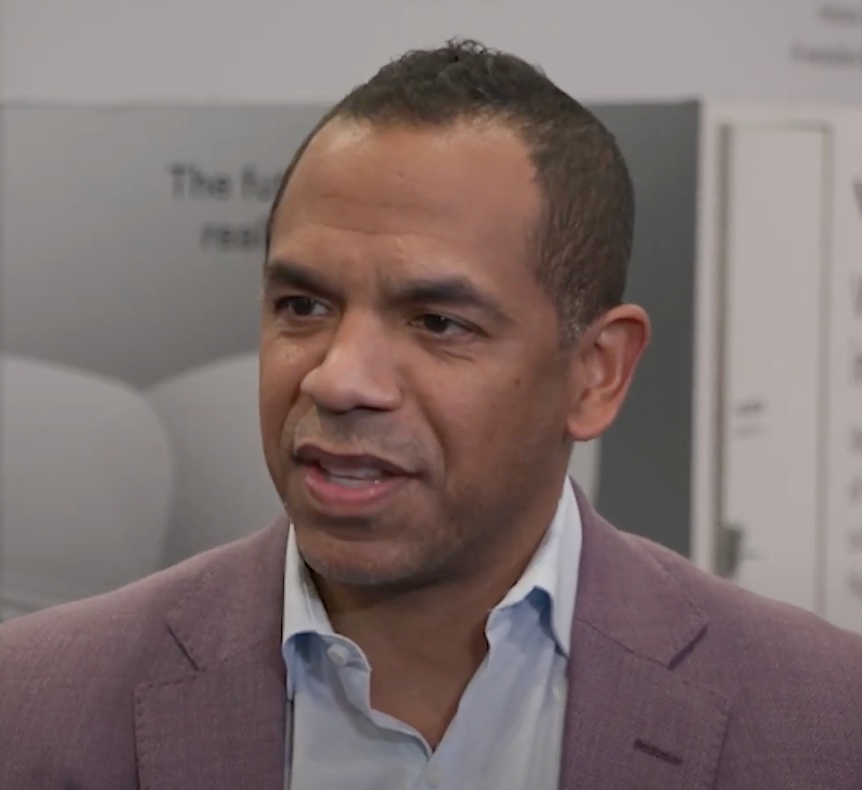
Doug Thornell had a government degree and an idea that involved getting away from government. After college, he returned home and considered moving to Los Angeles to work in sports or entertainment. Instead, he was in his parents’ basement, without a job, when his mother suggested a campaign. She had worked on Robert F. Kennedy’s 1968 campaign. Perhaps her son ought to try one, too.
He took an internship with Al Gore’s presidential campaign and was sent to Iowa. There he fell for politics. Later, uncertain about continuing, he left for Costa Rica, lived by the beach, learned to surf and studied Spanish. Eventually he came back. The career that followed would put him on Capitol Hill, on the presidential campaign trail, and at the head of SKDK.
The detour deserves a place in the biography. Washington careers are often described as though somebody drew the route before departure. Thornell’s included a mother’s suggestion and an ocean. The government degree looks wonderfully predictive in retrospect. At the time, its owner was considering quite another line of work.
Before the talking points, a football roster
At Cornell, Thornell studied government and played varsity football. The university’s 1995-96 roster lists him as a freshman wide receiver from Silver Spring, Maryland, and a graduate of Sidwell Friends School. Before he had a professional audience, he had a position on a team.
A roster is a pleasingly unromantic document. It gives a name, a hometown, a school and an assignment. Nobody gets extra credit for having a promising personal brand. For Thornell, those lines locate the beginning of the story in Maryland and Ithaca, rather than in the conference rooms where his later career unfolded.
He completed his bachelor’s degree in government in 1999. His first political organizing work came with Gore’s 2000 presidential campaign. That sequence puts the Iowa experience close to the start of his working life. The move into politics was a practical experiment, undertaken before the reassuring accumulation of titles. It turned into an occupation.
- MarylandHome & school
- IthacaCornell & football
- IowaGore campaign
- WashingtonCongress & SKDK
A spokesman travels with the argument
By Howard Dean’s 2004 presidential campaign, Thornell was a traveling spokesman. He subsequently held senior roles at Democratic campaign organizations and advised the Congressional Black Caucus and Chris Van Hollen. His assignments covered the Democratic Senatorial Campaign Committee, the Democratic Congressional Campaign Committee and, later, media strategy for the Democratic National Committee.
The titles describe different kinds of proximity to power. Organizing means persuading people to participate. A traveling spokesman carries a candidate’s case into a moving conversation. Advising on Capitol Hill brings the argument closer to the machinery that turns political promises into decisions. Thornell worked across those settings, rather than learning Washington from a single desk.
His work with Van Hollen and the DCCC became part of the experience he brought to private clients. A campaign spokesman has to know both the prepared answer and the question that could make it useless. That is a useful education for anyone who will eventually train an executive to face a microphone. The polished sentence still needs somewhere solid to stand.
The useful question is outside the Beltway
Thornell joined SKDK in 2011. By the time he appeared in PRWeek’s 2015 40 Under 40 class, he was helping build its public affairs practice, advising political, energy and technology clients, and training CEOs, candidates and nonprofit executives for interviews. His colleague Kelley McCormick credited him with turning campaign and congressional experience into practical client counsel.
He also launched Beyond the Beltway Insights, a joint public polling initiative with Benenson Strategy Group. The name made a small declaration of intent: an argument that sounds convincing in Washington still has to survive contact with people elsewhere. Asking those people questions is a sensible place to begin.
Media training and polling sit on opposite sides of the same exchange. One helps a speaker communicate; the other asks what listeners think. Bringing them together makes persuasion less of a monologue. A client can rehearse an answer all afternoon, but rehearsal alone will never reveal whether the audience cares about the question. Thornell’s work already spanned both ends of that conversation.
Thirty markets, and an earlier invitation
For the NAACP in 2020, Thornell ran an advertising program across 30 markets. It began in July, recruiting volunteers through radio, digital advertising and some television. Those volunteers then spoke with infrequent voters in the fall. The schedule matters as much as the geography: the invitation arrived before the closing weeks of the election.
In a 2022 interview, he argued that campaigns should treat their base as people who still need persuasion, rather than simply as turnout targets to be contacted near election day. His formulation was compact: “base voters are persuasion voters.” Political allegiance, in this view, does not excuse a campaign from making its case.
That approach gives organizing a central place in the advertising story. An ad can recruit somebody who then becomes a messenger. The paid communication leads to a person-to-person conversation, which may reach somebody the original ad did not move. For all the money and machinery attached to political media, the last step can still be one person asking another to show up.
“base voters are persuasion voters”
Doug Thornell, 2022
Maryland provides the test
In 2022, Thornell was lead media consultant and a top strategist for Wes Moore’s winning gubernatorial campaign. He also worked as media consultant for Glenn Ivey. Both Maryland candidates won competitive Democratic primaries after beginning their campaigns double digits behind, and SKDK worked on their advertising and strategy.
When the primary results arrived, Thornell emphasized the candidates’ willingness to campaign everywhere, the effort of their teams, and the combination of a clear message with a persuasive personal story. Economic opportunity, education and safer neighborhoods were among the issues he identified. The explanation gave room to the candidates, organizers and message, rather than awarding the entire victory to an advertisement.
SKDK’s Moore work included ads titled “A Different Way,” “Different,” “Oprah” and “Must Change.” Even that short list suggests how many entries a candidate’s story can have. A voter might meet the candidate through his own argument, an endorsement, or a demand for change. Each piece has to make sense on its own while belonging to the same campaign.
Thornell’s advertising department produced more than 700 ads that year. That figure measures department output, not ads he personally wrote. It does reveal the scale of the operation he oversaw. Maintaining a recognizable argument across that much work is an editorial challenge as well as a production task: repetition can help a message, while inconsistency can quietly undo it.
Ads produced by the department Thornell oversaw
Sometimes the strategist asks the questions
Thornell also helped create a place for political practitioners to talk at greater length. With Adrienne Elrod, he hosted The Electables, a podcast whose archive includes conversations with James Clyburn, Anita Dunn, polling specialist Tom Bonier and the NAACP’s Dominik Whitehead. The show ran in 2019 and 2020, bringing campaign mechanics into the foreground.
A November 2020 episode reunited him with longtime friends Jon Bernthal and Gareth Schweitzer. Their conversation about the election also drew on growing up in Washington. The guest list offers a less formal map of Thornell’s connections: a political adviser, an actor and a business executive sharing a history that predates the day’s professional introductions.
The archive is worth browsing for the change of pace. A political ad must fit an argument into seconds. A podcast can ask how the argument was chosen, what the numbers suggested, and who had to be persuaded first. Thornell’s career has made room for both the compressed message and the longer conversation that explains the work behind it.
The corner office comes with colleagues
SKDK announced Thornell’s selection as its next CEO in August 2022, with the transition scheduled for year-end. He identifies 2023 as the start of his tenure. Josh Isay moved into a senior counsel role, and Thornell took responsibility for day-to-day operations alongside the firm’s partners. He had become a partner himself in 2020.
The appointment placed a Black executive at the head of a major public affairs and political consulting firm, in an industry where such leadership remains uncommon. It also expanded his job beyond the paid-media practice. Running an agency means attending to the people who make the work, the clients who commission it, and the business that allows both to continue.
PRWeek included him in its Power List in 2023 and 2024. Recognition is one part of the record; the allocation of responsibility is another. SKDK introduced a mentoring program and a forum called The Lightbulb in 2024, giving staff a place to share ideas and feedback with leadership. An agency depends on people speaking up internally as well as speaking effectively for clients.
The audience has changed screens
By January 2025, Thornell was at CES discussing artificial intelligence and agency processes, along with changes in political spending after the 2024 election. The setting moved the conversation from Washington’s familiar political calendar to the technology that increasingly determines how a message reaches anybody at all.
On February 5, 2026, SKDK announced that Wavelength Strategy was joining the firm. The stated aim was coordinated advertising across conventional television, streaming services, social media and emerging platforms. Wavelength would keep its existing name through 2026. For Thornell, the business decision addressed a straightforward audience habit: people move among screens, and campaigns need a coherent strategy across them.
That is a more demanding assignment than finding a new home for a television spot. Different screens offer different amounts of time, different surroundings and different ways for a viewer to leave. An argument has to remain recognizable as its shape changes. The voter with the remote has very little sympathy for an agency’s organizational chart.
In July 2026, SKDK named Veracelle Vega chief operating officer, with responsibilities spanning talent, capabilities and execution of the firm’s strategy. The appointment belongs to the same practical question as the Wavelength deal: how to organize a company for the work its clients now require.
Thornell’s route gives those decisions a human scale. A young graduate tried a campaign. An organizer became a spokesman, then an adviser, then a leader of people doing those jobs in many forms. There was room along the way for a beach, football, old friends and a microphone turned toward somebody else. Washington got him back. It took a few other places to make the journey his own.