The apartment came without a business plan
Tom Harari moved from Philadelphia to a walkup in Park Slope and discovered that his new building lacked a washer and dryer. It was an awkward omission for a person who intended to continue wearing clothes. Colleagues explained the local arrangement: someone could collect the laundry and bring it back. The city had already invented a solution. Unfortunately, using the solution could become another chore.
There were cash payments, trips to the ATM, unanswered calls and delivery windows large enough to swallow an afternoon. Harari and his future co-founders, Itay Forer and Chen Atlas, began testing a different arrangement. They collected friends’ laundry around their day jobs, carrying bags through New York during lunch breaks and after work. Before the company offered convenience, its founders supplied a considerable amount of inconvenience themselves.
That origin is pleasingly ungrand. A missing household appliance produced a business problem with actual addresses, actual bags and very little room for philosophical disagreement. The laundry either came home or it did not. Harari’s later career would take him into other companies, bookmarking software and fiction. But the first question was wonderfully easy to understand: could getting clean clothes require less of a person’s day?
A delivery window is a promise
Cleanly was testing an early product in October 2013. Its app reached Apple’s store in March 2014. Harari’s explanation at the time placed the emphasis on logistics: local laundromats already knew how to clean clothes. He wanted to improve the surrounding business of collection, payment and return. The founders visited laundry operators across Manhattan to learn the trade before widening their service.
They identified three things customers cared about: price, cleaning quality and delivery flexibility. For the busy professionals they hoped to serve, a convenient handoff mattered particularly. This was a fairly intimate form of product research. A person might tolerate a mediocre website; a missing work shirt had a more immediate audience.
The early app let customers specify when they would be available. Cleanly worked with laundromats that met standards for sorting clothes and using appropriate temperatures. Harari also described a design goal that sounds almost impolite by today’s internet standards: get people into the app, place the order and let them leave. The less time the customer spent admiring the software, the more convincingly it had done its job.
- 01 / BOOKChoose a handoff time.The customer’s part.
- 02 / COLLECTGet the bag to the cleaner.The logistics problem.
- 03 / RETURNBring the clothes home.The promise kept.
The graph went up. The bags still weighed the same.
Y Combinator admitted Cleanly to its Winter 2015 batch. Forer later recalled two unsuccessful applications before the team got in. By then, he said, they were bringing in roughly $60,000 to $70,000 in monthly gross revenue from a handful of Manhattan zip codes. The founders had already put their savings into the venture. Acceptance arrived after the work had begun to produce evidence.
Forer remembered a third application submitted just after the deadline, a second interview and the eventual acceptance call from Garry Tan. The details puncture the immaculate founding myth. Here was a team working its way through repeated applications while running a service whose customers needed their clothes back tomorrow.
By late February 2015, Harari was looking at a chart showing weekly orders rising by an average of 25 percent. Coverage had expanded from two New York neighborhoods to much of Manhattan. He would soon have 150 seconds at Demo Day to explain the business to a room of investors, entrepreneurs and journalists.
He could still see the comic distance between the setting and the service. Other founders were working on technically ambitious projects; his team moved laundry. “We’re delivering laundry,” he said. That self-deprecation is part of the appeal. A growth chart can make any business look weightless. The business underneath this one required somebody to carry the bag.
Average weekly order growth reported during the run-up to Y Combinator Demo Day.
His father had a different measure
Harari had another example of working life close at hand. His father was a self-employed house painter after the family moved to the United States. In 2016, Harari described the lesson he had taken from watching him: “be obsessed with perfection in your craft.” His father’s reputation rested on the quality of the work that clients could see.
A painted room and a delivery app belong to different economies, but the comparison is useful. Both leave an ordinary person judging whether a promise was kept. A customer does not encounter a company’s funding round. The customer encounters the result. In laundry, that result arrives folded.
The father’s example also supplies a quieter counterpoint to the graphs. Harari was learning to build a company that could grow, while carrying a standard inherited from work done one room at a time. Those aims can coexist. Keeping them together becomes harder when the orders multiply.
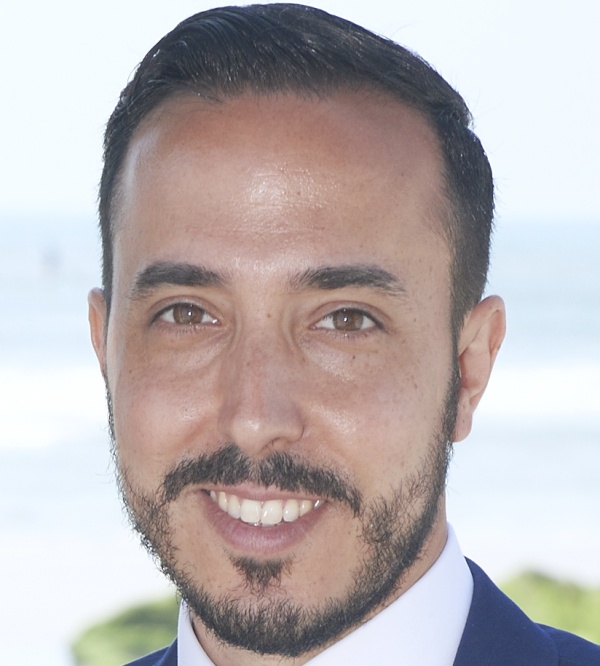
Photo: Cleanly, via Entrepreneur, 2016.
A shirt has to earn its ride
By 2017, Harari was publicly emphasizing customer satisfaction alongside unit economics: the money made or lost on the service being delivered. He told Crunchbase News that Cleanly offered guaranteed one-hour delivery windows, early and late pickups, and driver tracking. He also reported that 2016 revenue had grown fourfold over the previous year.
That same year, Cleanly announced the purchase of The Dhobi and Do Laundry for Me. Its offering included a way to attach photographs of stains to an order. The detail is almost comically specific, which is precisely its value. Somewhere between a customer’s tap and a returned garment, someone had to know which mark needed attention.
In March 2020, Cleanly and NextCleaners announced their merger under the name By Next. NextCleaners brought a physical network of more than 15 retail stores. Kam Saifi became chief executive of the combined company; Harari became executive chairman. The change joined Cleanly’s technology to cleaning infrastructure and marked the end of his tenure as the standalone company’s CEO.
The original proposition had concentrated on moving clothes between people who owned them and people who could wash them. The combined business put more of that journey under one organization. The practical work had kept asserting itself.
The next pile was made of bookmarks
Harari’s career continued beyond laundry. He joined the founding team at REGENT, and his professional record includes an MBA from MIT. Another project, dewey, began with a familiar irritation: saved social posts that were difficult to find again. He and Alex Prober made a tool to retrieve and organize them. The household errand had acquired a digital cousin.
Dewey started as a free product in 2021. In a March 2024 essay, Harari said it had attracted more than 20,000 users, while server bills ate into the founders’ savings. They introduced a paid model in January 2023. Keeping the service available meant giving it a way to pay for itself.
He was explicit about the lesson he carried from venture-backed company building. Pressure to maintain growth could pull a business toward choices that did customers little good. For dewey, he favored profitability, control over the pace and direct replies to support requests. He called the project “a labor of love.” The affection still required a functioning bank account.
The tool now organizes saved material across multiple services, with search and export among its functions. Its promise is modest and recognizable: the thing you saved should still be there when you need it. Having once arranged the return of shirts, Harari was helping people recover their own attention.
An appointment after five
In a public post about leaving startup life in December 2022, Harari described writing a set of anti-goals. He wanted work without the permission structures of boards and investors, small partnerships with people he trusted, and projects he enjoyed doing. He also wanted evenings and weekends with his daughter. After five o’clock was family time.
The list was concrete enough to be tested against a calendar. That matters. A vague wish for balance can survive any amount of overwork; a rule about the end of the working day has to meet the clock. He reported writing, starting a coaching practice, and launching a software business. The proposed break had evidently encountered an entrepreneur.
There is an irony here that does not need much assistance. Cleanly’s sales pitch concerned the hours customers could reclaim. Years later, Harari was specifying which hours he wanted to keep. His question had become personal, and the answer included somebody too young to care about a growth chart.
“I want work to feel like play.”
Tom Harari / on his anti-goals, 2023
The manuscript has no delivery window
By August 2026, Harari was writing a debut techno-thriller. He described rereading thriller novels and reverse-outlining them to study pacing. He had not decided between seeking an agent and self-publishing. The stated ambition was straightforward: make the work as good as he could and bring it to readers.
He disclosed one theme: the relationship between boys and their fathers. In the same update, he wrote about heading away with his wife and children. The newsletter put craft, family and travel on the same page. The subject matter had changed since Cleanly; his interest in how work fits inside a life was plainly present.
His reading had become a public project too. In March 2026, he invited subscribers to work through Spinoza’s Ethics using George Eliot’s translation. They had previously read Montaigne’s Essays. By August 19, he had reached the final part of Spinoza, discussing understanding, freedom and how to live well.
He wrote as a reader willing to be puzzled, checking an earlier interpretation and going back through a difficult passage. It is an agreeable departure from the executive obligation to sound certain. A book club can admit that a paragraph needs another attempt.
Harari’s story began with an errand he wanted out of the way. It now includes a manuscript that demands sustained attention, and books that refuse to hurry. The spare time has found something to do. Somewhere along the route from Brooklyn laundry bags to Spinoza, he began choosing tasks he wanted to spend his hours on.