Tom Barton had made it into venture capital, the business where other people do the worrying and you get to ask about their margins. He discovered that he missed the worrying. After roughly a year and a half, he wanted another operating job. His explanation was unusually economical: “I was frankly bored doing that.”
The job he chose involved selling servers. This was the early 2000s, after the internet bubble had burst, when starting a fight with established computer manufacturers required either a persuasive argument or a defective sense of timing. Rackable Systems had an argument. Big internet companies needed large numbers of ordinary machines, arranged and deployed in ways the established suppliers were failing to provide.
Barton joined as CEO in December 2002. By 2005, Rackable was public. Two decades later, he is applying a related argument to satellites: perhaps some of the expense and delay people accept as inevitable can be designed out of the system. Antaris, which he co-founded in 2021, is where he is testing that proposition. The distance between a server rack and an orbiting spacecraft is considerable. His business question has travelled remarkably well.
Three Stanford degrees, then the server room
A Silicon Valley native, Barton had a father who taught law at Stanford for decades. He collected three Stanford degrees himself: a BA, a BS and an MBA. History and industrial engineering sat alongside the later business training. It is an education with room for both how institutions behave and how systems work, although his eventual employers supplied plenty of additional instruction.
His career included McKinsey, Cygnus Solutions and Red Hat, followed by venture investing at Lightspeed. Cygnus and Red Hat put him close to the commercial development of open-source software. The underlying idea was important: businesses could make money helping customers use shared software, while customers gained an alternative to closed, proprietary systems.
At Rackable, the problem was more physical. Internet companies were building data centers at a scale that made the arrangement of servers a business issue. Yahoo, Microsoft and Amazon became important customers. Barton’s job was to build a company around their requirements. A rack could look unremarkable and still contain a very good answer to an expensive problem.
During his tenure, annual sales grew from about $25 million to $360 million. The public offering in 2005 supplied a conspicuous milestone, but the customer list carried its own complication. When a few enormous buyers account for much of your business, their purchasing schedules can make your quarterly results look temperamental. Growth came with a dependency that required managing.
The salesman’s million dollars
Barton’s account of managing a valuable salesperson is more revealing than a list of executive appointments. The employee had become a central strategic-account seller. Losing him would have hurt. Barton approached the compensation discussion by laying out the company’s numbers, the growth it wanted and the assumptions behind a possible million-dollar year for the salesman.
The commission rate followed the calculation. Both sides could examine what the employee needed to sell and what the company expected to gain. The approach left less room for an annual performance review to become a theatrical production in which everyone pretended the other person had no idea what money was.
In that conversation, Barton described a willingness to pay above the market for people whose performance justified it. The detail matters because it turns an agreeable management principle into a decision with a price attached. Transparency meant showing the arithmetic. Generosity meant being prepared to honor it.
Another negotiation story concerned a semiconductor customer whose chip was selling poorly. The customer wanted more features in the supporting toolchain, and the relationship had become acrimonious. A colleague proposed that they offer to end the contract and withdraw gracefully. The customer backed down. Barton remembered the episode as a lesson in recognizing when an unhappy customer still needs the relationship.
A planet changes the management problem
At Planet Labs, Barton became chief operating officer. The company’s work offered a different kind of scale: imaging satellites circling Earth and returning pictures of a changing planet. His responsibilities included building the leadership team. He hired Karthik Govindhasamy as CTO, along with senior finance, marketing and revenue executives.
During Barton’s time there, Planet deployed large imaging constellations and acquired Google’s Terra Bella satellite business. The work connected organizational decisions to objects already in orbit. Hiring, partnerships, software and physical hardware all had to serve an operating system much larger than a single machine.
It also introduced a management problem that could not be resolved with a better sales commission. Some employees objected to selling imagery to particular customers. Barton has described concerns involving government use, Saudi Arabia and oil and gas companies. Planet formed an ethics committee and commissioned an outside assessment of questions around selling to the US government.
He recalled explaining the process and its conclusions to employees, including conditions around the use of imagery. The story shows a working method: make the decision process visible, bring in outside judgment and explain how the result will be applied. A satellite company still contains people, each arriving at work with convictions that do not disappear when the launch countdown begins.
The computer business, with a launch date
His route to Antaris included further executive jobs. A brief period as Tintri CEO in 2018 was followed by the top job at Diamanti, whose infrastructure supported containerized applications. Containers let software teams package and move applications more consistently. Barton was again working in a market where customers wanted complex technology to become easier to deploy.
He and Govindhasamy had worked together at Planet before founding Antaris in 2021. They had encountered the costs, long schedules and awkward integrations involved in satellite development. Their response was to bring more of the work into software, where a team could test decisions before committing to the physical spacecraft.
Barton’s own writing makes the connection explicit. In 2023, he argued that satellites should benefit from the changes that had reshaped personal computers and servers. More interchangeable components, accessible software and better supply chains had expanded those markets. He believed space was ready for a similar change. That is his thesis, with the optimism and commercial interest of a founder attached.
The resulting platform connects design, simulation, flight software and operations. TrueTwin provides a virtual environment for testing proposed missions. SatOS supplies spacecraft software. Design Studio and Command Center address other parts of the process. The intended benefit is continuity: decisions made during design should survive into testing and operation without becoming a fresh integration project at every handoff.
“We created Antaris to make space easy.”
Tom Barton, August 2022
Ten months to something you can launch
JANUS-1 gave the argument a physical test. The 6U demonstration satellite carried five payloads and launched on February 10, 2023. Before launch, Antaris had announced that the project reached launch readiness in ten months, with eight participating organizations across seven countries. XDLINX Labs and Ananth Technologies were the principal manufacturing partners; ATLAS Space Operations provided ground services.
Antaris reported costs 75 percent below comparable missions. That is the company’s comparison, rather than a universal price promise. The more concrete achievement was getting a collaboratively developed spacecraft ready and then into orbit. Software still needed manufacturing partners, components and a launch. The point of the platform was to let those participants work together with fewer delays.
From concept to launch readiness
The company subsequently released open-source components including a satellite design library, a payload development kit and a hardware abstraction layer. These are practical extensions of a belief that appears throughout Barton’s career: a supplier can build a business while making it easier for other organizations to participate.
Forty trips to Japan, and more work ahead
By 2026, Barton’s pitch included the development of space capability within other countries. In February, Antaris and SARsatX announced an agreement for an initial 16-satellite radar and optical Earth-observation constellation for Saudi Arabia. The plans included local manufacturing, integration and skills development. An agreement sets out an intention; delivering and operating those satellites remains a separate undertaking.
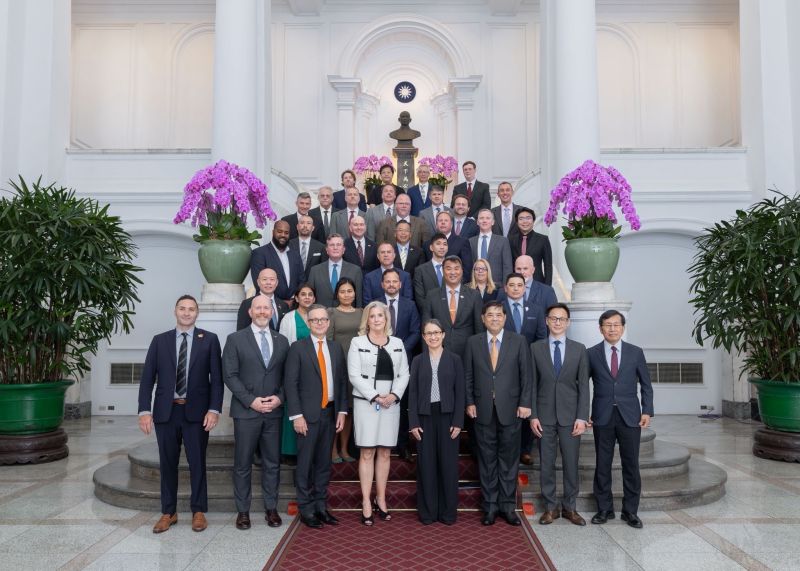
In March, Antaris announced work with Intralink to develop its business in Japan. Barton said he had visited the country more than 40 times and described a longstanding personal interest in the market. It is a welcome specific detail in an industry fond of announcing that its ambitions are global. Forty visits suggest familiarity acquired through airport queues as well as presentations.
That month also brought the announced first close of a $28 million Series A led by WestWave Capital, with Lockheed Martin Ventures participating. In July, Antaris established the defense mission-virtualization business Aeonyx, led by John Trionfo in Colorado Springs, while Antaris Global continued its international satellite work. The organization was changing as its customers’ requirements diverged.
Experience has not relieved him of the practical work of raising money. For the Series A, he sought help reaching family offices interested in space, despite already having access to venture firms and strategic investors. He described the extra introductions as insurance against overconfidence about how quickly a round would close. It is a useful companion to the story of leaving venture capital: years later, the operator still has to think carefully about who belongs on the other side of the table.
For Barton, the challenge is recognizable even as the equipment changes. Assemble people who understand different parts of a system. Give them a way to work together. Make the economics explicit. Then see whether customers get something useful. It is an interpretation of a career that has repeatedly returned him to operating jobs. A spacecraft is a demanding place to test it. At least he has found plenty to keep him occupied.
Continue the conversation
- Tom Barton on LinkedIn ↗
- Antaris: platform, missions and company updates ↗
- Watch: Scaling, Strategy & Negotiation with Stan Christensen ↗
- Listen: Barton on software-defined satellites, July 2026 ↗
- Read Barton’s essay on satellites and commodity servers ↗
- The 2006 Rackable interview ↗
- The July 2026 Aeonyx announcement ↗