Buildings are excellent at taking credit. They stand in flattering light, acquire handsome names and appear in photographs beside people holding ceremonial scissors. The financing that makes them possible receives rather less applause. Todd Schuster has spent his career on that side of the picture, where the questions concern a borrower, an investor and what happens when the promised money fails to arrive.
His founding business, CW Financial Services, gathered several of those questions under one roof. There was a company to finance property, another to invest in real estate debt and a third to manage difficult loans. It was an organization built around the financial life of a building, including the chapters an owner would generally prefer to skip.
Schuster led CW until 2009. Later came executive responsibilities at Ares and a board seat at TPG RE Finance Trust. Follow those moves and a consistent subject emerges: the institutions that put money into property, the arrangements that support them and the work required after a transaction has acquired its celebratory handshake.
Three businesses, one financial life
CW took shape in the early 1990s. Its principal operations eventually included CWCapital, the mortgage banking business; CWCapital Investments, the investment adviser; and CWCapital Asset Management, the special servicer. The names were close enough to require attention. Their jobs were different enough to make that attention worthwhile.
A lender helps an owner obtain financing. An investment manager puts capital to work on behalf of investors. A special servicer handles loans that need particular attention, including troubled situations. Bringing those functions into a group creates several ways of participating in the same market. It also creates several kinds of responsibility, each requiring its own people and judgment.
Mortgage banking
Investment management
Special servicing
Later accounts of Schuster’s tenure describe a group with 400 employees. CWCapital Investments managed approximately $10 billion. CWCapital Asset Management was named on securitizations and investment structures with more than $175 billion of underlying collateral. Those figures describe different things. Adding them together would produce an impressive number with very little meaning, a temptation finance already supplies in sufficient quantity.
The useful point is the breadth of the operation. A founder running this collection of businesses had to think beyond the next loan closing. Origination, investment decisions and the handling of distressed debt placed different demands on the organization. Schuster’s CW chapter involved building the company around those demands, rather than treating property finance as a succession of isolated transactions.
The capital behind the capital
Before CW, Schuster worked in the commercial mortgage finance units of Salomon Brothers and Bankers Trust in New York. His degree was a Bachelor of Arts from Tufts University, awarded in 1982. The subsequent career was thoroughly concerned with the practical business of credit: where money comes from, where it goes and who remains responsible for it.
A consequential turn arrived in September 2002. Schuster led CW’s combination with a subsidiary of the Caisse de dépôt et placement du Québec, the Canadian pension fund manager. The transaction connected a commercial mortgage business with an institutional capital provider. For a business that finances other people’s property, its own relationship with capital is a central piece of the story.
A 2008 snapshot gives the company a more tangible scale: more than 306 employees in 14 offices across the United States as of May 31 that year. That is a business with geographical reach and the everyday complications of coordinating teams. Behind a portfolio figure are credit decisions, operating systems and colleagues who need to understand the same obligations.
Schuster’s CEO tenure ended in 2009. The businesses subsequently followed their own corporate paths. In September 2012, Walker & Dunlop completed its acquisition of CWCapital LLC, the mortgage banking operation. It was one part of the wider CW organization. Keeping that distinction in mind makes the history easier to follow: a familiar name can remain visible while ownership and business boundaries change around it.
An outside director takes the wheel
At Ares Commercial Real Estate Corporation, Schuster initially sat on the other side of the management table. He served as an independent director and audit committee member before the company appointed him co-CEO, effective June 1, 2013, alongside John Bartling. He also became a senior partner at Ares Management. The move put an existing board member into daily executive responsibility.
The appointment arrived with an acquisition plan. ACRE agreed to buy Alliant Capital LLC, a multifamily mortgage origination and servicing business, for approximately $62.8 million in cash and shares. At the time of the announcement, Alliant had about 90 employees across 15 offices and a servicing portfolio of approximately $3.9 billion. Schuster already held a board role at an Alliant affiliate.
The attraction was practical. Alliant brought Fannie Mae lending capabilities and a mortgage-servicing business. Those operations could add origination fees and servicing income to ACRE’s direct lending activities. Servicing extends the relationship beyond the day the mortgage is made. The acquisition offered another way to earn revenue while broadening what the company could provide to property owners.
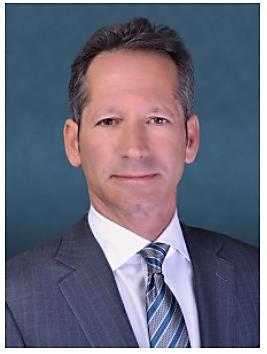
The tie is formal. The subject is cash flow. Schuster pictured in a 2015 commercial real estate feature.
Alliant’s acquisition closed in August 2013, and the business became ACRE Capital. Schuster subsequently served as ACRE’s CEO and president. The operational family resemblance to CW is visible: mortgage origination and servicing alongside investment activity. He was working again with a collection of related capabilities, this time inside a public company whose investors could ask about the results every quarter.
The price of keeping money moving
In August 2014, ACRE entered a $180 million financing facility with MetLife and completed a $308.7 million securitization. The company also added a $75 million City National Bank facility that summer. These arrangements belonged to the funding side of the lending business. A property lender needs reliable access to money before it can reliably provide money to anyone else.
The results could still be uneven. In the third quarter of 2014, Schuster described earnings pressure from loan prepayments and the continuing development of the mortgage banking operation. A prepaid loan returns capital, but it also changes the lender’s expected income. Building a new line of business carries costs before the hoped-for production arrives. An expanding product menu comes with a bill.
His public commentary also addressed interest rates. In a 2015 discussion of ACRE’s lending business, approximately 90 percent of loans held for investment carried floating rates, alongside approximately 93 percent of liabilities. Schuster expected higher net income if LIBOR rose. It was a view about that portfolio at that time, dependent on how its assets and funding behaved together.
“We expect our net income to go up as well.”Todd Schuster, discussing a potential LIBOR increase, 2015
That small sentence captures the arithmetic behind a much larger enterprise. A lender considers the income its loans produce alongside the cost of financing them. Loan size alone cannot tell the whole story. The spread, repayment timing and access to fresh capital all matter. A handsome building can be financed by an arrangement that is considerably less handsome.
Schuster’s Ares responsibilities extended beyond the listed company. He held senior real estate credit responsibilities and sat on investment committees covering debt and equity vehicles in the United States and Europe. His work also included raising and investing Ares’ first private commercial real estate credit vehicle. The public lender was one part of a broader set of investment responsibilities.
The view from the boardroom
In August 2015, Schuster resigned as ACRE’s president, CEO and director. His Ares Management tenure ended the following month. John Jardine and Robert Rosen took on the announced co-CEO responsibilities at ACRE, with Rosen serving on an interim basis. For Schuster, another operating chapter had closed; the career remained connected to credit and investment.
He joined the board of TPG RE Finance Trust in July 2020. Its April 2026 proxy continued to identify him as a director and as founder and head of Rivrock Group, a stakeholder in a company managing a hedge fund for a separate account. The role at TPG returns the story to oversight, informed by years spent managing businesses with borrowers, investors and funding partners of their own.
There is a useful continuity across those chairs. At CW, he assembled and led businesses that dealt with different stages of property finance. At Ares, he worked within a larger investment organization while running a public lender. At TPG RE Finance Trust, he brings that experience to the board. The responsibilities have changed; the financial questions remain recognizably related.
Schuster’s story gives the unphotographed part of real estate a human shape. There are teams to build, institutions to work with and obligations that persist after a loan has been signed. The property may supply the attractive façade. The financing still needs people prepared to mind the accounts when everyone else has gone home.