Ivan Kaufman sold the mortgage company. He kept the name. In 1995, after taking Arbor National Holdings public and agreeing to sell it to Bank of America, he retained the commercial business and the word Arbor. A transaction that might have supplied a comfortable ending became the setup for another company. Three decades later, he is still working on the consequences of that decision.
There is a pleasing inconvenience in Kaufman’s career: the graduation dates refuse to wait their turn. He started the business that became Arbor in 1983. He graduated from Hofstra Law in 1985. The company was already under way while its founder was learning how to read the documents on which companies depend. Most students have homework. Kaufman also had a mortgage business.
Today he is founder, chairman, president and chief executive of Arbor Realty Trust, the publicly traded real estate lender. The job places him between apartment owners who need money and investors who expect it back. That description is less glamorous than the language of property empires. It is also more useful for understanding both his long run and his present difficulties.
The name that escaped the sale
Before Arbor was Arbor, Kaufman started American Mortgage Banking at 23. Its initial name offered an elementary marketing advantage: it appeared near the beginning of an alphabetical list. Later, an employee naming contest produced Arbor. The tree connection gave the business a community identity, and the company developed a tradition of planting a tree to mark a closed loan.
The detail is almost disarmingly modest. A firm financing houses acquired a name that could be planted outside one. In June 2023, employees marked its fortieth anniversary by planting an Eastern Red Cedar at Tanglewood Preserve in Rockville Centre, New York. Forty years of financial engineering, commemorated with something that required a shovel.
The original residential operation reached 25 branches across 11 states. Arbor National Holdings went public in 1992 at $9 a share; the 1995 sale price was $17.50. Those are two transaction prices, rather than a complete account of anyone’s investment return. They nevertheless show the distance between the early mortgage operation and the business Bank of America bought.
Keeping the commercial arm gave Kaufman something more practical than a souvenir. It provided the basis for continued multifamily lending and, eventually, Arbor Realty Trust. The REIT began in 2003 and went public in April 2004. In 2016 it acquired the agency lending platform of Arbor Commercial Mortgage. The name survived; the business underneath it kept changing.
A law degree with a different destination
Kaufman studied business administration at Boston University and worked in mortgages and real estate before entering Hofstra. He went to law school intending to become a businessperson. A legal qualification was a tool he wanted to use in negotiations, purchases and sales. The courtroom was never the necessary destination.
His account of the education is unusually concrete. Contracts taught him to examine what an agreement actually required. Classroom discussions taught him to listen to competing answers. “We gather everybody’s point of view,” he explained of executive discussions. That is a useful admission from someone whose corporate title manages to occupy most of a business card.
He also described spending hundreds of hours working through thousands of pages of documents in a business matter, eventually finding a solution during a long night of reading. The anecdote has none of the usual entrepreneurial scenery. There is no triumphant launch, no applause, no ringing bell. There is a person still reading after everyone would rather have stopped.
His legal education also helped him recognize when to bring in outside counsel. That combination matters: enough knowledge to interrogate an agreement, enough restraint to ask someone else to advise on it. A lender may spend years living with language negotiated in an afternoon. Kaufman’s explanation of his degree makes that imbalance feel quite sensible.
“There’s nothing more gratifying than taking a concept and turning it into a reality.”
Ivan Kaufman, 10X Growth Conference, 2025
The child beneath the desk
For his son Adam, the early business came with a literal ground-floor view. Adam remembers spending Sundays playing beneath his father’s office desk from the age of three while Kaufman worked. It is an excellent place from which to observe entrepreneurship: close enough to hear everything, too small to be invited to the meeting.
Adam later identified his father as his most important mentor, crediting his resourcefulness, imagination and work ethic. His recollection supplies a family perspective on the hours behind the corporate timeline. The business was part of childhood scenery before it became a possible career.
In 2016, Kaufman helped launch ArborCrowd, an online commercial real estate investment platform, with Adam among its co-founders. The proposition was to give accredited investors access to individual property investments. It took an established area of expertise and changed how people could participate in it. Family continuity arrived through a new distribution channel.
Kaufman had also established AMAC in 2012, a multifamily investment business. Lending against apartments, acquiring them and opening selected investments to outside participants are related activities, but they involve different responsibilities. His career has repeatedly moved across those boundaries. The recurring subject is the apartment building; the seat he occupies around it can change.
Why apartments became the center
Kaufman’s case for multifamily housing rests on its durability through economic downturns. In 2020, discussing the lessons of earlier recessions, he described a deliberate concentration on the asset class. People continue needing homes when other kinds of spending become optional. For a lender, that is an appealing starting point.
Arbor’s broader ambition was to serve more stages of a property’s financial life. A building might need acquisition financing, money while improvements are made, and a longer-term mortgage once its operations settle. Servicing continues after a loan closes. Each stage offers another reason for a borrower and lender to remain in touch.
This helps explain the importance of the 2016 agency-platform acquisition. Originating and servicing agency loans added fee-generating activities alongside the structured lending business. For Kaufman, expanding the company meant more than making the next loan larger. It meant having another product available when the borrower’s circumstances changed.
One property can need several kinds of financing over time. Conceptual illustration, not a guaranteed borrower path.
The logic has an obvious qualification. A building can be needed and its financing can still fail. Interest expense, occupancy, operating costs and the price paid for the property all matter. The usefulness of apartments does not suspend arithmetic. By 2026, Kaufman’s confidence in the asset class was being tested against that distinction.
The quarter that interrupts the success story
Arbor’s second-quarter 2026 results, released July 31, included a $37.3 million GAAP net loss and a $38.2 million net provision for loan losses. Its agency servicing portfolio stood at approximately $36.7 billion, while the structured loan portfolio was approximately $12.11 billion. Scale and difficulty appeared on the same page.
Distributable earnings were $21.7 million, down from $52.1 million in the comparable 2025 quarter. The company declared a quarterly common dividend of $0.17 a share. GAAP results and distributable earnings measure different things; neither number should be quietly substituted for the other. The gap belongs in any account of the business Kaufman is currently running.
Quarter ended June 30, 2026. Company results released July 31.
Earlier that year, he had spoken about stabilizing properties and reducing the company’s holdings of troubled real estate. Those were management expectations. The subsequent results make clear why execution matters more than the assurance of experience. Four decades in mortgages offer perspective; the next resolution still has to be negotiated.
This is the less photogenic work of a lending career. Creating a company produces a date for the timeline. Working through a troubled loan produces correspondence, revised terms and a considerable amount of waiting. Kaufman’s old story about reading documents late into the night feels rather closer to this part of the job.
A school, and a room full of property people
Another institution has occupied Kaufman for years: North Shore Hebrew Academy High School, which he founded and whose board he chairs. At the academy’s March 2026 dinner, the high school’s founding families were honored in a celebration of its twenty-fifth anniversary, with Kaufman presenting. The project has lasted long enough to acquire its own institutional memory.
Education also runs through his family history. His mother, Anita, worked to reopen a Jewish school on Long Island that she and his father, Morris, had founded. Kaufman has described growing up in a household where business and philanthropy coexisted. His school involvement gives that account a visible, continuing expression.

In March 2025, he gave the keynote at a Jewish National Fund-USA real estate reception in Miami, attended by nearly 200 property professionals. The gathering raised money for rebuilding communities in Israel. His professional network and philanthropic interests shared a room. Here, too, the work involved getting people with different roles behind a physical project.
Eighteen holes, a second look
Kaufman’s recreation supplies a lighter version of the same appetite for rearrangement. He bought Three Ponds Farm on Long Island in 2019 and worked with golf architect Rees Jones on the course. Through different tees, angles and uses of existing ground, the estate accommodated an eighteen-hole round on roughly sixty acres.
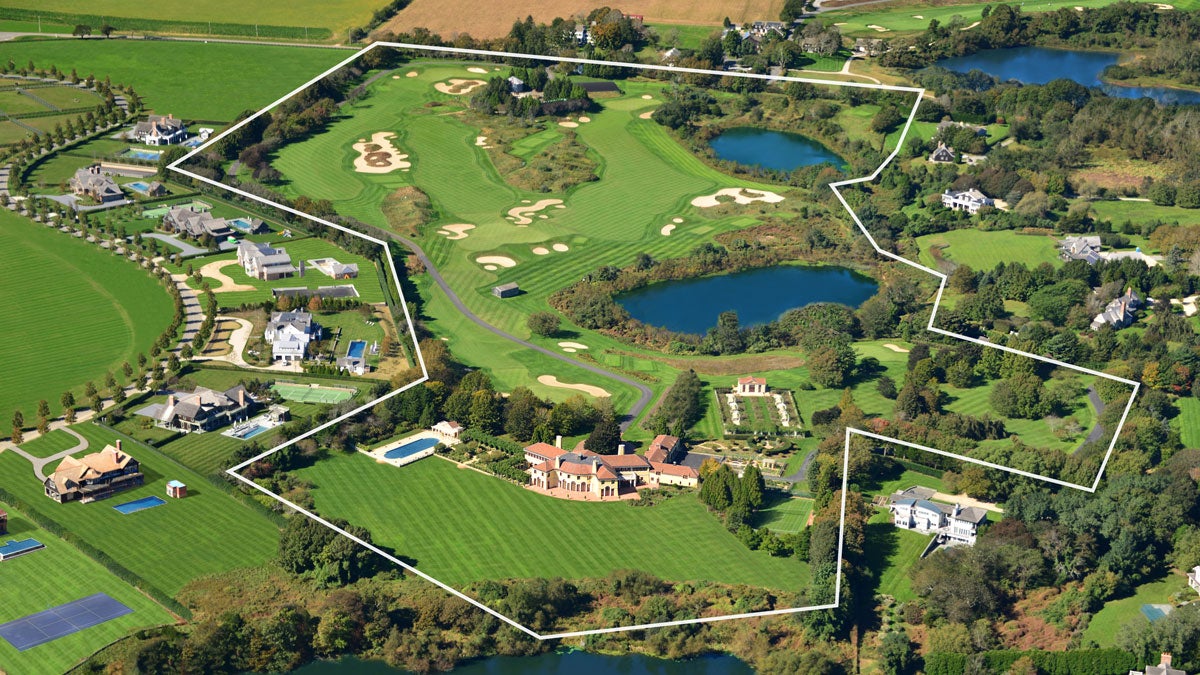
He took up golf seriously around forty. It became a way to spend time with his son Maurice, a scratch golfer. Kaufman also discussed using the course for charity outings and mapped a shorter arrangement suitable for players of different abilities. Even a private golf course, it seems, can acquire another operating plan.
The career invites an easy finish at a stock-exchange bell. The golf course offers a more interesting place to leave him: examining an existing layout, wondering what else it could accommodate. A name survives a sale. A degree finds an unexpected use. A course gains another route. Kaufman keeps returning to things he has already built, looking for the next workable arrangement.