The most revealing thing about Tinno USA is that you may have held its work without ever reading its name. A carrier-branded hotspot lands on a counter. A budget smartphone appears beside a monthly plan. A child tracker starts reporting its location. The logo belongs to the company selling the service. The industrial design, radio engineering, software work, certification grind and factory coordination may belong to somebody else.
Tinno is that somebody else. Its American operation, founded in 2018 and based in Plano, Texas, is the local front door to a global original design manufacturing business. In plain English: a wireless carrier or consumer brand describes the device it wants, and Tinno can help turn that brief into a certified object in a box. Tinno USA's own legal language is less romantic. It imports and wholesales consumer electronics and provides support services. Both descriptions are accurate. One explains the ambition; the other explains how invoices happen.
The business serves carriers, service providers, national retailers and device brands. Tinno USA displays names including AT&T, T-Mobile, Boost Mobile, Dish and Cricket among its partners, alongside Android, KaiOS, Google and MediaTek. The parent company adds Lenovo, Transsion and HONOR to the relationship list. Consumers are the eventual users, but they are rarely the buyer Tinno must persuade first. That distinction shapes everything.
01 / The actual productAn entire device department, rented by the launch
Tinno does not merely stamp metal or populate circuit boards. Its pitch covers industrial design, color and materials, hardware and software R&D, certified testing, supply-chain management, manufacturing, delivery and lifecycle support. The catalog stretches across 4G and 5G smartphones, mobile hotspots, tablets, personal trackers, child watches, accessories, smart-home products, Wi-Fi customer-premises equipment and fixed-wireless broadband gear.
The expensive middle, compressed
The commodity is not assembly. It is fewer handoffs, one accountable path and a shorter trip from specification to shelf.
This is the cleanest way to understand the business model. A carrier can build a permanent organization for occasional hardware launches, or it can convert much of that fixed cost into a program with an ODM. The customer still owns the product position, channel and brand relationship. Tinno supplies the scar tissue: radio tuning, Android adaptation, component sourcing, failure analysis, production ramps and certification paperwork.
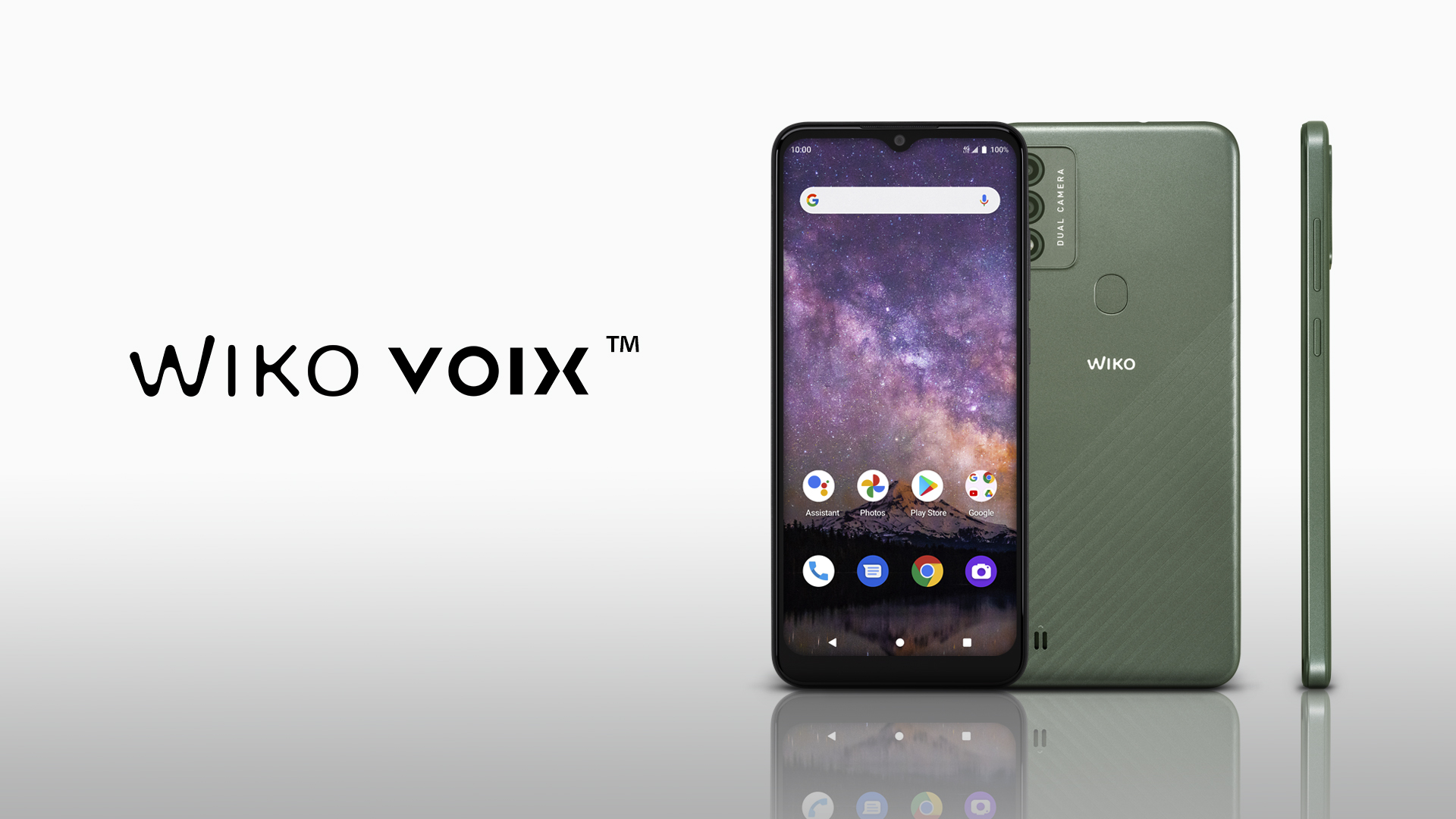
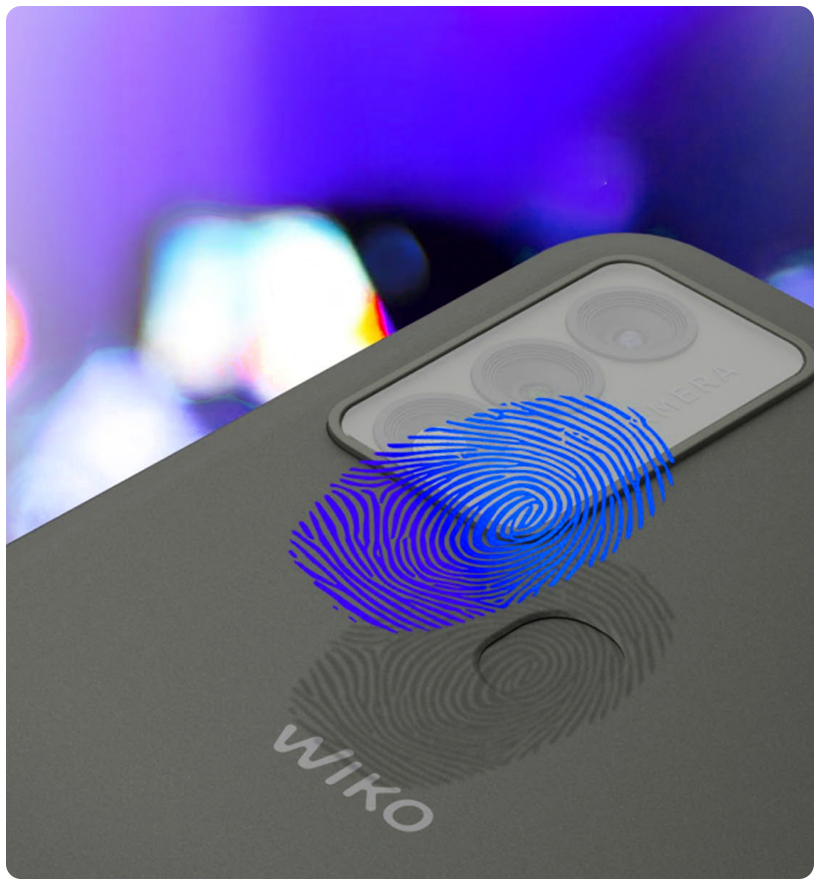
The Wiko Voix is a useful specimen. Tinno's U.S. site presents the 4G Android phone with a 6.5-inch display, 3,400 mAh battery, dual rear cameras, fingerprint sensor and face recognition. None of those numbers is exotic. That is the point. Carrier hardware often wins by arriving at the required price, passing the required tests and avoiding a support catastrophe. Novelty matters, but operational predictability pays the bill.
“The better the ODM works, the more the customer gets to look like the product company.”The quiet bargain behind white-label hardware02 / Scale with an asterisk
A small Texas team plugged into a much larger machine
Tinno USA itself is compact. LinkedIn places it in the 11-to-50 employee range; the supplied company record counts 35. The scale claims belong to the parent operation. Tinno Mobile says it shipped more than 61 million units in 2025, runs seven R&D centers and four manufacturing bases, employs more than 7,000 people, and has filed more than 3,000 patent applications. Nearly 40 percent of its staff works in R&D, according to the company.
That local-global split is the operating design. The Plano office can speak carrier: roadmap meetings, U.S. certification, channel deadlines, returns, warranty expectations and local support. The parent can speak factory: tooling, yields, component substitutions, test fixtures and production capacity. Tinno's difference from a simple contract manufacturer is that it wants both conversations.
The competitive field is not gentle. Huaqin, Longcheer and Wingtech dominate outsourced smartphone design by shipment share. Branded manufacturers can build internally. Carriers can buy proven hardware from familiar names. Tinno therefore has to win on a mixture of customization, responsiveness, certification experience and willingness to own more of the workflow. Its U.S. presence is not decoration. In carrier procurement, proximity is part of the product.
03 / What it costsThe public price is simple. The work behind it is not.
That $198 device is a neat window into the model. T-Mobile sold the service, financed the promotion and put its name on the shell. Tinno USA hosts the user guides. Underneath sit costs that shoppers never see separately: modem and memory components, antennas, enclosure tooling, software integration, compliance testing, packaging, logistics, inventory and post-sale support.
For a carrier, the economic question is not whether an ODM adds a margin. Of course it does. The useful comparison is that margin against the cost and delay of maintaining every specialist internally, then coordinating multiple vendors when something breaks. Tinno wins when the integrated route is cheaper in time, organizational drag and launch risk. This is why the product is best described as operational compression with a radio attached.
04 / What failed firstSoftware trust cracked before the factory story did
The uncomfortable chapter arrived through brands in Tinno's orbit. In 2016, security researchers found that firmware supplied by Adups on some BLU phones collected sensitive user information. In 2017, Wiko, then controlled by Tinno, confirmed that preinstalled software transmitted technical data to Tinno monthly without users' consent. Wiko said an updated version would stop collecting geolocation data.
For an ODM, this was not a side issue. The model asks a carrier to trust a supplier with layers customers cannot inspect: firmware, update mechanisms, diagnostics and data flows. A beautiful enclosure cannot repair a compromised chain of custody. The first failure was governance around software and telemetry, precisely where a behind-the-scenes supplier is hardest for the public to see.
The observable change is procedural. Tinno announced ISO/IEC 27001:2022 information-security certification in 2025 and said it had implemented 45 security metrics across operations and product development. Certification is not absolution, but it is a legible response: move security from a feature claim into the management system. The company also publishes conflict-minerals policies, operates a U.S. take-back program with prepaid shipping, and promises commercially reasonable efforts to supply spare parts for at least three years after production ends.
A more recent legal risk ended without a full commission fight. Pantech named Tinno USA and its parent among respondents in a 2025 U.S. patent-infringement investigation covering mobile communications devices. The U.S. International Trade Commission terminated Tinno from the case in July 2026 after Pantech and Tinno moved to resolve their dispute through a settlement agreement. For an ODM, patents are another invisible input that can suddenly become very visible at the border.
05 / The copyable bitSell the vanished headache
The lesson worth stealing has little to do with handsets. Tinno packaged a messy sequence, not a single capability. Design shops can sketch. Labs can test. Factories can assemble. Logistics firms can ship. Tinno's value rises when the customer would rather manage one outcome than five vendors.
Founders can copy that architecture. First, map every handoff between the customer's idea and its revenue. Second, own the two or three transitions most likely to stall. Third, keep a small, credible team close to the buyer while heavier operations sit where talent and capacity are deepest. Finally, let the customer keep the applause. Tinno's anonymity is commercially useful because its buyers want a stronger carrier brand, not a co-star.
When the model works - and when it does not
It works when launch volume can amortize engineering and tooling, the buyer values customization, certification is genuinely difficult, and the supplier can reuse knowledge across programs. It weakens for tiny production runs, radical products that need constant founder-level iteration, buyers that require complete control of sensitive software, or programs exposed to trade restrictions and a fragile cross-border supply chain.
The market fit is therefore specific. Tinno sits between branded electronics companies and commodity contract assembly. It is most useful to organizations with distribution and customer relationships but without the desire to recreate a global device company for each launch. Guardian fixed-wireless gear, Wi-Fi CPE, wearables and automotive electronics extend the same logic beyond phones: take a complicated connected object and make its path to market repeatable.
In February 2026, parent company Tinno Mobile announced RMB 864 million in strategic investment from Yibin Emerging Industry Investment Group at a pre-investment valuation of RMB 6.5 billion. The deal combined debt conversion with new cash. It gives Tinno more room to expand the machine, but the enduring pitch remains almost modest: bring the brief, keep your logo, and skip the trouble of becoming a factory.
Even the name is an operating instruction. Tinno expands to “Think-Innovate,” while its stated values emphasize enterprise, responsibility and customer orientation. The language is ordinary corporate fare; the structure makes it concrete. A customer-facing team in Texas gathers the constraints. Engineers and factories convert them into repeatable production. Support staff stay with the device after the launch confetti is gone. Culture here is less about office theater than the daily willingness to solve somebody else's unglamorous hardware problem, then leave that customer's logo on the answer.