A company can have a website, a sales team and a perfectly respectable logo while remaining surprisingly difficult to understand. Who does it compete with? How large is it? What changed this week? Tim Harsch helped build a business around those awkward little questions. The answers, he believed, were already scattered among the people who went to work every morning. The challenge was persuading them to compare notes.
Owler made that proposition into company profiles, competitor relationships and news alerts. Harsch’s route through it involved product work, a succession planned by his co-founder, and an engineering team on another continent. It is a career concerned with information, certainly, but also with the stubbornly human business of getting people to contribute, collaborate and pay attention. Even an excellent database must contend with the person on the other side of the screen.
A useful acquaintance, before graduation
In 2008, Harsch worked alongside Jim Fowler at Jigsaw, a company that gathered business contact information through crowdsourcing. It was an early encounter with an idea that would occupy much of his working life: a community could know things that a centrally maintained directory struggled to keep current. People were the participants in the information system, as well as its customers.
Salesforce acquired Jigsaw in 2010. Harsch has described company information as an opportunity that remained outside the buyer’s plans. He and Fowler pursued it. Harsch graduated from Dartmouth in 2011 and went straight into the venture that became Owler. The timing gave his first post-college job an unusually long afterlife.
There was another information job in his Dartmouth years. In June 2011, the college library included Harsch among the graduating student employees it honored. The recognition put students’ names into books through its bookplate program. Long before company profiles became his business, he had appeared in the institutional record as someone who helped a library function. A library book and a sales database make an unfashionable pair of career props. Both have their uses when you need an answer.
The founder who worked his way to the title
Owler dates its founding to 2011. Harsch’s early work included an associate product manager role; eventually he became chief operating officer. That progression matters because a founder’s title can obscure the actual apprenticeship. His path ran through the work of operating the company before it reached the public announcement of who would lead it.
In August 2018, Fowler announced that Harsch would become CEO while he moved to executive chairman. Fowler had intended to hand over when his son finished high school. The personal timetable produced a business succession, with a closed funding round providing the moment to make it public.
Fowler said Harsch had already been effectively running Owler as COO. He also described having prepared him for the chief executive role from the beginning. The handover was therefore a recognition of responsibility already being exercised. It is an appealingly practical way to change the name on the door: first find out who is doing the job.
Seventeen trips belong in the job description
Harsch joined early company meetings remotely from Hanover. Later, the distance was rather greater. An alumni biography recorded seventeen visits to India to work with Owler’s engineering, data science and data teams. The company had a San Mateo headquarters and an office in Coimbatore. His work crossed product management, operations, leadership and occasional coding.
Those visits give the career a physical geography that the phrase “data company” leaves out. There were people to work beside, in places that required a journey. His Dartmouth recollections also retain ordinary details: rugby, STAR mentoring, the CAD Lab, and Isaac Asimov’s Foundation series as a favorite. These are small particulars, but welcome ones in a biography otherwise populated by job titles.
Distributed work posed practical problems. Owler used monthly video meetings for the whole company and visits between offices in both directions. Engineering schedules had to account for customers’ hours, especially when an enterprise service needed attention. Keeping a company informed internally was a recurring task for a business selling information externally. The irony hardly required a spreadsheet.
“keeping everyone on the same page”
Tim Harsch, on a challenge of dispersed teams
The crowd gets a business model
A community’s size is an attractive number. A useful service still has to decide what membership means. In a November 2020 product announcement, Harsch described an Owler community exceeding five million members, tracking more than fifteen million companies and supplying 500,000 contributions a month. Those were figures reported at that moment, rather than a permanent description of the platform.
The same announcement introduced Owler Pro and limits for newly created free accounts. New Community members could follow five companies, view ten distinct profiles a month and access three categories of news triggers. Existing members were told their original experience would remain available, while new capabilities belonged to the evolving plans.
The details expose a decision every generous online product eventually faces. Someone must determine which parts stay open and which parts justify a subscription. For Harsch, growing the community and building paid products had to occupy the same business. The announcement addressed members directly, thanked them, and explained the changed terms. The product was becoming a more explicit commercial relationship.
A conversation measured in years
Harsch began talking with Meltwater’s founder in 2018. Three years later, Owler announced an agreement to join the company, during the week of its tenth anniversary. Harsch described a shared ambition to put business intelligence into the morning routine. Coffee figured in the vision, which was sensible: a service intended for daily reading needs a place in the day.
The fit he described joined Owler’s community knowledge with Meltwater’s artificial intelligence and monitoring of news and social media. Each side brought a different way of observing business. The community contributed what people knew; monitoring could follow what was being published. Bringing them together was the strategic argument for the transaction.
The acquisition was completed in mid-2021. In March 2022, Harsch was still addressing Owler’s members as CEO, introducing a revised look and previewing product developments. Owler Max followed in April. An acquisition had supplied a new owner, while the work of explaining the next version to customers continued.
What belongs to the computer?
In 2022, Harsch described AI doing two stages of work at Owler: sorting through a large flow of articles, posts and website changes, then choosing information relevant to an individual member. Slack and Salesforce integrations were intended to put that information into tools teams already used. The daily problem was partly one of delivery. An insight waiting somewhere else still requires someone to go looking.
His discussion of remote work was similarly concerned with ordinary behavior. Unplanned conversations could disappear when people stopped sharing an office. Making room for connection had to be balanced against personal time. Software could carry the message; a manager still had to consider the interruption.
That concern runs through his view of selling, too. He argued for relationships that extend beyond a transaction and for humans and AI working together. Gathering and summarizing information were suitable tasks for computers. Understanding the person considering a purchase remained part of the salesperson’s work. A fuller prospect profile, in this account, should help someone conduct a more considerate conversation.
Fourteen pitches, and an unfamiliar market
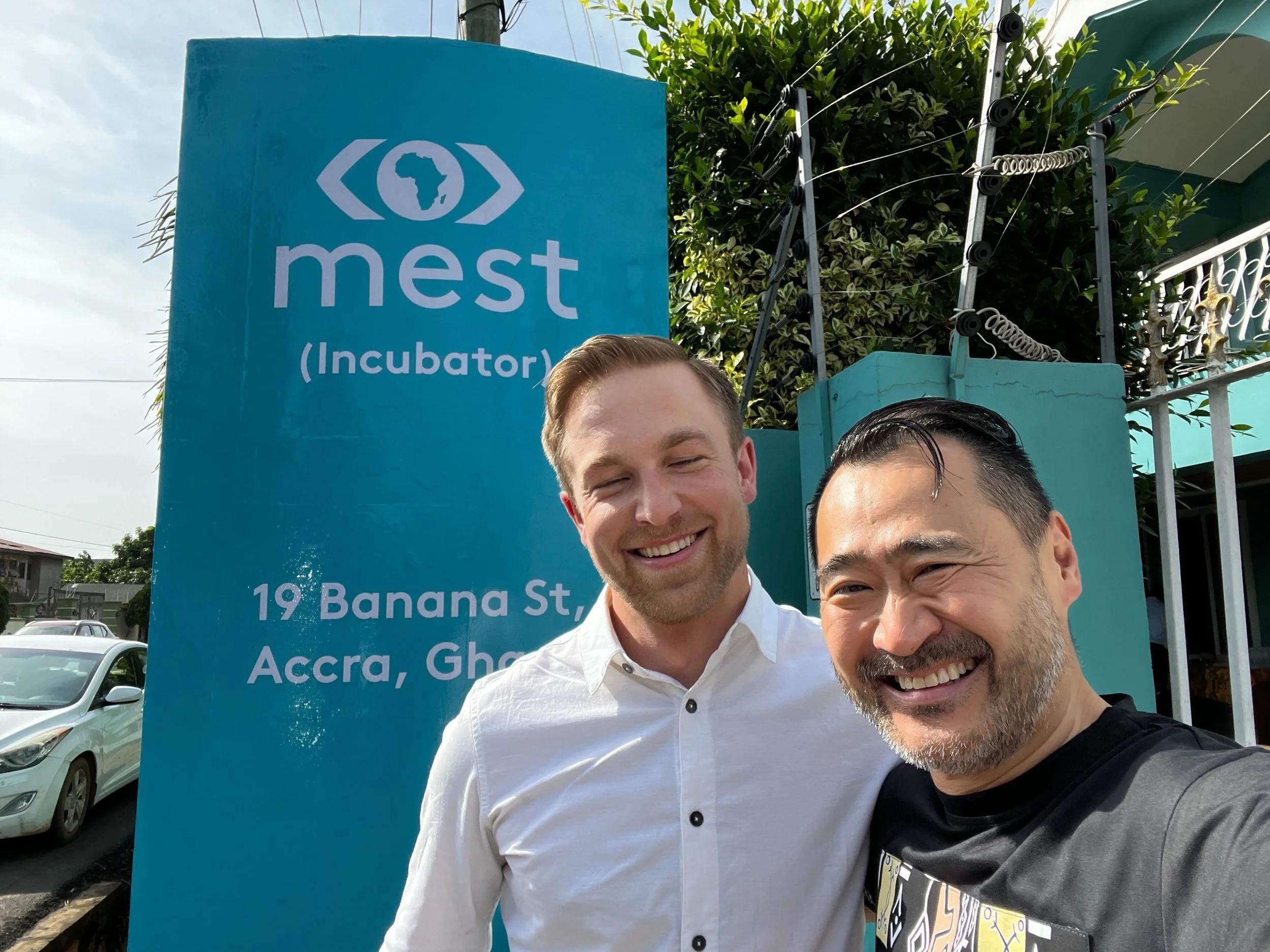
During a three-day visit to Ghana in June 2022, Harsch encountered fourteen teams presenting at MEST Africa. He admired the presentations and singled out a proposal for reserving seats on commuter minibuses. Another team proposed software for moving bulk goods. Its pitch prompted scrutiny of how the local transport market actually worked.
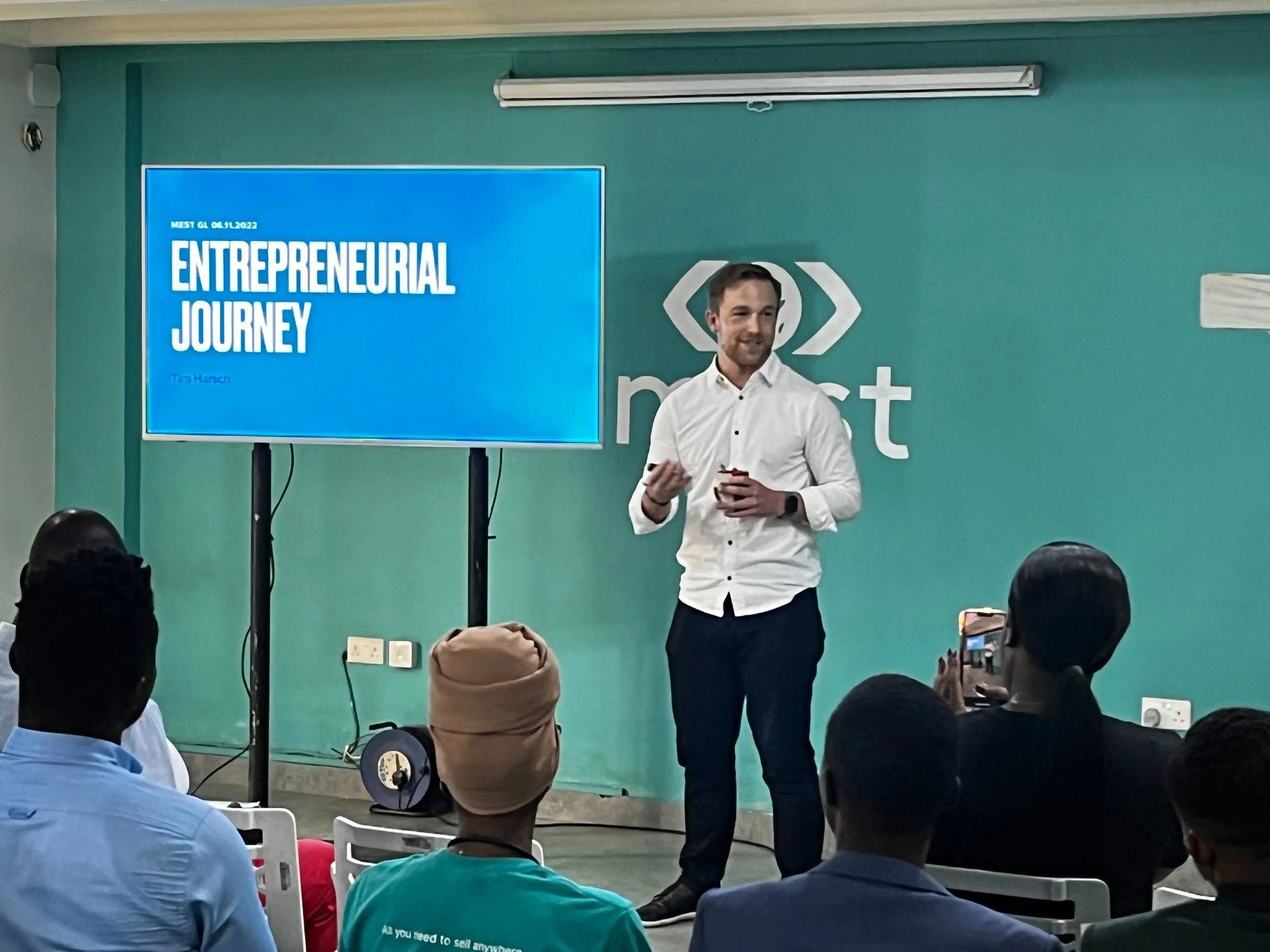
The visit supplied a useful reversal. An experienced visiting founder could offer advice and still encounter assumptions that needed revisiting. He thought about buying buses; the team planned to rent them. A plausible application depended on the economics around it. His account of the visit gave space to those differences, alongside his enthusiasm for the teams.
The question he keeps returning to
Harsch’s later public profile lists Bkey and places him in Truckee, California. Bkey describes its business in terms of biometric trust. His own brief description of his work remains concerned with data products, contribution and ownership. Those words connect to the questions that animated Owler without requiring his newer work to repeat it.
His Owler years also included a webinar with Sarah Brazier and Jason Bay about using competitor knowledge in conversations with executives, followed by a December 2022 podcast appearance on selling to leadership. Across those settings, information acquired its value when somebody could use it. The database needed a route into a decision.
That is a useful way to read Harsch’s career: through the distance between knowing something and making it useful to another person. There are company records to assemble, colleagues to keep informed, founders to hear out, and customers whose time deserves care. The crowd supplies knowledge. Building a business around it means attending to the people who make up the crowd.