Real-time adaptivity and human-level dexterity - retrofitted onto the robots you already own.
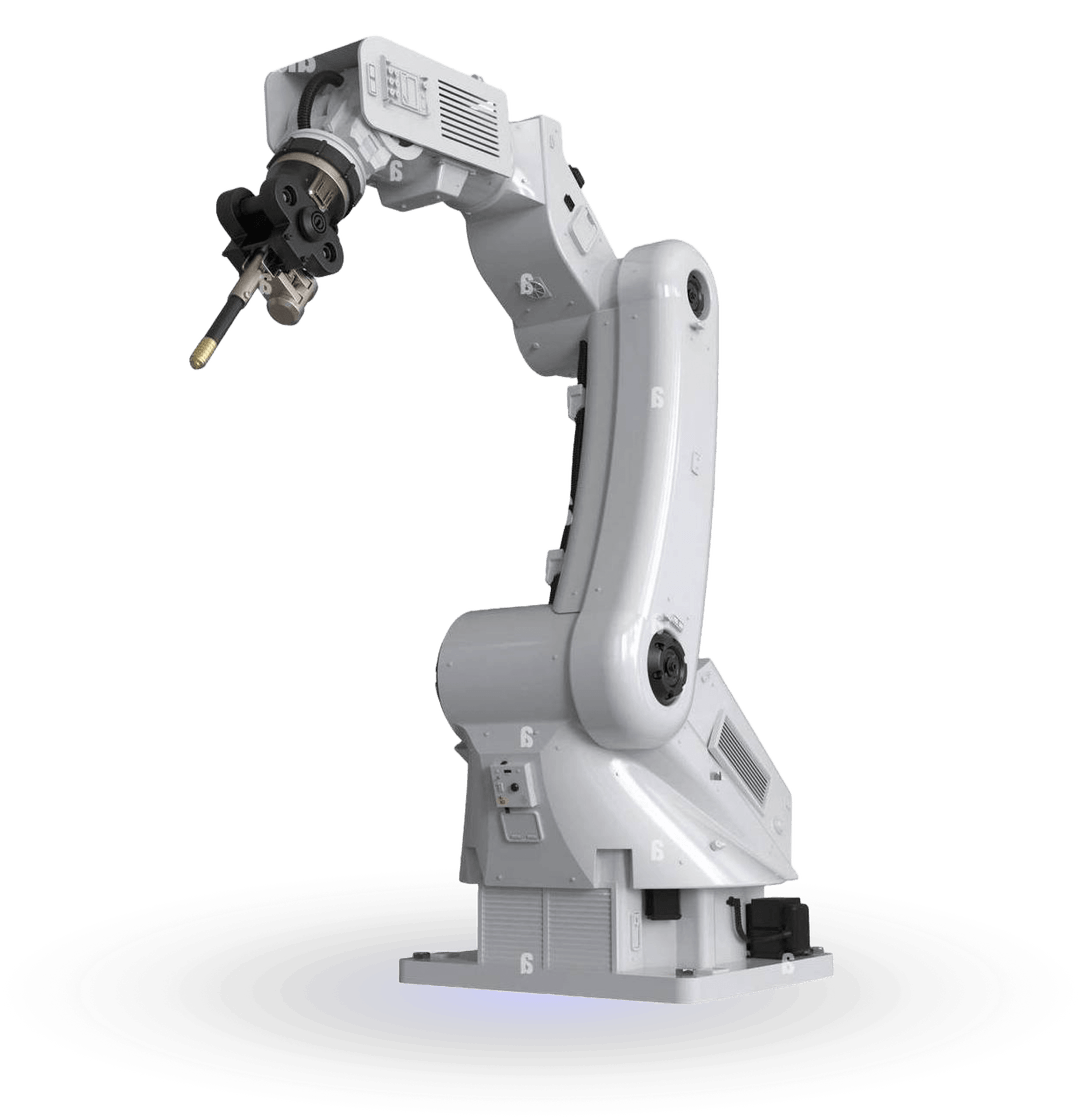
Somewhere on a plant floor, a robot arm reaches for a soft rubber grommet and has to press it into a hole that isn't quite where the drawing said it would be. A conventional robot does one of two things here: it succeeds because the world behaved exactly as programmed, or it fails, freezes, and waits for a human. There is rarely a third option.
ThoughtForge AI is building the third option. Its software watches the force feedback, the vision feed, the small resistances that mean "not yet," and it adjusts - in the moment, on a single CPU, without a call home to the cloud. The robot doesn't run a bigger model. It runs a different kind of model. And when the part finally seats, the machine has quietly learned something it can use on the next one.
That is the whole pitch, and it is a strangely modest one for an AI company in 2026. ThoughtForge is not promising a general intelligence that can do anything. It is promising a specialized one that can do a hard, boring, physical thing reliably - and keep the robot you already bought.
"Most robotic AI systems today are trained to handle specific scenarios, relying on pre-defined datasets and rigid programming to function within known conditions."
ThoughtForge AI - on why the factory floor keeps breaking the robots* Figures as reported by ThoughtForge. Independent verification pending - treat as company claims.
The unusual part of ThoughtForge isn't the robotics. It's the theory underneath. The company builds on Active Inference - a framework from neuroscientist Karl Friston, who serves as an advisor. The short version: brains don't wait to be told what to do. They constantly predict what's about to happen and act to minimize the surprise. Friston's Free Energy Principle turns that instinct into math.
ThoughtForge takes that math and points it at a knob, a hatch, a deformable part. Instead of memorizing millions of examples, its models carry a compact prediction of how the world should respond and correct themselves when it doesn't. That is why the data appetite is measured in thousands, not billions - and why it fits on a CPU instead of a rack of GPUs.
The founders call the result ASI - Adaptive Specialized Intelligence. Not the AGI everyone else is chasing. A deliberately narrow intelligence that masters one industrial skill with precision, then gets out of the way.
"ThoughtForge was born from a desire to develop biologically-plausible learning systems - grounded in cutting-edge neuroscience."
The founding thesisThoughtForge ships its platform as three plainly named tools. Between them, they convert a model, run a robot, and watch a fleet.
Takes an existing AI model and rebuilds it in ThoughtForge's Active Inference format - higher accuracy, lower compute, simpler to deploy.
Universal robotic control for dynamic, unpredictable environments. Adapts in real time on standard CPUs at the edge, no tuning marathons required.
Unified fleet monitoring and performance visibility across every robot, surfaced through a single API.
ThoughtForge's quiet moat may be compatibility. It aims to work across the machines already installed - not a new arm you have to buy.
Illustrative of stated OEM compatibility (~78% of industrial robots). Bars are directional, not benchmarks.
Two decades in AI. Built real-time systems for Halo, BioShock, and Splinter Cell, then became first engineer and technical lead at Bonsai AI - the world's first production-grade deep-RL platform, acquired by Microsoft in 2018. Post-acquisition, Microsoft's liaison to UC Berkeley's RISE Lab. MIT (CS), UPenn (MS). Holds patents in reinforcement learning and autonomous systems.
14+ years in robotics and machine learning. First product manager at Bonsai AI, later led Microsoft's Bonsai product team serving Fortune 100 clients like PepsiCo and Siemens. Early contributor to Amazon RoboMaker and warehouse automation; prior roles spanning AT&T Bell Labs, Intel AI, and academia.
"ASI is designed to master specialized industrial skills with extreme precision and efficiency rather than attempting broad human-like reasoning."
ThoughtForge's north starBonsai AI - where the founding team met - is acquired by Microsoft. The playbook for production deep-RL is written.
ThoughtForge founded in Berkeley around Active Inference and biologically-plausible learning.
Seed round closes, with Plug and Play Tech Center among the backers.
Product suite - Replicate, Control, See - goes public around "Universal Robotic Intelligence." ARM Institute funds a soft-part insertion project; Industry Today profiles the real-time adaptation approach.