An athlete looking at a tub of creatine faces a peculiar problem. The ingredient may be familiar; the contents remain invisible. Before asking whether a powder will help, there is a more elementary question: is the label telling the truth? Thorne’s business has grown around that awkward gap between what a customer can read and what a customer can verify.
- Practitioners supplied the original audience; consumers expanded the business.
- Manufacturing control and sports certification make quality a selling point.
- P&G’s $3.8 billion agreement is pending, while an earlier testing offer has been retired.
In August 2026, P&G agreed to acquire Thorne for $3.8 billion. Three years earlier, L Catterton’s announced transaction valued the company at about $680 million. Those prices describe different transactions at different moments, rather than a tidy investment-return calculation. Still, they invite a question: how did a supplement company become something a household-products giant wanted so badly?
The customer who came before the crowd
Thorne Research began in 1984, founded by Al Czap to serve healthcare practitioners. Its early audience was unusually useful. A practitioner recommending a product puts a professional relationship beside the bottle. The company needed to satisfy someone whose recommendation might carry more weight than an advertisement.
Paul Jacobson and his management team acquired Thorne in 2010. The business subsequently added research relationships, sports products and consumer distribution. A Mayo Clinic clinical-study agreement arrived in 2014; an NSF Certified for Sport product line followed in 2017. Each step gave the brand another way to explain why its bottles deserved attention.
By August 2026, Thorne reported reaching more than seven million consumers, tens of thousands of healthcare professionals and over 100 professional sports teams. Those are company-reported reach figures, not a count of current subscribers. The audience now includes ordinary supplement buyers alongside people whose livelihood depends on athletic performance.
“We exist to prove better is possible.”Thorne’s statement of purpose
A familiar ingredient, an expensive process
Thorne sells vitamins, minerals and formulas for foundational health and sports nutrition. At the time of writing, its Basic Nutrients 2/Day multivitamin listed at $36 for 30 servings. Its 90-serving creatine monohydrate tub listed at $44. That works out to approximately $1.20 and 49 cents per serving, respectively, before discounts, tax or shipping.
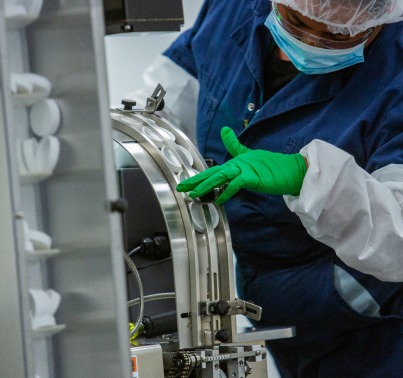
The creatine illustrates the positioning. Customers are buying a familiar ingredient from a company that controls its own manufacturing and attaches independent sports certification to that particular product. Thorne’s quality page describes four rounds of testing: incoming materials, work in progress, finished products and stability through the expiration date.
- 01Raw materialsIdentity + purity
- 02In processFormula + defects
- 03Finished productPotency + contaminants
- 04StabilityThrough expiration
Independent certification answers a narrower question. NSF’s Certified for Sport program reviews formulations, inspects facilities and screens for banned substances. It reduces an athlete’s risk of inadvertently consuming something prohibited. It does not establish that every promised benefit will occur, and shoppers should check the certification of the specific product.
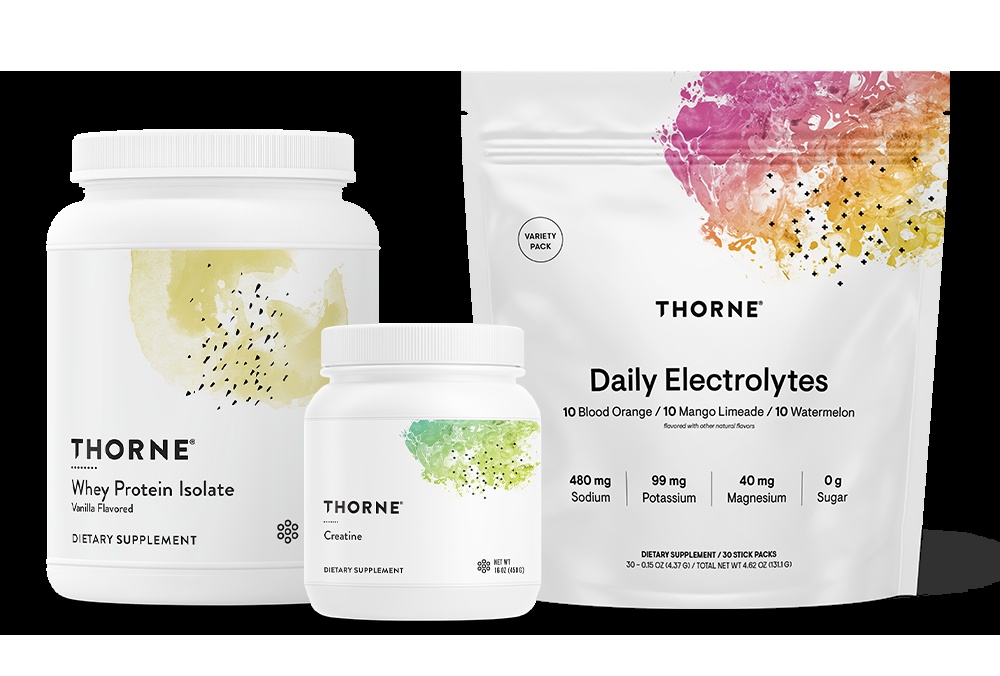
Thorne’s UFC relationship makes the distinction practical. A partner since 2019, it renewed the arrangement in February 2025, retaining sports-nutrition and Performance Institute roles while becoming a premier partner of UFC’s anti-doping program. For a tested athlete, ingredient assurance belongs in the purchasing decision before any discussion of aspiration.
The model combines consumer orders, replenishment subscriptions and professional channels. Alternatives include practitioner brand Pure Encapsulations and sports-nutrition specialist Klean Athlete. Thorne occupies the overlap: clinical credibility translated into an accessible consumer range. Its in-house scientists, researchers and medical team give it expertise across formulation and education; its manufacturing control lets it turn those choices into products.
The test kit that left the story
The HealthTech name came from a broader ambition. In 2021, Thorne combined with Onegevity, founded by scientists Joel Dudley and Chris Mason alongside Jacobson. Onegevity proposed using molecular information and AI to turn blood, genetic and microbiome data into personalized recommendations. Supplements would sit inside a larger system of measurement and advice.
A 2022 gut-test relaunch showed how concrete that ambition could become. Thorne introduced a microbiome collection wipe made from a biodegradable polymer that dissolved in a preserving solution. The insight was almost comically domestic: a sophisticated analytical service still needs someone to collect a sample. Improving that moment could make the whole service easier to use.
Yet the kits did not become a permanent fixture. In March 2026, a Thorne spokesperson told Athletech News that the company was winding down at-home tests while developing a biomarker-insights approach, with a limited beta planned. Its FAQ set June 1 as the deadline for test activation and lab requisitions. The documented change is a withdrawal and a proposed new direction; it does not establish that weak demand caused the decision.
Personalization remains in another form. Taia, Thorne’s AI wellness advisor, answers ingredient questions, compares products and suggests supplements based on goals. That can help someone navigate a large catalogue. Its recommendations also come from the business selling the bottles, a commercial context readers should keep in view.
Growth has a bill attached
Thorne’s 2021 IPO raised $70 million gross, leaving approximately $60 million after underwriting and offering expenses. In 2022, net sales reached $228.7 million, up 24.1%; direct-to-consumer sales grew 44.3%. Gross margin nevertheless fell to 50.2%, down 206 basis points. A larger audience did not remove the cost of serving it.
Gross margin: 50.2%, down 2.06 percentage points.
L Catterton completed its take-private acquisition in October 2023. P&G’s subsequent agreement remains subject to regulatory approvals and customary conditions, with closing expected later in 2026. Thorne CEO Colin Watts framed the choice around expanding the company’s impact while retaining its standards. That is the stated rationale, rather than evidence of a private change of heart.
What the label can promise
For another business, the useful lesson is the order of operations: win a demanding customer, build inspectable quality processes, then broaden distribution. It works best when buyers value verification enough to pay for it. It is harder to copy where price dominates or credentials say little about the customer’s actual need.
Even here, assurance and efficacy deserve separate scrutiny. Thorne’s September 2026 announcement described a 105-person, 30-day open-label study of Creatine + Alpha-GPC. Without a blinded placebo comparison, improvements cannot establish how much change the formula itself caused. The sensible reader asks two questions of every bottle: what is inside, and what evidence supports buying it? Thorne has built a substantial business around the first. The second still needs answering product by product.