The cleanest button in finance rests on a mess of obligations. A tap has to become an order. Identity must become an account. Money must arrive where it is expected, records must agree, partners must respond, and the whole procession must satisfy people whose job is to distrust shortcuts. If it all works, the customer sees almost none of it. Thomas Pischke has built a career in that almost.
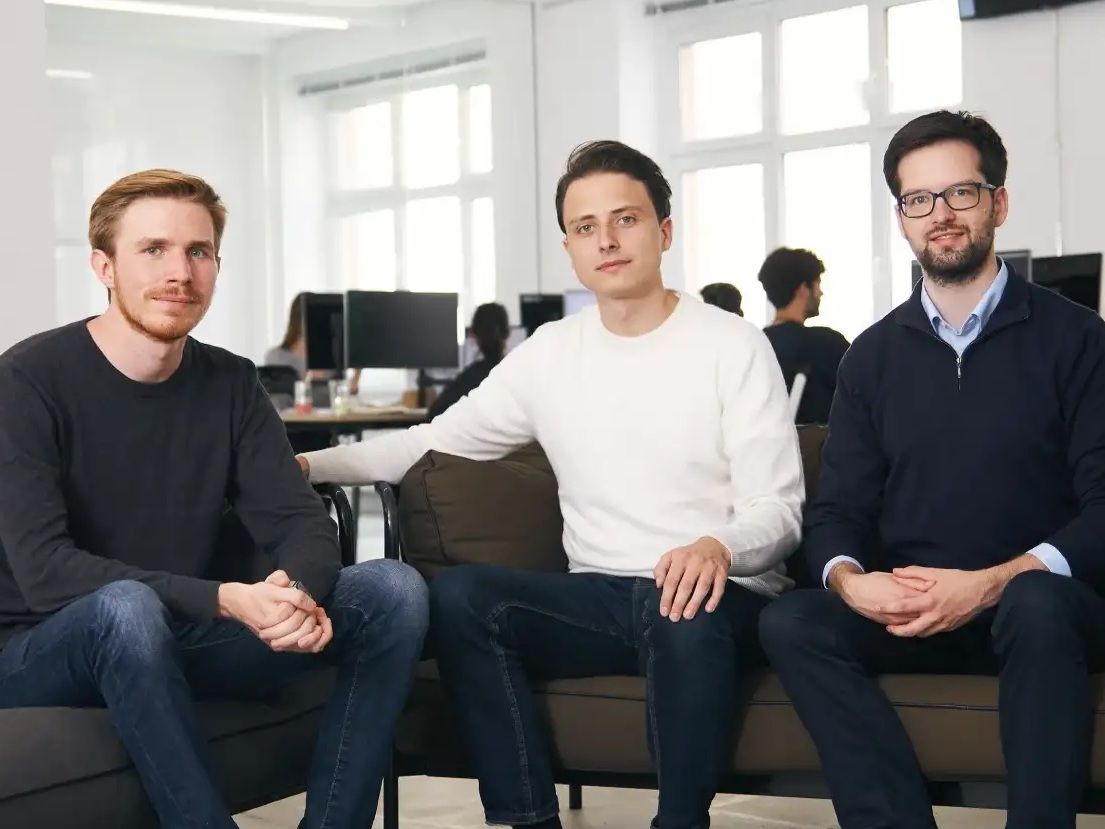
Trade Republic's founders divided the work. Christian Hecker directed the company's strategic development. Marco Cancellieri shaped the mobile application. Pischke took responsibility for the machinery below the surface: infrastructure, information security and the technical relationships with financial partners. Public attention tends to collect around what can be demonstrated. Infrastructure proves itself by refusing to become a story.
This makes him an odd subject for a profile and a useful one. Technology companies are often narrated from the screen outward. Pischke's story runs the other way. It begins with first principles, passes through the first lines of code, and ends in the quiet institutional fact that Trade Republic became a licensed bank operating across Europe. The interface is the promise. His domain is whether the promise survives contact with reality.
A pension problem, considered by a physicist
At Ludwig Maximilian University of Munich, Pischke earned a master's degree in physics with a focus on quantum computing. It is the sort of education that makes ordinary complexity look almost hospitable. His path into finance was practical rather than hereditary: he worked at Payworks, a Munich payments fintech, and by early 2015 was programming in Frankfurt.
He already knew Hecker from their university years. When they met in Frankfurt, the conversation ranged across macroeconomics, banking and the future of pensions. They agreed that Europe's pension gap would become a large problem. The observation had none of the chirpy glamour of a pitch deck. It concerned an ageing population, pressure on public systems and the difficulty ordinary households faced when trying to participate in capital markets.
The two reconvened in Munich for three days of concentrated argument and design. What were the economic forces? What product could respond to them? What, exactly, would have to be built? The idea that emerged was not to offer a more ornate form of investing. It was to remove friction and cost. Saving through capital markets had to become simple enough to live on a phone.
Late that year, they met Cancellieri, a media-informatics student and mobile developer. He began work on the first app prototype the following day. The company's original name was Neon Trading, a pleasingly electric label for a business whose hardest problems would be sober ones. It entered a startup program associated with Comdirect. A philosopher and economist, a physicist and a computer scientist had found their respective corners.
The prototype wins, then the serious work begins
Pischke had a taste for proving systems by making them. Trade Republic's press material credits him with winning several programming competitions organized by major banks using prototypes of the company's technology. A prototype is an argument that executes. It can still be brittle, but it saves everyone the trouble of pretending an idea exists before it does.
Building a brokerage was a harsher test. A consumer app can be updated. A financial transaction must also be accounted for, secured and reconciled. The founding team's task required cooperation with regulated partners before its own licences arrived. Pischke became responsible not merely for software development, but for making those interfaces dependable. He had to build the joints between a young company and older institutions without allowing the joints to dictate the experience.
The sequence took years. The company was formally registered in 2016. Sino invested in 2017. A securities-trading-bank licence followed in December 2018. The Trade Republic service opened to German customers in 2019. This was not the mythical weekend in which three bright people disrupt an industry before Monday breakfast. It was a long apprenticeship in permission, plumbing and patience.
Pischke serves as vice president of the student entrepreneurship network START Munich.
Hecker, Pischke and Cancellieri begin Neon Trading and write the first product code.
A securities trading bank licence clears the way for the German public launch.
Trade Republic receives a full banking licence.
Pischke becomes a registered managing director of Trade Republic Bank GmbH.
There is a comic mismatch between the effort required and the gesture produced. Years of licences, integrations and code resolve into a thumb moving half an inch. That mismatch is the product. Complexity has not vanished. It has merely been persuaded to wait elsewhere.
“I still program regularly myself and work very closely with our engineering team.”Thomas Pischke, 2022 · translated from German
The CTO who kept his hands on the keyboard
In 2022, Trade Republic announced plans for a Stockholm technology hub and hundreds of engineering roles across frontend, backend, core infrastructure and data. Pischke described the journey from the first code written in 2015 to cooperation among several hundred engineers. The scale was substantial, but a revealing sentence was small: he still programmed regularly.
Executives like to say they remain close to the work. Coding makes the claim falsifiable. A compiler is notably unmoved by seniority. Staying near the code can preserve an instinct for how elegant plans become awkward systems, and for the cost of a decision that sounds trivial in a meeting. Pischke also said the company had developed its technology platform internally rather than relying on third-party technology. Whether one agrees with every architectural choice or not, ownership of that kind creates a very direct relationship with consequences.
His technical leadership also became organizational. He spoke of building a management team with experience from established technology companies and of creating conditions in which developers could work well. Infrastructure, in this view, includes people: clear responsibility, shared standards and teams capable of changing a live financial system without turning an ordinary Tuesday into folklore.
Trade Republic expanded from brokerage into savings, cards and current accounts after receiving its full banking licence in 2023. Each new product widened the surface Pischke's systems had to support. In October 2024, he became a registered managing director of Trade Republic Bank GmbH, adding a formal banking responsibility to the CTO title. The programmer had not left the machine; the machine had become an institution around him.
By September 2025, Trade Republic counted 18 European Union markets. Its menu had grown to thousands of stocks and exchange-traded funds, bonds, derivatives, cryptocurrency, savings plans, cards and current accounts. The list is dry, which is precisely why it matters. Every additional market adds local expectations; every new product creates another route through the platform; every route has to meet the same customer at the other end. Expansion is usually pictured as a map acquiring colored territories. For a CTO, it looks more like a multiplication table in which none of the answers is allowed to be approximately right.
What remained after the scale arrived
Pischke's connection to Munich's builder culture predates the company. He was vice president of START Munich in 2013 and belonged to a university investment club. In spring 2025, he returned to the wider academic entrepreneurship community as an alumni expert at a 36-hour hackathon run by the Center for Digital Technology and Management. Students produced more than 30 working prototypes. The setting was a neat echo: a founder whose own story had advanced through prototypes, back among people trying to make an idea executable before the coffee lost its authority.
His published comments return to three things: internally developed technology, the quality of the engineering team and his own continued contact with the code. “Raising the bar” can be corporate fog. Writing code while responsible for a bank gives the phrase edges.
The founding question was social and enormous: how might Europeans build wealth as traditional pension arrangements came under strain? Pischke's answer was necessarily narrow, then repeated. Make this process work. Secure that connection. Remove this cost. Keep the system standing while more people arrive. Large missions survive only through small obligations honored many times.
Thomas Pischke's signature is therefore easiest to see by looking for what is absent. The customer does not need to know which partner replied, which service recovered or which security control objected at the right moment. The app simply behaves. Behind that simplicity sits a physicist who learned banking by building it, and who never quite accepted that becoming an executive meant putting down the tools.