In July 2020, Thomas Ohr gave thirty founders one minute each. Their task was to pitch a startup into a microphone. More than 150 applications had arrived; thirty made the cut. For a publisher whose working life involved deciding which European companies deserved attention, it was a familiar exercise with a different soundtrack. The EU-Startups Podcast was back.
Back is the useful word. There had been three trial editions in 2011, followed by a long silence. Nine years later, Ohr wrote that neither the world nor his team had been ready the first time. Startup culture has a fondness for first attempts that immediately become legends. Ohr's microphone had spent rather longer in the cupboard.
That gap offers a way into his story. He founded EU-Startups in 2010, built a conference around its readership, moved his working life from Germany to Barcelona, and kept finding new ways for people to meet. The interesting question is how a small publication becomes somewhere people return to, even when the format changes.
A continent-sized invitation
The first post appeared on October 4, 2010. It began with the modest greeting “Hello World!” and an invitation: founders could get in touch to have their companies covered. Ohr also wanted writers from Portugal, Britain, Spain, France, Poland, Italy, Belgium, Germany, the Netherlands and Denmark. The proposed beat was already bigger than any one country's startup scene.
It is a revealing opening document. Before a long archive, a conference or a podcast, there was a request for contributions. The publication's European character was present in the list of people it hoped would answer. A website could be started by one person; covering that list of countries would require a much wider conversation.
His early interview work made that geographic brief concrete. In February 2012, he questioned Tom Leathes, co-founder and CEO of London-based Top10.com, about the company’s origins, investors and domain name. The questions moved between a founder’s idea and the arrangements needed to make a company work. That combination of origin story and practical detail remains a useful introduction to Ohr’s beat: the people building businesses, and the decisions underneath the announcement.
Ohr came from the German magazine business. Before turning EU-Startups into his full-time occupation, he worked as a senior brand manager at a major German magazine publisher. His route into startup publishing therefore included experience of the business surrounding a publication: the work of giving an editorial product a place in a reader's life.
For its first five years, EU-Startups occupied his evenings alongside a full-time job. Looking back in 2025, he remembered writing the first 1,500 articles himself. He also remembered the financial arrangement: “During those first five years I did not pay myself anything.” A side project is a pleasantly compact phrase for a substantial second shift.
“It was a pure passion project.”
Thomas Ohr, reflecting on the early years
In January 2016, he left his corporate job to concentrate on EU-Startups. By the summer of 2017 he had relocated to Barcelona. In an August post, he marked seven weeks in the city by inviting people to a meetup. It was a characteristically practical introduction to a new home: here is where I am; here is when we can meet.
The readership gets a room
The first annual conference had taken place in Munich in 2014, with about a hundred attendees. Berlin followed for three editions, then Barcelona from 2018. The geography moved while the purpose remained recognisable: gather people who wanted to build companies in Europe and give them access to others attempting the same thing.
Speaking on his own podcast in February 2024, Ohr described an event organised around European success stories. The premise was that founders could build substantial technology companies in Europe. Silicon Valley could remain an interesting place to visit without becoming a compulsory forwarding address.
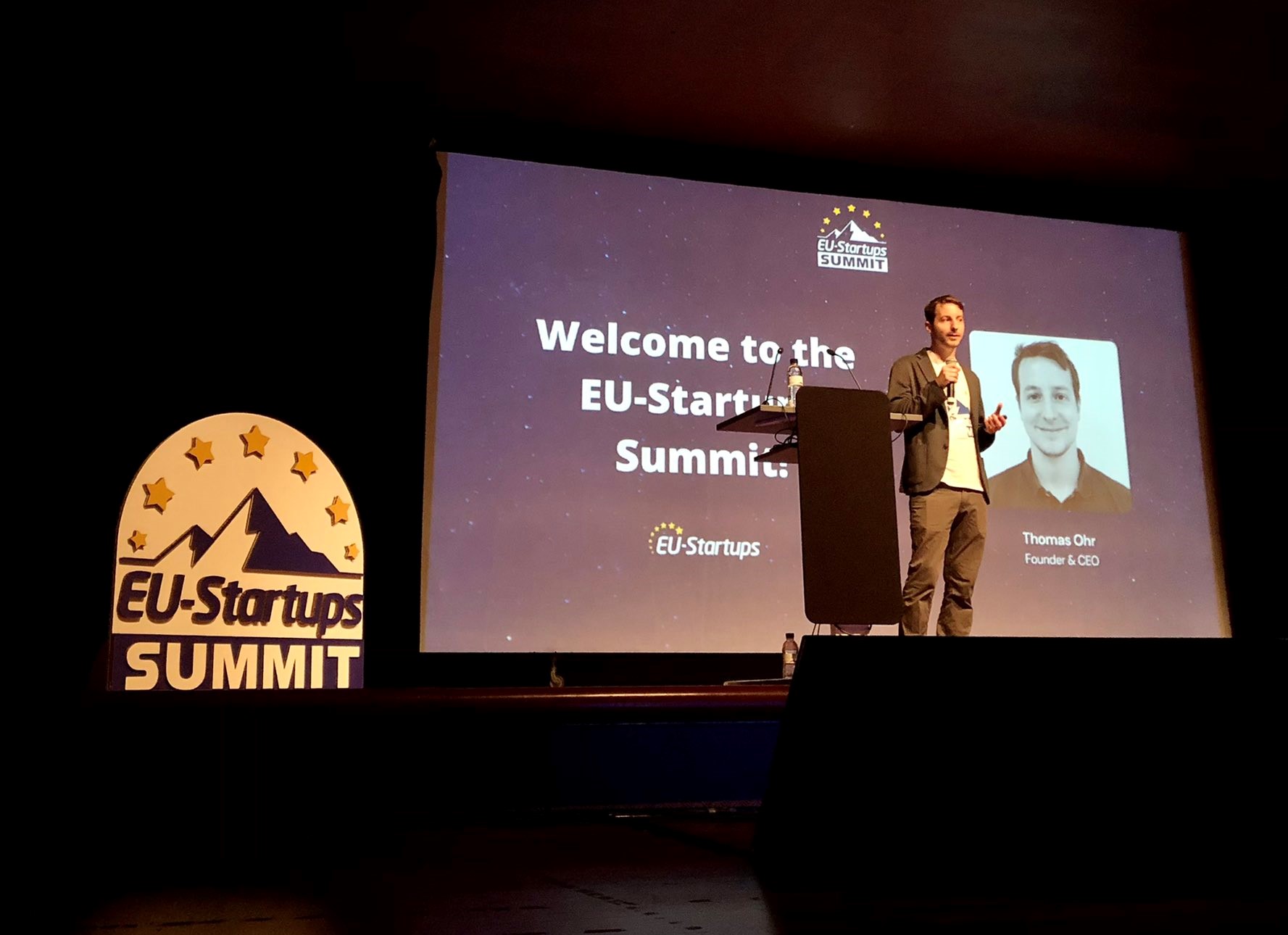
By April 2023, the Barcelona gathering brought together more than 2,000 founders, investors and startup enthusiasts. Ohr and Malta Enterprise CEO Kurt Farrugia used the closing stage to announce another move. The next edition would take place in Malta on May 9 and 10, 2024.
Ohr's explanation went beyond the venue. The gathering had, he said, “already from the very beginning” been “a European event”. Moving it was intended to preserve that international mix. An event can acquire a local identity simply by staying put. His argument was that its audience should keep a passport.
- 2014Munich
- 2015-17Berlin
- 2018Barcelona
- 2024Malta
What happens after the lanyards come off
A conference's most useful results can arrive after everyone has left. In July 2026, EU-Startups gathered examples of what Summit introductions had produced. One concerned Pekka Mäkki, managing partner at 3TS Capital, who first connected with the fintech company Wamo following the previous year's gathering. In April 2026, 3TS announced a €10 million investment in Wamo.
Other outcomes were smaller and less easily reduced to a funding headline. Coraltalk co-founder Melissa Morgan met an Italian distribution partner and secured a University of Malta customer. She also found an Australian friend with whom she later played padel. The programme had apparently extended itself into doubles.
Those are different kinds of return on the same activity: putting people within talking distance. They also make the organiser's job easier to understand. A stage supplies a schedule. The meeting after a session, or the conversation that continues over dinner, may supply the reason someone buys a ticket again.
For Ohr, the event sits alongside a publication whose stated purpose includes connecting aspiring entrepreneurs with others in the startup community. Reading and attending offer different levels of proximity. An article lets a reader encounter an idea; a gathering gives that reader a chance to ask its author a difficult question.
Nine years later, press record
The podcast supplied another kind of proximity. Its July 3, 2020 relaunch, The BIG PITCH, let founders make their own case in their own voices. Ohr's announcement described a fortnightly schedule and distribution through the website, Spotify, Deezer and YouTube, with further platforms to follow. The opening format put young companies at the centre of the recording.
There is something appealingly concrete about a one-minute pitch. It imposes a limit on the founder's enthusiasm and the listener's patience at the same time. Thirty selected pitches made an audio introduction to European startups, with each company responsible for earning its next sixty seconds of interest.
By December 19, 2024, the show had reached its numbered hundredth episode. It marked the occasion with a compilation featuring guests including YouTube co-founder Steve Chen, Eventbrite co-founder Renaud Visage and Guy Kawasaki. The format had expanded from a batch of brief introductions into an archive of conversations about building and financing companies.
That archive also belongs to a team. Marcin Lewandowski hosted the show for more than two years. His December 2025 farewell episode was recorded while playing padel with editor David Cendón Garcia, who announced he would take over hosting. Even a microphone handover, it seems, could be improved by making the participants chase a ball.
Ohr's connection to the programme is precise: he led its 2020 relaunch and remains the founder and CEO of the publication behind it. In May 2026, his byline appeared on the show's interview with Overmind founder Tyler Edwards. The podcast gives the wider editorial operation another place to introduce a founder and examine what the company is trying to do.
The founder on the receiving end
Ohr spends much of his professional life around people asking for attention. In June 2026, sitting down with communications specialist Cathy White, he discussed what makes those requests useful. His emphasis was on explaining a company's problem, relevance and human consequences. A description of product features, however lovingly assembled, does not automatically give a reader a reason to care.
He also encouraged founders to develop relationships before asking for coverage: follow a journalist's work, understand the beat and meet people at events. His concern about generic AI-written pitches followed the same logic. The sender still has to decide what is interesting and whom it interests. An email can be polished to a shine and remain remarkably difficult to see into.
That advice comes from running the receiving end as well as the sending end. As a founder himself, Ohr has had to explain why his own publication should exist. Its first post, its conference and its podcast each offer a different answer: coverage for companies, introductions for people, and time to hear someone explain a decision.
A sale, and a seat kept at the table
On November 11, 2025, Ohr announced that EU-Startups and Menlo Media had become part of Budapest-headquartered MeOut Group. He would remain CEO, the team would stay, and the business would continue operating independently from Barcelona. For readers following his career, the announcement marked an ownership change rather than a farewell.
The publication had already reached its 10,000th article in April 2024, with contributions from more than 120 voices. Those figures describe a different working arrangement from the early evenings of solitary writing. An archive that began with one founder's invitation had become a continuing collaboration, with editors, contributors, event organisers and podcast hosts carrying it forward.
Ohr's stated ambition remains to support founders and strengthen connections across Europe. His work gives that ambition some ordinary, observable forms: an article goes live, someone asks a question, a meeting continues after the event. The microphone's return after nine years is a useful detail to keep. A project can wait, change shape, acquire colleagues, and still have a conversation worth starting.
Continue the conversation
- An early interview: Tom Leathes · February 2012
- EU-Startups
- Thomas Ohr on LinkedIn
- Thomas Ohr on X
- Watch: Thomas Ohr, episode 55
- Watch the EU-Startups channel
- Listen: A Brief Coffee With Thomas Ohr
- The first post · October 2010
- The podcast returns · July 2020
- The move to Malta · April 2023
- 10,000 articles · April 2024
- The hundredth episode · December 2024
- MeOut Group announcement · November 2025
- The podcast handover · December 2025
- Overmind interview · May 2026
- Summit connections · July 2026
- On stories and media pitches · June 2026
- The team behind the publication