Thomas Neff’s college work came with an awkward filing problem. One senior thesis concerned strict scrutiny and constitutional law. The other concerned protein modeling. A librarian could assign each a shelf. A career counselor would have needed a longer conversation.
That pairing is a useful place to begin with the founder of FibroGen. Before the company, before the public offering, before the decades in the chief executive’s chair, there was a student willing to spend serious time in two different intellectual worlds. His eventual business career would keep both science and the organization of human affairs within reach.
Neff graduated from Claremont McKenna College in 1976 with a B.A. whose concentrations were molecular biology and government. He later pursued economics and finance at the University of Chicago’s Graduate School of Business. The sequence invites a familiar question: which subject did he finally choose? His subsequent jobs provide a less tidy, more interesting answer.
He worked in investment banking, helped establish royalty investment partnerships, and founded a company that he would lead from 1993 to 2019. Each role required a different reading of the future. The banker assessed transactions. The investor considered income streams. The founder had to arrange for an organization to keep working before the outcome of its work was settled.
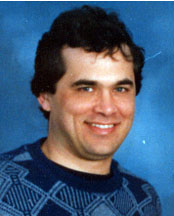
His professor Ward Elliott remembered an appetite for learning that made an ordinary course load seem insufficient. Neff worked as a lifeguard during a fifth college year and took roughly twice the usual number of classes across those five years. Elliott’s account includes another small detail: Neff taught the professor’s children how to handle intimidating interviews. Apparently the education traveled in both directions.
“He just wanted to learn everything”
Ward E. V. Elliott, Neff’s thesis adviser
The banker kept his other interests
At PaineWebber, Neff acquired experience in investment banking; the company biography prepared for FibroGen’s public offering places him there from 1983 to 1988. Lazard Frères followed, through 1992. In 1991, Institutional Investor included him among forty people selected as future financial industry leaders in a poll of six hundred financial leaders.
That recognition supplies a useful point of reference. Finance was an established part of his career before FibroGen existed. He had professional standing in a field with its own rewards and its own routes upward. Founding a company meant assuming a different set of responsibilities, with no convenient guarantee that the earlier success would transfer.
The royalty partnerships show one connection between the two careers. Neff founded Pharmaceutical Partners I and Pharmaceutical Partners II, entities that invested in drug royalties and preceded Royalty Pharma. A royalty interest gives an investor a claim on a defined stream of revenue. It turns a portion of future receipts into something that can be valued and financed in the present.
The arrangement is worth understanding without drowning in its paperwork. A company can raise money by selling shares in the whole business. A royalty transaction focuses attention on a particular revenue stream. Those are different bargains, with different obligations. Neff’s work brought him into the business of structuring the bargain as well as assessing the underlying opportunity.
He left the partnership group in 1998 to concentrate on FibroGen. The earlier duties continued: he remained managing general partner until the partnerships’ assets had been distributed through 2009. The résumé therefore contains an overlap that a simple list of job changes would conceal. Attention could move; contractual responsibility still had a timetable.
A founder’s calendar
FibroGen began in 1993. Neff became its chairman and chief executive, positions he held for the remainder of his life. The same year, he founded Three Arch Bay Health Science Fund, a private investment fund. That commitment ran to completion in 2011. His working calendar contained several institutions at once.
It is tempting to read a founding date as a moment of departure, after which the founder travels into an entirely new life. Neff’s chronology is more practical. The partnerships required distributions. The fund required management. FibroGen required leadership. The dates describe obligations being carried alongside one another, then gradually brought to their respective conclusions.
Founded in 1993. Nasdaq trading began in November 2014.
When FibroGen went public, it had already existed for twenty-one years. Its shares began trading on the Nasdaq Global Select Market on November 14, 2014. The offering closed five days later. At the closing, the company had sold 9,315,000 shares at eighteen dollars apiece.
Multiplication gives gross IPO proceeds of $167.67 million. The company also completed a concurrent $20 million private placement with AstraZeneca. After underwriting discounts, commissions, and offering expenses, the annual report recorded approximately $171.8 million in net proceeds from the two transactions together. Keeping those categories separate is part of understanding what the company actually received.
The ownership arrangements changed at the closing, too. The annual report recorded the conversion of outstanding preferred stock into common shares. Earlier investors and the new public shareholders would now appear within the same public company structure. Such details rarely make a ceremonial photograph, yet they are part of the transaction that makes the photograph possible.
For someone who had worked in investment banking, that structure was familiar professional territory. Neff’s role now included the continuing obligations of the listed company. The offering supplied money and new shareholders; it also gave the organization a reporting calendar that would repeat each year.
An IPO makes a company legible in a particular way: shares, prices, ownership percentages, reporting periods. Neff had spent years on the financial side of such arrangements. Now the company he founded was the one entering that public framework. He remained at its helm for almost another five years.
The address was part of the decision
Before the listing came a decision about where the company would work. FibroGen signed a fifteen-year lease in 2006 for headquarters in San Francisco’s Mission Bay. It completed the move from South San Francisco in 2008. Neff’s company joined the neighborhood while its identity as a center for scientific businesses was still being built.
A long lease gives a different measure of commitment from a speech about the future. It puts rent, space, and location into the operating plan. For a company with offices and laboratories, an address determines much more than where the mail arrives. It influences the people nearby and the practical arrangements of each working day.
In its 2014 registration statement, FibroGen described roughly 234,000 square feet of leased headquarters space in San Francisco, including space subleased to third parties. It also reported office and manufacturing space in Beijing. The scale and geography had become concrete entries in the company’s accounts.
That footprint gives the founder’s title some physical weight. Keeping a company going involves buildings as well as ideas, property agreements as well as partnerships. A promising project needs rooms in which people can work. An expanding organization needs decisions about how much room it will require and how long it can afford to commit.
The classroom, revisited
Neff returned to Claremont McKenna in another capacity in 2002, joining its Board of Trustees. His service continued until 2019. College president Hiram Chodosh remembered his contribution to the institution’s commitment to integrated sciences, along with his involvement in public safety and other college initiatives.
There is a pleasing continuity here. The former student had combined government and biology in his own education. As a trustee, he helped the college think about scientific learning within a broader institutional mission. The relationship now included decisions about what future students would be able to study.
Trusteeship also places a person in a different relationship to an institution. A student encounters the curriculum as a set of opportunities. A trustee helps consider the resources and commitments that make those opportunities possible. Neff’s career in finance and company leadership gave him experience with the second kind of question.
His public company biography also listed him as a named inventor on more than a hundred patents and patent applications. That distinction joins the academic interests to a recorded contribution at work. The description includes applications as well as patents, a detail that matters when counting the record.
His college friendships carried their own memories. Teammate Mike Sutton recalled working alongside him as a beach lifeguard in San Clemente and described him as “scary smart.” Water polo, two senior theses, and the summer job belong in the same account. They keep the future chairman recognizable as a person who once had classes to attend and shifts to work.
Twenty-six years, and a change of name
Neff died on August 25, 2019, aged sixty-five. FibroGen appointed board member James A. Schoeneck interim chief executive. The founding tenure had lasted twenty-six years. The organization would continue with other people making its decisions.
- 1976Claremont McKenna graduate
- 1993FibroGen founded
- 2002CMC trusteeship begins
- 2008Mission Bay move completed
- 2014Nasdaq debut
- 2019Founding CEO’s tenure ends
In January 2026, the company announced that it was adopting the name Kyntra Bio, with the Nasdaq symbol KYNB effective January 8. That later chapter belongs to its later leadership. Neff’s work remains anchored to the years when he was there: the founding, the overlapping financial commitments, the headquarters decision, the public offering, and the college board.
His paired theses offer a fitting way back through those dates. Constitutional law asks how authority is exercised and constrained. Protein modeling concerns the arrangement of the small structures of life. Finance introduces another set of questions about resources and obligations. Neff’s career placed these interests within the same working biography.
A degree records what someone studied at a particular time. The rest of a life reveals which parts remained useful. For Thomas Neff, the transcript kept finding new company: an investment partnership, a leased building, a board meeting, a public offering. The education continued to have places to go.