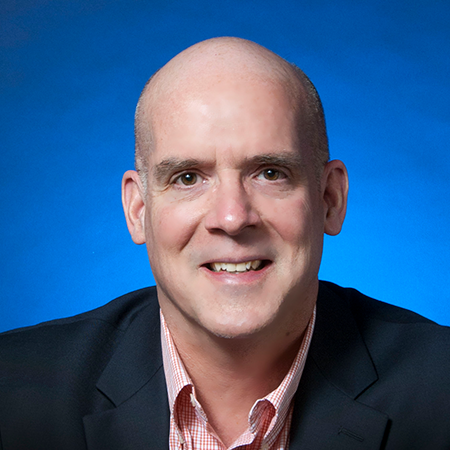
A career built on compounding tenure
Tom Moran ran Goodwill Central Coast, the Salinas nonprofit that puts secondhand sweaters into shopping bags and job-seekers into paychecks. He arrived as Chief Financial Officer in 2018, served as interim chief executive after the previous CEO left in late 2019, and was confirmed by the board as President and CEO in June 2020. The title now reads "former" - he has stepped back from the role, though he remains in the orbit of the regional civic groups that shape the Central Coast economy.
The thing worth noticing about Moran is not the destination. It is the route. He showed up at Goodwill as a volunteer director in 2009, sat on the board for five years, served as chairman in 2013, and then walked away. Most board chairs disappear after they hand over the gavel. Moran came back, this time on the payroll, with the keys to the spreadsheet. By the time he was running the place, he had spent more than a decade studying it from the inside.
Before nonprofits, the resume was retail. ARAMARK. Limited Brands. CarMax Auto Superstores. West Marine. Conn's, Inc. CFO twice. Strategic planning at scale. The kind of career path that explains how someone ends up parsing the unit economics of a donation truck route at midnight.
The math at Goodwill Central Coast is unusual. Annual revenue around $7.2 million. Roughly 1,100 employees across three California counties. Sixteen retail thrift stores. Twenty donation sites. Two industrial plants. An e-commerce division. A vocational rehabilitation program that helps thousands of job-seekers each year. It is a nonprofit with the operating complexity of a mid-market retailer and the mission profile of a social services agency. Run badly, it bleeds. Run well, it funds itself.
Moran ran it well enough to keep it running. That is not a small thing. Goodwill chapters across the country have struggled with the post-pandemic squeeze - donations down in one year, surging the next, retail labor markets unrecognizable. The Central Coast chapter kept its doors open, its donation centers staffed, and its workforce programs delivering. The 990 filings tell a relatively boring story. In nonprofit finance, boring is the highest compliment.
The unusual credential
There are not many retail CFOs with a physics degree. Holy Cross, the Jesuit liberal arts college in Worcester, Massachusetts, is not a finance feeder school - it is the place you go if you want to read Aquinas in the morning and solve differential equations in the afternoon. From there Moran went to Duke's Fuqua School of Business for an MBA, which is a more conventional pivot, and then into the operations of large retailers.
It is tempting to read too much into the physics background. Plenty of executives have STEM degrees they barely use. But Moran's career has a quantitative, systems-thinking shape to it - twenty years inside the kinds of multi-unit retailers where the difference between a good month and a bad month is a fraction of a point in the gross margin. CarMax built itself on data. West Marine survived on inventory turn. Conn's lived and died on consumer credit. The physics may not show up in the day-to-day, but the habit of mind probably does.
Why Goodwill, why now
The pivot from for-profit retail to a thrift-store nonprofit is not as wide a leap as it sounds. Goodwill, structurally, is a retail business with a social mission strapped to the chassis. The donations arrive. The volunteers and employees sort, price, and shelf them. The stores sell them. The proceeds fund job training, vocational rehabilitation, and community programs. Margin discipline matters. Inventory rotation matters. Labor cost per store matters. A retail CFO understands the engine. The difference is what the fuel is used for.
For Moran, the pull was probably mission-shaped and place-shaped at once. He had served on the board. He lived in Corralitos, a small unincorporated community in the Santa Cruz Mountains. He had decades in the seat-belt of corporate retail. The Central Coast offered a chance to take what he had learned at Limited Brands and CarMax and aim it at job training for the people of Monterey, Santa Cruz, and San Luis Obispo. That is a respectable destination for a long career.
The civic footprint
Moran serves as Board Treasurer of the Monterey Bay Economic Partnership, a regional consortium of business, government, and education leaders working on housing, broadband, workforce, and economic development across Monterey, Santa Cruz, and San Benito counties. The role is consistent with the rest of his profile. He is the person you put on a finance committee. He is not the person you put behind a microphone. The work is quiet, structural, and durable.
That low-key civic presence matters in a region like the Central Coast, where the economy is split between agriculture, tourism, technology spillover from Silicon Valley, and a fragile labor market. Goodwill is one of the bigger employers in the region. The CEO of Goodwill is, by default, a player in the workforce conversation - even if he never raises his voice in it.
The afterword
Moran has stepped back from the CEO seat - public records now list him as former or retired - though the LinkedIn profile remains, the MBEP page remains, and the email at ccgoodwill.org remains in circulation. The clean handoff is part of the discipline. Operators like Moran do not tend to linger. They run a thing well, they hand it over, and they go hiking.
And the hiking part is real. Moran and his wife Lindora are reported to spend their time outdoors across California. After two decades of retail finance and the better part of a decade inside Goodwill, the Santa Cruz Mountains will probably do.
If there is a lesson in the Moran story, it is the one that retail veterans already know and nonprofit boards keep relearning: the most useful executive is usually the one who has been in the room before. Moran was on the board, then off it, then back as CFO, then up to CEO. Five years on. Four years off. Two years as CFO. Four years as CEO. By the time he was running Goodwill Central Coast, he had been studying it for more than a decade. That is what compounding tenure looks like. It is unglamorous. It works.