The future Thomas Lake describes makes a very small sound. A package arrives. You place a device against your arm, press, hear a click, count roughly ten seconds and remove it. The annual errand has become an action performed at home. For a career spent around hulking manufacturers, specialized refrigerators, regulated processes and international alliances, it is an almost comic finale: decades of machinery distilled into one modest click.
Lake is the chief business officer of Vaxxas, an Australian biotechnology company developing a high-density microarray patch, or HD-MAP. Thousands of microscopic projections sit on the patch, each carrying vaccine material. The business proposition is as important as the mechanism. The company is working toward products that could be easier to distribute and simpler to administer than a conventional injection. Lake's remit is to help assemble the partners, production capacity and money that might move that proposition from clinical development into ordinary life.
He is based in Greater Philadelphia, half a world from Vaxxas' Brisbane headquarters. Yet Philadelphia is where the story makes sense. After graduating from the University of Maryland in 1988 with a degree in biological sciences, Lake began at Merck there as a vaccine technician. He thought his future might be at the bench. Instead, the factory taught him to notice the organization around the science.
The factory was the first business school
At Merck, biology stopped being an academic subject and became a promise that had to survive repetition. Lake worked around live-virus and recombinant vaccine production, sterile filling and quality control. A process did not merely need to work once. It needed to work again, under rules, at scale, with the same result. That is a stern education in reality, and an excellent cure for the breezy use of the word “innovation.”
He stayed for 18 years, eventually becoming senior director of vaccine operations. Along the way he earned an MBA at Villanova University and served as manufacturing alliance manager during the startup of a European joint venture between Merck and Sanofi Pasteur. The movement was gradual but decisive: from making the thing, to managing how it was made, to understanding how institutions agree to make it together.
He arrived expecting the bench. The business built around the bench proved just as compelling.Lake's account of his early Merck years
Lake has a tidy description of what followed: he “sort of stumbled” into vaccines and then did nothing else. The stumble is true only at the entrance. Everything afterward looks like a deliberate widening of the lens.
A career moving outward from the vial
The startups hiding inside the résumé
In 2007, Lake left Merck to start a small vaccine administration company. Two years later he returned to big pharma to lead U.S. vaccine marketing at GSK. Then came another entrepreneurial stretch, including MinibarRx and Optical Inventory Solutions. One venture worked on vaccine storage and administration; another used a connected camera system to count inventory and make reordering less cumbersome. Lake also operated a vaccine commercialization consultancy.
The names have a cheerful startup plainness. Their subject was less glamorous: stock on shelves, capital tied up in refrigerators, replenishment, reimbursement, missed doses. In a 2018 essay about the American “buy and bill” model, Lake followed the dollars from insurer to clinic to supplier and argued for a cleaner system. He knew that access can fail without any scientific failure at all. A dose can exist and still be in the wrong refrigerator, purchased by the wrong party or absent when someone is ready for it.
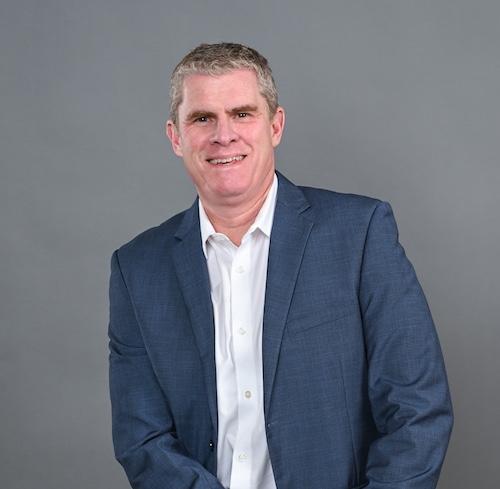
This is why his scientific training still matters. Lake does not present himself as the person discovering the molecule. His value lies in being able to hear a technical argument without sanding off its important edges, then carry it into a commercial conversation. His Maryland training, he says, gives him enough scientific fluency to understand research and clinical discussions and translate them into business value.
The translation job
He called the company he wanted to join
By 2017, after another vaccine-related startup, Lake wanted a new problem. He studied a range of technologies and settled on microarray patches. Then he did something pleasantly uncomplicated: he contacted Vaxxas' chief executive and asked how he could help grow the business. He arrived first as a consultant, helping the company win contracts with governments and pharmaceutical companies. Vaxxas later brought him inside full-time.
The anecdote says more about him than a polished leadership maxim could. Lake was already a veteran of Merck and GSK. He had founded companies. Still, he approached the next chapter with the useful humility of someone willing to knock, explain his tools and ask for work. It also reveals a preference for the practical. He was not joining a fashionable category in the abstract. He had picked a technology, studied its bottlenecks and found the company building it.
“Second, the flow of dollars is inefficient.”Thomas Lake, writing about vaccine financing in 2018
At Vaxxas, the division of labor makes partnerships unavoidable. The company develops the delivery platform; it does not make all the vaccine antigens that would go onto it. Lake's job therefore lives in the connective tissue. Large pharmaceutical companies bring products and manufacturing reach. Governments and global organizations support research and preparedness programs. Vaxxas brings the patch, coating process and applicator. A commercial product requires the parts to behave like one enterprise before they are one product.
The tiny patch has a long to-do list
Lake has spoken publicly about the promise and the obstructions in the same breath. Microarray patches could reduce reliance on refrigerated distribution, use less antigen per dose and make administration simpler. Commercial adoption still asks harder questions: Can manufacturing scale? Will regulators approve the combined product? Will customers accept it? Can the company finance infrastructure before late-stage trials generate the comfort investors prefer?
Those are not footnotes to invention. They are the plot. In recent years, Vaxxas has built a biomedical manufacturing facility in Brisbane, run clinical programs, expanded government-backed work and developed partnerships with vaccine makers and global-health organizations. In 2025 the company announced roughly A$90 million in financing to install more automated manufacturing and advance later-stage programs. In 2026 it entered a European consortium with SK bioscience and IDT Biologika for next-generation influenza work. Lake's title changed from senior vice president for strategic alliances and commercialization to chief business officer, a promotion that neatly describes the expanding assignment.
He has carried that assignment onto conference stages and into technical rooms: manufacturing scale-up at a vaccine congress, commercialization challenges at a microneedle forum, self-administration in Philadelphia, clinical plans at a World Health Organization meeting in India. The geography is broad because the product's usefulness depends on broad adoption. A patch developed in Brisbane may need antigen from one partner, funding from another and a regulatory path through several markets. Lake, from Philadelphia, works the map.
A click is not a conclusion
There is restraint in Lake's stated ambition. He talks about the at-home future, but he also says Vaxxas remains a clinical-stage company and that commercialization is still a few years away. His first goal is simply formidable enough: bring the product to market. To do that, he wants a broad base of pharmaceutical partnerships capable of putting multiple vaccines onto the platform.
This patience is not timidity. It is what 18 years in manufacturing does to a person's verbs. Lake tends to speak of establishing, scaling, partnering and launching. The nouns may be futuristic; the verbs wear work boots.
His career can be read as a tour of all the reasons a good scientific idea might never reach anyone. Production can wobble. Inventory can sit. Financing can loop. Partnerships can stall. Regulation can take longer than enthusiasm. By moving from technician to operator to marketer to founder to dealmaker, Lake has collected a view of the entire obstacle course.
And so the little click at the start of this story carries unusual weight. It is not merely the sound of a device. It is the sound Lake hopes the rest of the system will eventually permit: biology that survived manufacturing, a partnership that survived negotiation, a product that survived development and a supply chain that finally got out of the way. Small sounds, after all, often require a great many adults in a great many rooms.