There is a small joke hidden in Steve Watt’s job title. At Atterx BioTherapeutics, he is both Chief Operating Officer and Chief Scientist, which means he is responsible for the unruly behavior of bacteria and the unruly behavior of a biotechnology company. The first multiply. The second must keep enough money, evidence and momentum to survive the years between a persuasive experiment and a usable product. Watt has been doing both jobs, in one form or another, since he joined the Madison company in 2006.
The company was then called ConjuGon. Its central proposition ran against the familiar grammar of infection control. Medicine usually describes bacteria as trespassers to be eliminated. ConjuGon was interested in a different possibility: recruit a harmless organism, let it occupy valuable territory and make the neighborhood less welcoming to dangerous microbes. In ecological terms, it is competition. In the company’s vocabulary, it is bacterial interference. In ordinary language, the useful bacterium gets there first.
Watt’s career makes sense as preparation for that argument. He trained in biochemistry and microbiology at the University of Guelph. In 1994, while at Guelph, he and Anthony Clarke published a paper on two extracellular autolysins produced by Pseudomonas aeruginosa. The title is sternly technical; the habit behind it is clear. Watch bacteria closely. Notice when they release particular enzymes. Work out how their behavior changes over time.
A career built at the scale of a cell
After graduate work, Watt held a postdoctoral position at the University of Texas MD Anderson Cancer Center in Houston in 1998 and 1999. He later worked as a scientist at Promega. He moved into senior management at Infigen, where he directed cell biology and transgenesis, and at OpGen, where he directed government programs. A 2004 paper in the Proceedings of the National Academy of Sciences lists him among the researchers who produced pigs lacking a particular sugar-producing gene, work tied to the problem of immune rejection across species. The organisms were larger by then; the intervention remained cellular.
Those roles also widened the job. Government programs require a scientist to speak in milestones, budgets and deliverables. Transgenesis turns elegant molecular biology into a managed chain of procedures. When Watt arrived at ConjuGon, he brought the vocabulary of the bench and the scar tissue of administration. A tiny biotech needs both. Its chief scientific question may be microscopic, but the paperwork is life-sized.
“We are extremely pleased that the FDA has cleared our IND.”Steve Watt, as ConjuGon COO, 2009
That clearance came in April 2009 for C-1205, the program that still anchors Atterx’s public story. The product was designed for people with indwelling urinary catheters. Its active ingredient is a benign strain of E. coli. The company’s formulation is stored as a freeze-dried powder, mixed with water to make a gel, then used in place of the usual catheter lubricant. Once introduced, the benign bacteria are intended to colonize the bladder and reduce the opportunity for infection-causing organisms to settle in.
A benign bacterial strain is held in a freeze-dried preparation.
Water turns the preparation into a catheter lubricant.
The strain is intended to colonize the bladder before harmful organisms do.
It is a sophisticated idea disguised as an act of hospitality. The trick is not merely to find a harmless strain. The organism has to survive preparation and storage, revive predictably, establish itself in the intended setting and behave consistently enough for regulators. A bacterium is not a tablet. It is a guest with opinions.
The sixteen-year middle
Press releases make drug development look like a row of stepping stones. Watt’s record supplies the water between them. One year after the IND clearance, ConjuGon raised $1.9 million for its antibacterial programs. The company had already received federal support, including small-business awards for new approaches to unwanted bacteria and resistant wound infections. Patents followed. One issued in 2020 names Watt, Caleb Dorsey and Josh Smith as inventors on methods involving the growth, storage and use of bacterial preparations.
- Watt joins ConjuGon.
- FDA clears the C-1205 IND.
- ConjuGon becomes Atterx.
- C-1205 receives Fast Track.
In 2018, ConjuGon changed its name to Atterx BioTherapeutics. The new name was crisper, but the underlying work continued. This is where Watt’s dual title stops sounding ornamental. A chief scientist guards the integrity of the idea. A chief operating officer guards the conditions that allow the idea to remain alive. In a three-person company, there is little room for the theatrical separation of vision and execution. Someone who understands the assay may also need to understand the grant, the vendor and the next meeting.
How do you turn living material into a repeatable preparation?
The patent naming Watt and colleagues covers methods for producing and storing bacterial preparations and using donor organisms in antibacterial approaches. The mundane verbs matter: grow, store, prepare, use.
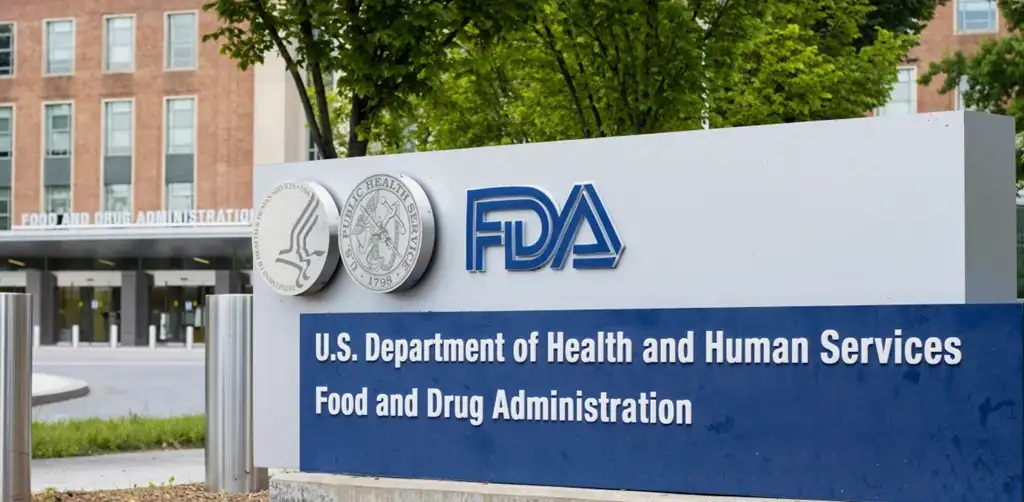
The calendar is bracing. Sixteen years separate the 2009 IND clearance from Atterx’s May 2025 announcement that the FDA had granted C-1205 Fast Track designation. Fast Track is meant to increase communication with the agency and potentially speed review for drugs addressing serious conditions and unmet needs. It is a development designation, not an approval. The distinction matters, especially in an industry forever tempted to let the headline arrive before the evidence.
For Watt, the designation was another marker in a continuous project, not a sudden conversion of the world to his view. By then, the microbiome had become a consumer word, probiotic products crowded supermarket shelves and the notion that some microbes could be useful no longer sounded eccentric. C-1205’s history predates much of that fashion. The company’s approach is narrower and more demanding than a general promise about “good bacteria.” It proposes a specific strain, formulation, route and clinical purpose.
The operator as institutional memory
Small biotechnology companies are often described through their assets: two candidates, a patent estate, a platform. They also depend on memory. Someone must remember why an early formulation failed, which result changed the next protocol, what a regulator asked five meetings ago and which compromise would quietly break the scientific premise. Watt’s tenure makes him a keeper of that memory. He has remained through ConjuGon and Atterx, through financing announcements and fallow public years, through a name change and two different FDA milestones.
Continuity can sound suspiciously like stasis, but Watt’s tenure was not spent standing still. The formulation became a freeze-dried preparation. The delivery method became a lubricating gel. The regulatory language moved from permission to begin a study toward a designation intended to facilitate development. Meanwhile, the intellectual property addressed the unromantic obstacles that living medicines present: how to isolate a useful variant, propagate it, preserve it and recover it in a form that still performs. The thesis stayed legible because the implementation kept changing.
His public persona is correspondingly spare. There is a LinkedIn page, institutional biographies, papers, patents and old company announcements. There is little of the founder-as-content-machine performance now common in technology. The record instead accumulates sideways. His name appears in the early bacteriology paper, the transgenic-animal research, the IND quote, the patent documents, Wisconsin business registrations and, most recently, an advisory biography at Bench in a Box Technologies.
That 2026 advisory role fits the pattern. Bench in a Box is developing a molecular detection platform; Watt is presented as an advisor who has spent years moving biologics and pharmaceuticals toward practical use. Advice, in this case, is likely less about grand theories than sequence. Which experiment first? Which claim can the data carry? What has to remain true when a laboratory procedure becomes a product?
The experiment and the enterprise share the same clock. Watt’s career has been an exercise in watching both.
There is no tidy ending yet. Atterx says C-1205 has Fast Track status and that no expanded access is currently available. Its website describes an FDA-approved Phase I study and a planned path into further clinical work. Those statements leave the program where honest biotechnology usually lives: between a credible mechanism and the proof required to make it routine.
Watt’s story is therefore not the fable of a lone inventor or a victory lap around one designation. It is a study in durable attention. He began by observing what bacteria release into a culture. He later helped build products around what bacteria can prevent, transfer or displace. Around that scientific thread, he learned to operate institutions: a government program, a laboratory group, a venture-backed company, a regulatory process.
The charming part is still the original inversion. A dangerous bacterium arrives to find the seat taken. The serious part is everything required to make that encounter safe, stable and reproducible. Nearly twenty years after Watt joined the company, the friendly bacterium remains both the product and the wager. He remains one of the people keeping its place.