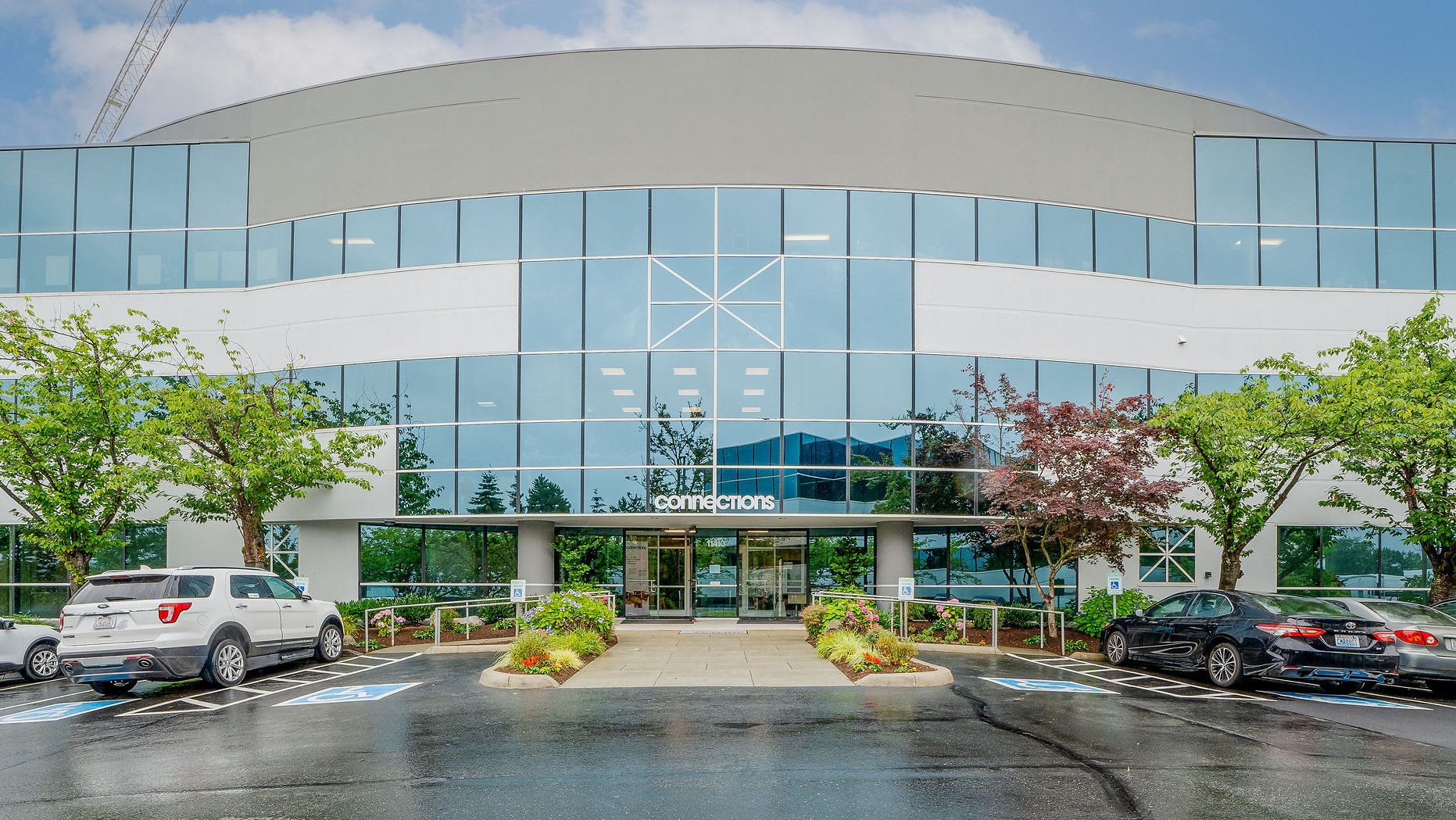
An office building has a stubborn way of telling you what it is. There are meeting rooms, parking spaces, places to plug in computers. At Kirkland 405 Corporate Center, outside Seattle, one building acquired a different answer: a place where people could walk in during a mental health crisis. The Roxborough Group, its owner, helped make that change possible. In May 2026, the firm announced that King County had bought the building for $32.6 million.
- Roxborough pools investor capital to buy and improve real estate.
- Its bets turn on local demand, existing cash flow and what a property could become.
- Operating partners help turn those investment ideas into functioning places.
The interesting part comes before the sale. Roxborough bought two buildings at the campus for $35.7 million in February 2019. Connections Health Solutions subsequently raised $20 million in county and state grants to convert one into a care facility. That required seismic strengthening, new electrical service and purpose-built treatment space. A change of use was also a construction project, a financing exercise and a long-term leasing decision.
A building gets a second job
When the center opened in 2024, the company reported that the campus was 95% leased, with a weighted-average lease term exceeding ten years. The operator had a home. The landlord had a durable tenant. Residents had another place to seek care. Those outcomes depended on different parties wanting different things from the same address.
It is tempting to put the purchase and sale prices next to each other and announce a triumph. Resist. The original purchase covered two buildings; the sale covered one. Grants raised by the tenant are a separate pot of money. Acquisition costs, financing, landlord spending, rental income and holding expenses matter. The public figures describe a transaction, not a complete investment return.
Two buildings
Raised by Connections
Building A-1 only
The conversion illustrates Roxborough’s business more clearly than an asset-class label could. The firm supplies investment capital and asset management, investing directly or alongside operators. Its investors include endowments, pensions, family offices and wealthy individuals. Their problem is finding and executing property investments. The work extends from deciding what to buy to making the building useful enough for somebody else to want it.
The map is smaller than the market
Marc Perrin founded Roxborough in 2013 after sixteen years at Starwood Capital Group, where his responsibilities included co-heading U.S. investing. His earlier work included real estate investment banking at Salomon Brothers. The experience helps explain the firm’s broad remit: properties, structured capital and real estate-related businesses, rather than a single kind of building.
Its stated approach starts with economic forces, then narrows toward particular submarkets and individual assets. The useful question is specific: what creates demand here, and what prevents somebody from supplying more of the same? Roxborough emphasizes buying below replacement cost and prioritizing cash flow. On its strategy page, the firm puts one principle bluntly:
“Avoid principal loss and let the upside take care of itself”The Roxborough Group / investment strategy
That is an ambition, not insurance. A building can cost less than a new one and still lack tenants. The practical distinction is the firm’s ability to move among sectors and structures as opportunities change. Its menu includes core-plus, value-add, opportunistic investments and high-yield structured debt or preferred equity. Compared with a sector-specific manager, that flexibility gives it more places to look, while demanding broader underwriting expertise.
A train station. A power supply.
Consider Union Flats. In April 2025, Roxborough and Camden Pacific Partners announced an $81.6 million purchase of the 243-unit Union City apartment community. Built in 2018, it was 93.4% occupied and directly across from BART. The partners were buying an existing rental business with transport access, rather than waiting for a development to become one.

The company’s announcement identified no apartment communities under construction in Union City at the time. Roxborough argued that costly new development helped protect the property from competition. Camden Pacific brought a multifamily investment focus; Sares-Regis Group was appointed property manager. Eastdil Secured arranged financing from New York Life Real Estate Investors. One purchase contained several distinct jobs.
In May 2026, another partnership applied the same attention to scarcity in a different setting. Roxborough and Paceline Investors bought 2581 Junction Avenue in San Jose for $29.2 million. The 102,722-square-foot R&D facility was leased to battery technology developer Ensurge Micropower. Its useful details included cleanroom improvements and approximately 8,500 amps of power capacity. Existing infrastructure was part of what the buyers valued.
The two properties make an instructive pair. For apartments, access and barriers to new supply support the thesis. For specialized industrial space, power and technical fit enter the calculation. Neither proposition can be reduced to enthusiasm for California. Each depends on a user needing something that this particular property already has.
The capital behind the address
Roxborough’s first fund closed at $101 million in January 2015, led by the University of Texas Investment Management Company. Fund III closed in July 2021 with commitments just above $518 million, exceeding its original hard cap. That money belongs to the investment vehicle’s capital base. It is not a venture funding round or a valuation of Roxborough itself.
The firm describes senior team members investing personally alongside its investors. It also presents attention to detail, transparency and honesty as cultural priorities. Those are company-stated commitments; the observable work is in the partnerships, leases, acquisitions and completed changes of use.
What can another business copy? Start with the eventual user. Separate an attractive purchase price from a credible operating plan. Find partners whose abilities match the job. Kirkland also supplies the condition: the approach needs a suitable building, a committed operator and workable capital. Public grants helped make that conversion possible. An empty office without those ingredients is still an empty office, however persuasive the spreadsheet.