There is a particular sort of problem that appears only after a hotel becomes very good. The beds are immaculate. The pool disappears into the horizon. The restaurant has the proper number of stars. Yet the people the hotel most wants to meet - studio executives, producers, agents, athletes, founders - do not arrive simply because the thread count is excellent. They are busy, protected and professionally suspicious of invitations from strangers.
This is the narrow opening in which The Friedman Group operates. Founded in Santa Monica by Julie Friedman in 2001, the firm calls itself a brand-enhancement agency. That description is accurate in the way that calling a maître d' a person with a reservation book is accurate. The visible task is an introduction. The useful thing is the judgment behind it: who belongs in the room, why they might come, what should happen once they do and whether anyone remembers to call them next month.
The sitcom in the swimming pool
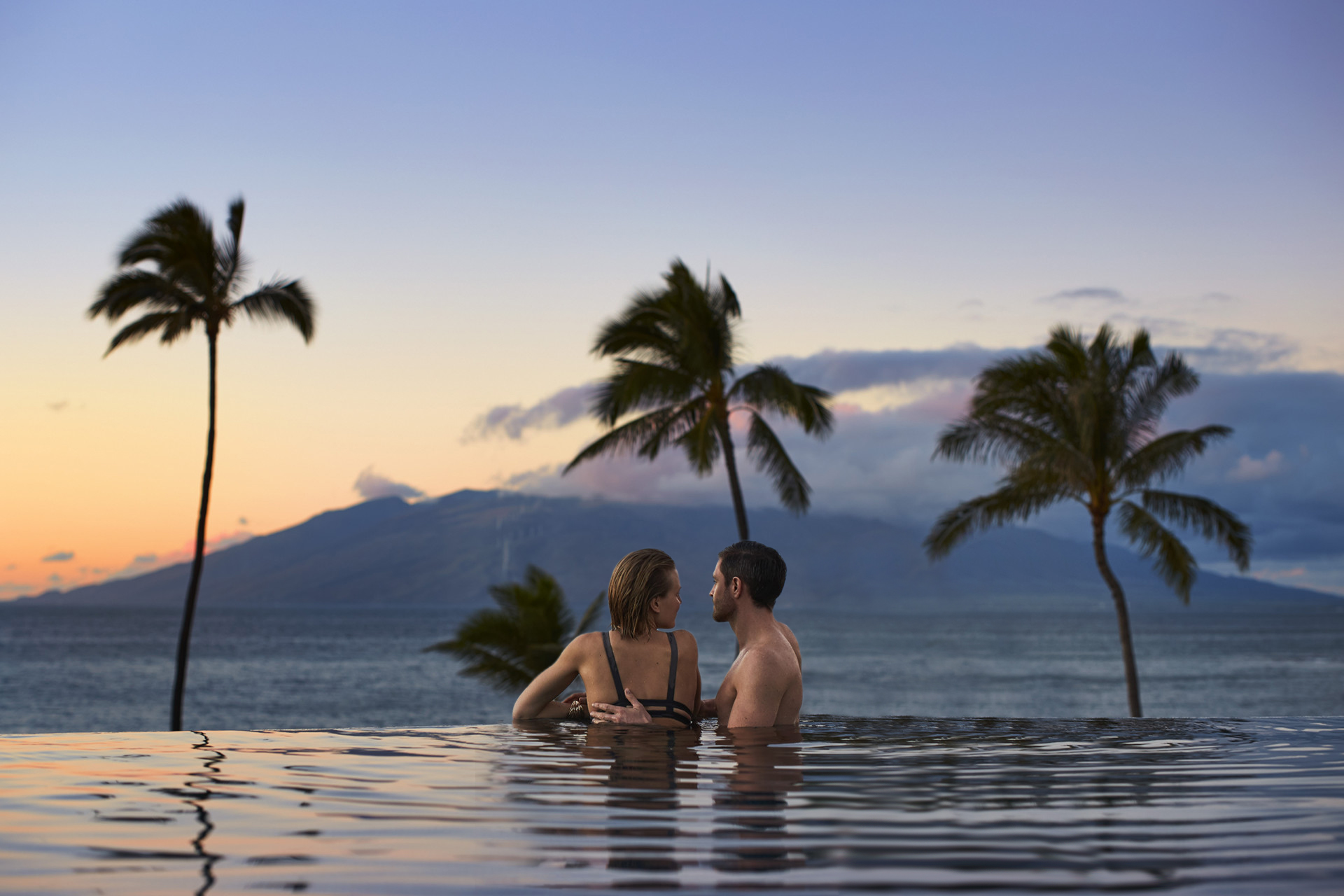
The firm's most revealing case began when Four Seasons Resort Maui at Wailea wanted to become a favored luxury destination for Hollywood. A normal campaign might have described the resort to producers. Friedman instead brought producers and writers to the resort, creating its first Producers and Writers Retreat. The distinction matters. A brochure asks someone to imagine a place. A retreat lets that person order breakfast there.
One result was unusually literal. The Friedman Group says it secured a placement for the resort in Modern Family. In May 2010, ABC aired “Hawaii,” filmed at Four Seasons Maui. The resort's own release anticipated roughly 10 million viewers; reported Nielsen figures later put the audience at 10.335 million. The company summarizes the outcome as millions of media impressions. More interesting than the number is the route: experience first, relationship second, exposure third.
Approximate viewers for the Maui episode. The placement put the actual resort inside the story instead of placing an advertisement around it.
“Julie first focuses on helping to create meaningful relationships which become longstanding loyal clients.”Hermann W. Elger, Baccarat Hotels & Resorts
That order explains the business better than the phrase “influencer marketing.” The Friedman Group is not advertising rooms to a mass audience or merely mailing complimentary stays to a long list. Its stated specialty is “relationship access, marketing influence and relationship management.” Access opens the door. Management is what prevents the door from swinging shut.
The relationship loop
A network with table manners
The client roster looks eclectic until one notices the common constraint. It includes Four Seasons resorts in Maui, Lanai, Chicago, Nevis, Orlando and Tamarindo; Baccarat Hotel New York; The Ritz-Carlton Grand Cayman; Montage Los Cabos; Shangri-La Paris; the private-terminal company P/S; watchmaker Panerai; and international film festivals. All sell premium experiences. All benefit when a relatively small number of well-connected people understand the product. Their problem is not a shortage of possible customers. It is a shortage of credible paths to the right ones.
The Friedman Group's film-festival work makes the operating details easier to see. For festivals seeking a North American profile, the firm markets the event to entertainment talent, communicates with representatives, runs invitations and RSVPs, and handles talent logistics on site. This is part diplomacy, part production. The glamorous output is a red carpet. The work underneath is a spreadsheet full of arrival times, representatives, dietary requirements and promises that must be kept.
By 2026, the agency said it had worked with Italy's Giffoni Experience for 21 years. Longevity is an important metric here because this is a business built on borrowed trust. Every introduction asks one person to rely on Friedman's judgment about another. A careless match would not merely disappoint one client; it could reduce the value of the next call. The inventory renews itself only when handled carefully.
What the client is actually buying
Publicly, the firm offers no software platform, packaged subscription or price list. It is a founder-led B2B service business, likely sold through bespoke projects or retainers. The deliverables can include strategy, introductions, hosted programs, product-placement opportunities, festival representation and hands-on event work. But clients are buying two less tangible things: compressed search time and transferred credibility.
Conventional reach
- Buys a large audience
- Repeats a controlled message
- Optimizes impressions
- Works at media speed
Relationship access
- Selects a small audience
- Creates a lived experience
- Optimizes relevance
- Works at trust speed
That makes The Friedman Group different from a general public-relations shop, a celebrity-booking agency or an event producer, even though it overlaps with all three. A PR agency may pursue coverage. A booking agent may deliver a name. An event company may make the evening run on time. Friedman's pitch combines the three around an existing web of relationships, then keeps cultivating the resulting business.
Baccarat executive Hermann Elger describes the outcome not as a temporary bump in publicity but as entertainment-industry relationships that become loyal hotel clients and revenue. Giffoni founder Claudio Gubitosi praises Friedman's persistence. Both testimonials point to the unphotogenic half of the job: follow-through.
The part nobody can outsource
There is a useful playbook here for a company too small to hire a Hollywood connector. Begin with the experience, not the publicity. Decide which tightly defined group would genuinely value it. Give that group a reason to spend useful time together. Remove every logistical irritation. Then treat the first gathering as the start of a relationship, not the end of a campaign.
The method has conditions. The product must hold up when influential guests arrive. The invitation needs relevance beyond free luxury. The host must be selective enough to protect everyone's time, and patient enough to maintain contact without turning every conversation into a pitch. If those pieces are absent, access becomes a stunt. A famous guest may create a photograph, but not necessarily a customer.
The Friedman Group's enduring trick is pleasantly old-fashioned. It treats attention as a consequence of usefulness. A resort becomes useful to writers as a place to retreat. A festival becomes useful to talent as a serious cultural occasion. A private terminal becomes useful to people for whom an ordinary airport is friction. The firm then places those uses in front of people who can act on them.
Twenty-five years after its founding, the agency remains small and its offering remains personal. That may be a constraint, but it is also the point. There is no self-serve button for trust. Somewhere between Santa Monica and Maui, someone still has to know whom to invite, pick up the telephone and make the room worth entering.