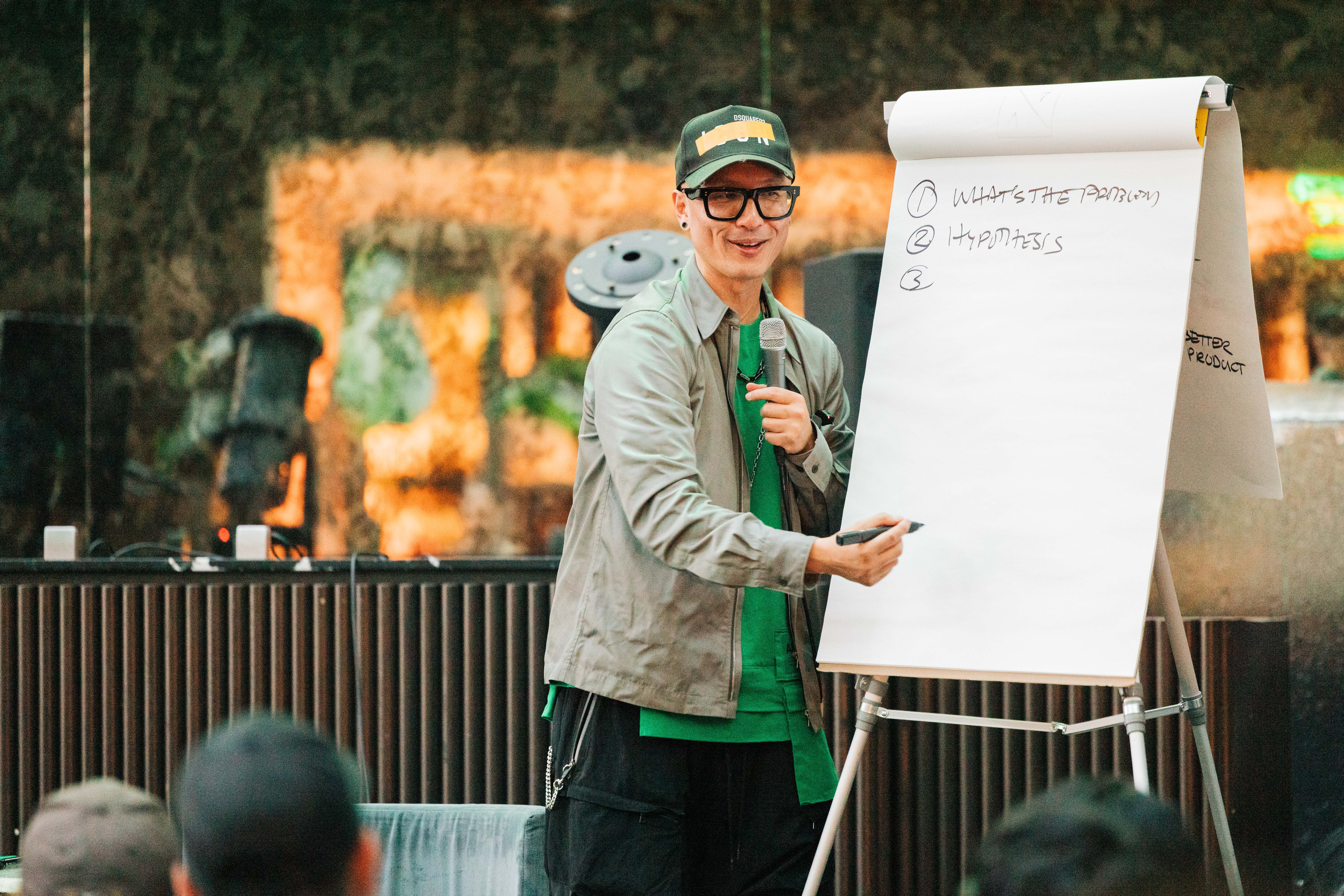
A Talent Problem That Isn't About Talent
There is a specific silence that settles over a room when a skilled creative is asked to name a price. The work is done. The portfolio speaks. And still, at the exact moment the number should arrive, it doesn't. Selling feels like a betrayal of the craft, so the craft quietly goes underpaid.
The people who describe this best are the ones living it. "The best creatives I know hate selling," goes the line that started this piece. "That's why they're broke." It is a blunt sentence, and it lands because it is true often enough to sting. Talent gets you into the room. It does not, on its own, teach you how to talk about money once you are there.
The pattern is familiar to anyone who has freelanced. Talking about money feels dirty - some half-remembered idea that it is the root of all evil. Conflict feels worse, so the money conversation gets punted to the end, or past it. Confidence wavers. The number shrinks in your own mouth before the client has said a word. Then scope creeps, the work grows, the pay does not, and resentment sets in - the kind you can't even direct at anyone, because you did it to yourself.
None of this is a character flaw. It is an untaught skill wearing the costume of one. And untaught skills, unlike character flaws, can be taught. What was missing was never talent or generosity. It was a set of rules of engagement - pricing, framing value, tone of voice, objection handling - built for someone who is a creative and an introvert, not a closer in a cheap suit.
Chris Do Learned It the Hard Way, Too
The person now teaching the way out once needed it himself. Chris Do is an Emmy-winning designer who built the Los Angeles motion studio Blind into more than $80 million in creative services, working with Nike, Sony, Google, Microsoft and Xbox. By any measure the work spoke for itself. And for years he still struggled to sell it - talking about money felt dirty, he avoided the conflict, he undercut himself.
He figured it out, and he is quick to say he did not do it alone. In 2016 he founded The Futur, an online school that teaches the business of design to creative thinkers, and turned the thing he had learned into a curriculum. His framing of the whole enterprise is the opposite of the used-car cliche most creatives are afraid of becoming.
Sales is an act of service, done in the spirit of generosity.- Chris Do, founder of The Futur
That sentence is the hinge. If selling is manipulation, an honest creative should hate it. If selling is helping the right client understand the value of the right work at a fair price, then refusing to sell is the opposite of generous - it withholds. The reframe does not make anyone an extrovert. It gives the introvert permission.
Natural Born Seller, One Day, Vancouver
On August 6, 2026, Do is running a full-day workshop called Natural Born Seller at Church Untitled on Seymour Street in Vancouver, aimed squarely at creative agency owners who recognise themselves in the freeze. It runs nine to five and is built around six things most creatives were never taught:
- Proposals - writing the ones that convert
- Pricing - presenting higher rates without flinching
- Objections - meeting pushback instead of caving to it
- Confidence - holding steady through the money conversation
- Closing - without a whiff of desperation
- Listening - evidence-based listening that does the selling for you
The pitch anticipates that you are on the fence, and does the honest thing: it argues with you. Three objections, answered in advance.
Relative to a single new client, is the ticket really still expensive? Set it against the money already leaving the table - every lost bid, every time you undercut your own price. The workshop is a cost you can see. The undercharging is a cost you have trained yourself not to.
Do has taught his own creative directors and hundreds of others, online and in person. The prerequisites are unglamorous: an open mind and a willingness to follow directions. Not charisma. Not an extrovert's nervous system.
If it does, it is probably because you learned it from someone who leaned on cheesy scripts, psychological pressure and false urgency. Anyone with taste would hate that. The alternative on offer is permission-based - the same approach Do has demonstrated in public, again and again.
The deeper point survives the marketing. Every undercharged invoice is a small vote for the belief that the work isn't worth it. A day spent unlearning that belief is not really about one workshop in one city. It is about the number you can finally say out loud without your voice dropping.