In 1947, Harold and Margaret Anderson and their six children opened a grain terminal in Maumee, Ohio. Its revealing feature was nine truck bays. Farmers could unload quickly and get back to their farms. The family had built a business around something easy to overlook: the customer’s time.
- The Andersons connects growers with food, feed and fuel buyers.
- Storage, transport and price management make the connection valuable.
- Its expansion includes expensive exits as well as acquisitions.
Today, The Andersons, Inc. reports annual sales and merchandising revenues of roughly $11 billion. It buys grain, moves it, stores it, processes some of it and finds buyers for it. The nine bays offer a useful way into this sprawling enterprise. The company earns its place by making a complicated transaction easier to complete.
A harvest has a timing problem
A farmer’s harvest arrives when the crop is ready. A food factory needs ingredients when its production schedule demands them. Those clocks rarely agree. Storage bridges the gap. Transportation bridges the distance. Merchandising finds the buyer, and pricing tools help the grower decide how and when to sell.
The Andersons combines those jobs. A grower can deliver crops and work with a merchant on marketing. A feed mill can buy ingredients and arrange delivery. A food manufacturer can source grain with particular specifications. Freight can travel by truck, rail, vessel or container. Each handoff gives the company another opportunity to be useful.
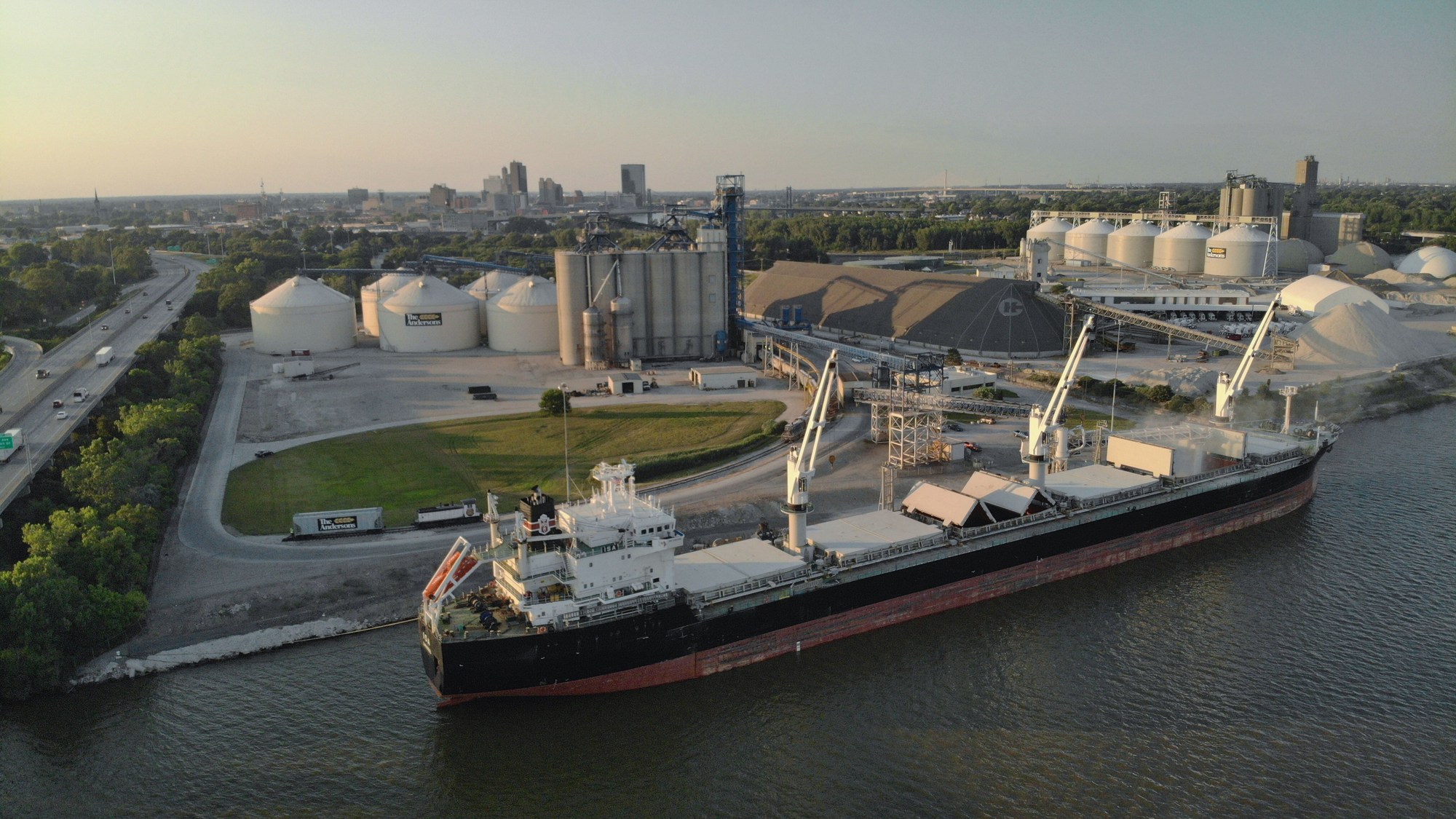
Food-grade corn makes the distinction tangible. Tortilla and snack manufacturers care about starch content, kernel hardness and how easily the outer layer comes off. A tonne of corn is therefore more than a quantity. Its characteristics affect what happens on the production line. Knowing those requirements gives a merchant something to sell beyond a price.
Price management runs alongside the physical journey.
The cement mixer school of expansion
In the 1950s, the business began blending fertilizer using a cement mixer. It also added corn cob milling. These sound like wonderfully improvised sidelines. They share a practical logic: the customer, material or handling knowledge was already close at hand.
That logic remains visible. PureGrade liquid fertilizers sit alongside micronutrients and soil amendments. Corn cobs become polishing and absorbent materials. Professional turf products serve golf courses and landscapers; selected lawn products reach homeowners online. The catalogue crosses several industries because agricultural materials have several useful lives.
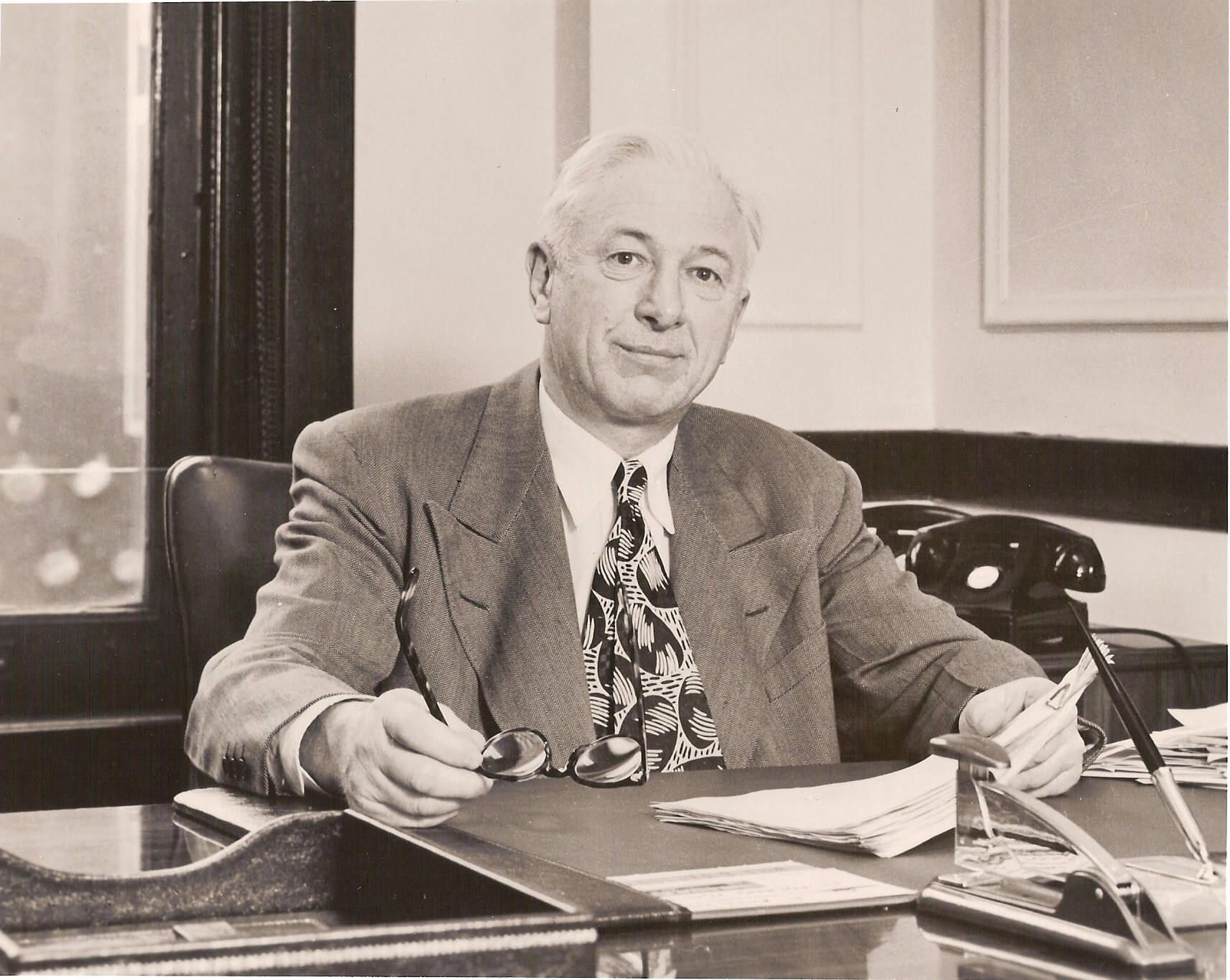
The family’s service ethic also became formal policy. Its Statement of Principles says, “Everyone in the organization should realize that the customer comes first and that every customer is important.” The document ties religious conviction to employee dignity, community obligations and shareholder returns. That is the company’s declared standard; the daily test is whether a delivery or transaction earns another order.
Four stores that stopped adding up
Expansion did not always earn its keep. In January 2017, The Andersons announced it would close its remaining four general merchandise stores. Over eight years, retail had accumulated more than $20 million in pretax losses, including previous impairments. Three stores had already closed.
The decision affected about 1,050 positions. The company expected another $9 million to $14 million in pretax severance and other closure costs during the first half of 2017. Familiarity with customers had not made this business financially sustainable. The losses explain the retreat more clearly than any tidy claim about corporate reinvention.
Rail supplied a different lesson. In 2021, The Andersons sold its railcar leasing business for approximately $550 million in cash. Management described a successful cash generator, then explained that selling it would reduce debt and release capital for agriculture. A useful capability can remain essential even when ownership of the associated assets becomes negotiable.
Start with the customer’s delay. Then ask which assets actually help remove it.An editorial reading of the company’s history
The $425 million turn toward fuel
Ethanol follows naturally from a grain network: corn becomes another marketable product. The Andersons operates four plants in Michigan, Indiana, Ohio and Iowa, selling ethanol and co-products into fuel and feed markets. In July 2025, it paid $425 million for Marathon’s remaining 49.9% stake in their ethanol venture. That included $40 million of working capital.
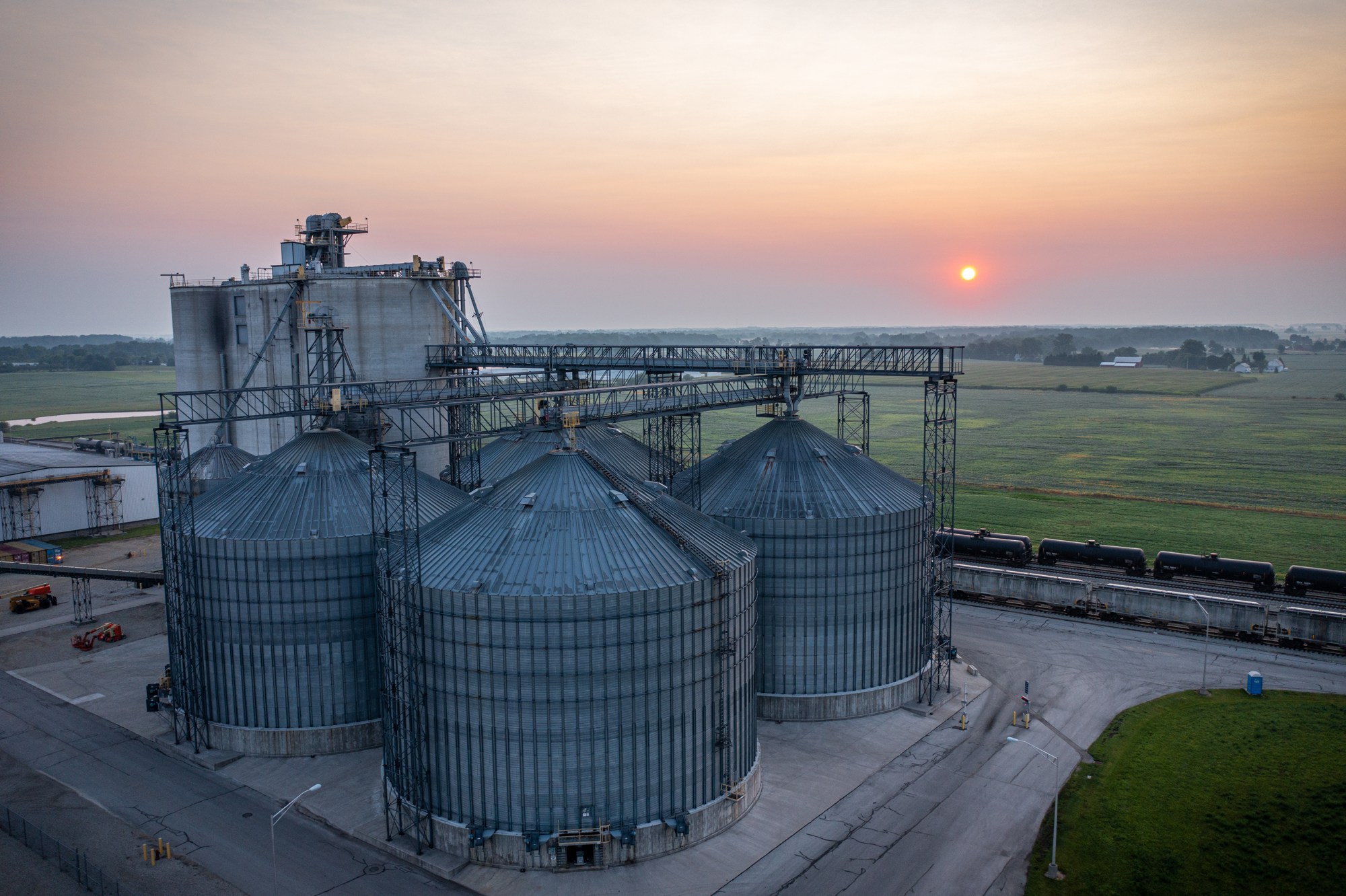
The economics require care. In the second quarter of 2026, Renewables generated roughly $65 million in pretax income, with $24 million of 45Z tax credits contributing to results. Production and merchandising mattered; policy mattered too. Management also reported a $10.6 million impairment of capitalized engineering and design costs while evaluating future ethanol plant expansions.
About 0.87 cents of attributable net income for every dollar of revenue. Rounded from reported figures.
What the middle must earn
The Andersons competes with cooperatives, local elevators and national and international merchants. Its filings describe competition based principally on price, service and reliability. Combining physical facilities with marketing expertise is its proposition. For a customer, the practical comparison is the delivered result: quality, timing, price and how much coordination the buyer must supply.
The transferable idea is to investigate the work surrounding a purchase. Find the wait, the awkward specification, the missing transport connection. Expansion becomes more defensible when it solves another problem for an existing customer. It becomes harder when facilities lack throughput, working capital gets expensive, processing margins narrow or policy support changes.
The original nine bays supplied a wonderfully concrete test. Did the farmer get back to work sooner? Almost eighty years later, that question still cuts through the machinery.