In October 2010, H&R Block agreed to pay $287.5 million for the company behind TaxAct. The attraction was understandable. Here was a smaller rival with millions of customers, inexpensive software and a habit of making the rest of the tax business uncomfortable. By the following year, the proposed purchase had become a federal antitrust case. Being affordable had made TaxAct valuable. It had also made buying it complicated.
- TaxAct sells tax preparation for individuals, businesses and the professionals who serve them.
- Free federal filing helped establish its reputation as a price challenger.
- H&R Block’s attempted acquisition was blocked in 2011; Cinven later bought the business.
- Today the choice extends from DIY software to expert assistance and full-service preparation.
Tax software rarely receives credit for having a personality. Its customers generally prefer that it possess arithmetic. Yet TaxAct has a recognisable character: the practical alternative that asks why completing a compulsory task should require quite so expensive a ticket. That question remains useful, even as the company becomes more elaborate than its early proposition.
01The sale that was supposed to be quick
TaxAct began in 1998 as 2nd Story Software in Cedar Rapids, Iowa. Its four founders were Lance Dunn, Cammie Greif, Jerry McConnell and Alan Sperfslage. They brought experience from Parsons Technology, whose tax software gave them an unusually relevant apprenticeship.
Greif later recalled that they hoped to attract a buyer within a year or two. Intuit did not oblige. The founders adjusted to running the business for longer, with profitability as a priority. The failed expectation was a quick exit, rather than the usefulness of the product. There is a modest lesson here for founders: a sale may arrive late; the bills tend to be punctual.
“our quick flip isn’t going to happen”
Cammie Greif, recalling the early plan in a 2018 interview
A web-based version arrived in 2000. In the 2005 tax season, TaxAct offered free federal software and free e-filing to all American taxpayers, according to its later acquisition announcement. Free became a competitive instrument. A customer who could finish without paying had a reason to reconsider what the familiar brands charged.
02A rival worth preserving
The Justice Department’s 2011 complaint described TaxAct as a disruptive competitor. At the time, it said three companies accounted for 90 percent of digital DIY tax-preparation sales. Combining two of them would remove an important source of price pressure. TaxAct’s products had served more than five million customers in 2010, the department reported.
The government called TaxAct a market “maverick.” The court was less enchanted by the label. Its opinion acknowledged TaxAct’s aggressive competition while observing that rivals had also innovated. The merger was blocked nonetheless. The distinction matters: the outcome rested on the competitive evidence, rather than a flattering nickname.
Proposed; blocked in 2011$287.5m
Acquisition$287.5m
Acquisition$720m
Transaction prices, not operating costs or venture funding. The 2022 cash consideration was subject to customary adjustments.
In January 2012, InfoSpace announced a purchase for the same $287.5 million. The announcement disclosed $78.1 million in revenue and $37.8 million in adjusted EBITDA for the twelve months ended September 2011. Those historical figures show that the cheap option was already a substantial business. Adjusted EBITDA is a company-defined earnings measure, not net profit.
Another ownership change followed in December 2022: Blucora completed a $720 million sale to a Cinven affiliate. In May 2023, Taxwell became the shared parent name for TaxAct and Drake Software. The brands remained separate. TaxAct’s history now runs from independent irritant to one part of a broader tax-software group.
03Choose your share of the work
The product is easier to understand as a decision about labour. With DIY filing, you supply the information and work through the return. With Xpert Assist, you still prepare it, but can ask an expert for guidance. With Xpert Full Service, a credentialed professional does the preparation. TaxAct’s commercial proposition reaches across those different appetites for responsibility.
Inside the individual software, editions follow increasingly involved finances. Free serves qualifying federal returns. Deluxe addresses situations such as homeownership and family expenses; Premier adds investment-related needs; Self-Employed serves freelancers and business owners. Browser-based products and downloadable editions give customers different ways to work. The right edition depends on the forms required by the return.
For businesses, TaxAct offers online filing for partnerships, S corporations and C corporations, alongside sole-proprietor products. That breadth is a concrete part of its positioning. A freelancer filing personal business income and a partnership issuing K-1s have different jobs to complete, even if both introduce themselves as small-business owners.
The market contains familiar alternatives: TurboTax and H&R Block, plus price-focused options such as TaxSlayer and FreeTaxUSA. TaxAct’s historic affordability does not establish that it is the cheapest choice for every return today. Its useful claim is a combination of filing breadth, price and selectable help. Each customer must decide what that combination is worth.
04The price after the asterisk
As checked on October 1, 2026, TaxAct’s homepage displayed starting federal prices of $0 for Free, $59.99 for Deluxe, $99.99 for Premier and $109.99 for Self-Employed. State filing and optional services can add to the bill. These are dated advertised starting prices, rather than a quotation for every customer.
The same site advertised a $70 federal-and-all-states offer for qualifying new customers preparing an online 2025 Form 1040, with a specified September start window and an October 15 filing deadline. Seasonal promotions can change the arithmetic considerably. TaxAct says final prices are determined when customers pay, print or e-file.
There is a sensible purchasing habit to copy: price the completed job. Count the state returns, identify the edition and decide whether expert help is necessary. A free federal offer may be perfectly useful, but the adjective alone cannot settle the total. A tax return has more moving parts than a price badge.
The company’s refund guarantee also has a defined job. Its terms describe refunding the applicable software purchase price if another online product, using the same information, produces a larger refund or smaller tax liability. It is a remedy with eligibility conditions. Customers should read that promise with the same care they give the product selection.
05The accountant has a different problem
TaxAct also sells to preparers. Their problem involves repeated work: collecting documents, managing clients, securing signatures and getting returns out of the office. Professional software must make that repetition manageable. Consumer friendliness alone cannot carry a practice through tax season.
TaxAct Professional’s Client Portals offers cloud-based document exchange and client communication, with checklist-based organisation. E-signatures are sold separately, and accepting payments requires Drake Pay enrollment. These tools expand the business beyond calculating a return into the administration surrounding it. For an accountant, a missing document can be as troublesome as a difficult calculation.
The shared Taxwell ownership helps explain the direction. Drake brings a professional-software business; TaxAct brings consumer and business filing, along with its own professional products. Cinven described their customer bases as complementary when announcing the acquisition. Shared ownership is an organisational fact, not evidence that the products are interchangeable.
06Less typing, more judgment
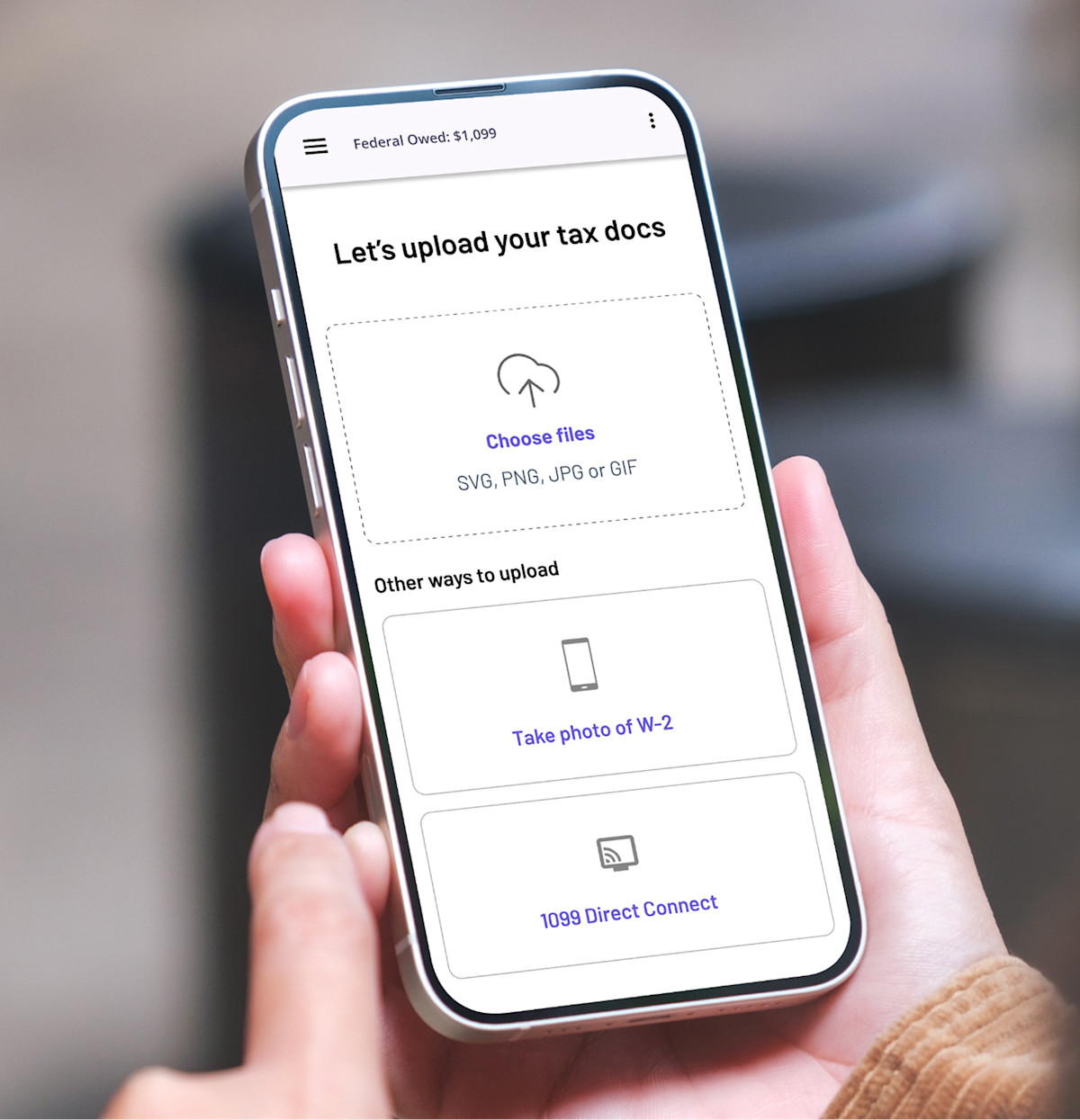
The 2026 filing-season announcement added Spanish-language full-service support, enhanced document recognition and mobile access. Chief Product Officer Bastien Martini described the customer demand as “choice without complexity.” The practical ambition is familiar: reduce the work of getting information into the right place, while offering a human when the customer wants one.
TaxAct’s update log subsequently listed SmartFile AI in April, Donation Assistant in June and a Claude connector in July. The company describes SmartFile as an in-product assistant for plain-language explanations and navigation. Donation Assistant helps value noncash charitable donations and build a ledger. These are specific jobs, each smaller and more useful than a promise to make taxes disappear.
The Claude connector supports cost comparisons, simple bracket-based estimates and document checklists without a TaxAct account. TaxAct explicitly says it does not replace the preparation, review and e-filing workflow. That boundary is useful for customers: a conversation can help organise the task, but it does not by itself produce a filed return.
Fit still matters. The supported-form list must match the customer’s actual situation. Expert availability and service scope matter when buying assistance. Imported numbers deserve review. Someone needing a continuing adviser for complicated affairs may want a different relationship from seasonal software support. The appropriate choice follows the work that needs doing.
07A useful kind of inconvenience
TaxAct’s early sale ambitions and its later blocked merger make an unusually revealing pair. The founders wanted a buyer; competition authorities wanted an independent rival. Both responses recognised value in the same business, from different seats at the table.
For readers building companies, the transferable idea is to find an expensive, unavoidable task and make completing it easier to afford. For readers buying software, it is to compare the whole bill and the work attached to it. TaxAct’s next chapter will be judged where its first one was: at the point where someone decides whether finishing their taxes feels worth the price.