At school, Ankur Warikoo had a tidy three-step plan: earn a physics PhD in the United States, work at NASA, become the first person on Mars. It had the elegance of an equation and the modesty of a boy who had never been told to dream smaller. In 2002, a full scholarship took him to America. His father borrowed ₹55,000 for the one-way ticket. The family had little room for a speculative adventure, but the first step was under way.
Then the equation stopped working. Warikoo was doing well in the program, yet the life it led toward no longer appealed to him. He returned to India at 24, with an MS in Physics, no savings and no new three-step plan. NASA and Mars would have to manage without him. The decision still runs through the work he does today: he asks people to examine a choice before they become too attached to the person it was supposed to make them.
It is easy to make this sound like a neat lesson after the fact. At the time, it meant admitting that years of effort and a costly journey had led somewhere unexpected. Warikoo has been careful to include the discomfort in his telling. His later advice about careers grew out of a personal question: what do you do when the dream comes true far enough to show you that it is the wrong dream?
Four turns, one recurring question
The useful detour
Back in India, someone suggested an MBA. Warikoo went to the Indian School of Business, where classmates with experience in sales, marketing and finance gave the former science student an education that could not be found in a lab. He later described the year as decisive. He joined Kearney and spent three years in management consulting, learning how organizations make decisions while wondering what it would be like to make one of his own.
He began helping ISB classmates with SecondShaadi.com while still consulting, then went full-time in 2009. The team built sites in several categories. Gaadi.com, the automobile business, was sold to goibibo.com in 2010. The sequence sounds obvious in a retrospective: a student changes fields, joins a firm, starts a company. It was considerably less polished in motion. Warikoo’s account is full of provisional moves, conversations and experiments that made a next step possible before he could name the destination.
In 2011 he became the founding CEO of Groupon India. By 2013 he was also overseeing Groupon markets in Thailand, Indonesia and the Philippines. Then came a rarer kind of departure. In 2015, Warikoo and the Indian management team bought the local business from its American parent and turned it into Nearbuy, backed by Sequoia. He served as CEO until 2019. The person who once abandoned a prescribed career had spent the better part of a decade building another one, with customers, employees and investors depending on decisions made in public.
A résumé with the wrong entries
Warikoo published a document in 2016 that looked like a résumé assembled by an unhelpful recruiter. It listed the IIT entrance attempts that went nowhere, physics and MBA applications that failed, corporate interviews that led to silence, and investors who declined to fund an idea. Among the smaller entries was an observation that when his son drew him, there was always a phone in his hand. He called it his failure résumé.
The document was both a joke and a correction. A conventional résumé makes every stop appear inevitable. His included the missed exits. The point was not to declare every rejection a hidden gift. It was to show that people with visible achievements accumulate an invisible archive of unfinished efforts. Readers could see the founder of Nearbuy alongside the candidate who had not got into several colleges or jobs. That contrast gave his later advice some texture.
He had already been blogging since 2005. At Nearbuy, he started Warikoo Wednesdays in 2016, a LinkedIn video series meant partly to attract people to the company. He talked about being a founder, a manager and a colleague. His own account says the series clicked. By the time he left the CEO role in 2019, an audience had been quietly assembling around a person willing to explain the errors behind a polished title.
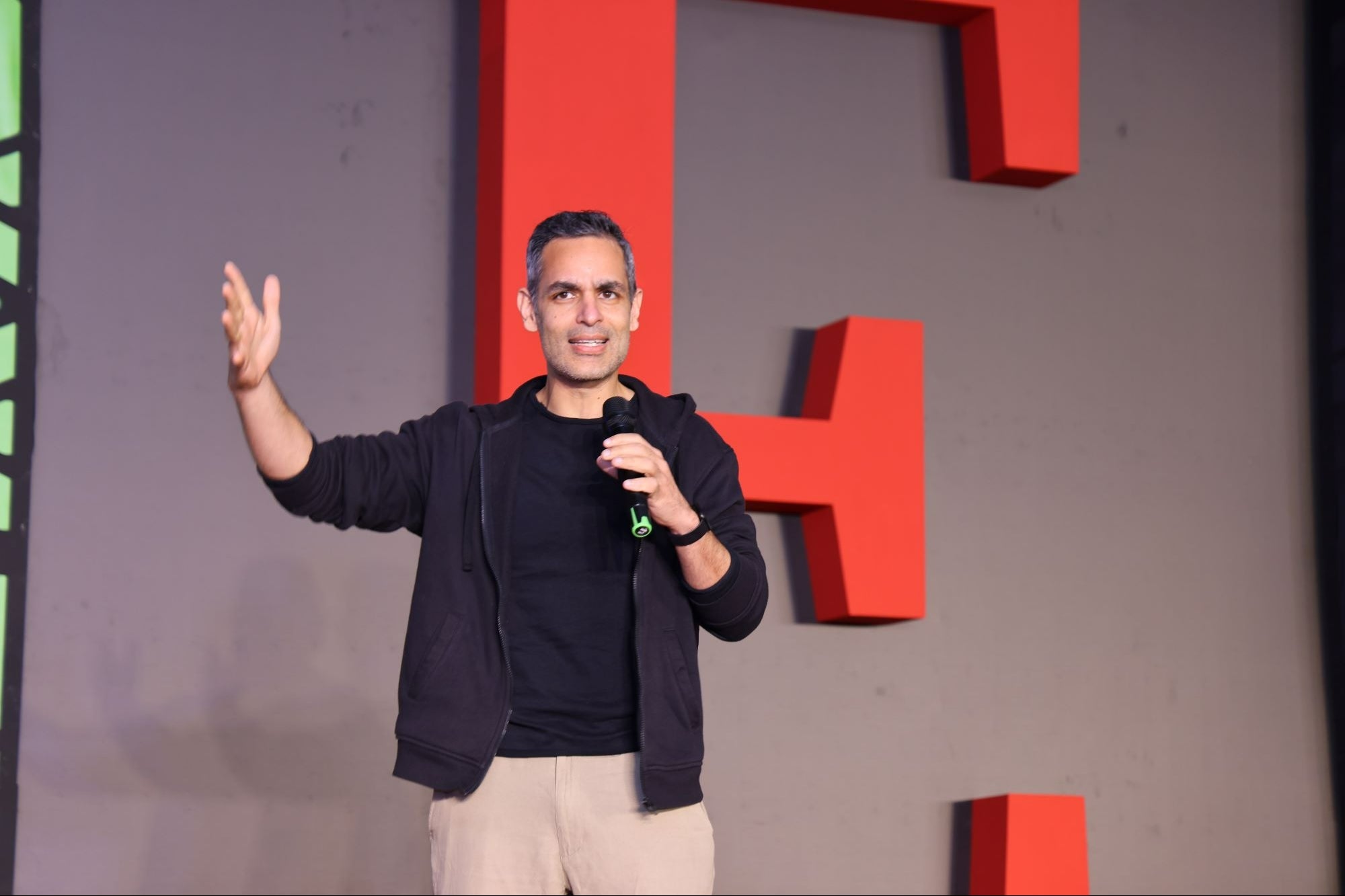
The CEO becomes a teacher
When Warikoo stepped away from Nearbuy, he put more structure around his videos and posts. The pandemic expanded the audience for online lessons, but the material had been forming for years. Warikoo Wednesdays, the old blog and a founder’s habit of explaining decisions all found a new home in WebVeda, the education venture he began building in 2020. Its subjects were practical: work, money, communication, time and the bewildering number of things adulthood asks people to learn without providing a syllabus.
The books followed. Do Epic Shit appeared in 2021. Later titles dealt with getting things done, money, careers, teenagers and relationships with other people. His publisher says his books have sold more than a million copies across 43 countries and 16 languages. His website counts six books and more than 17.6 million followers across social platforms. The figures describe reach; the titles describe the questions. Warikoo’s work repeatedly returns to the moment before somebody chooses a course, a job, a purchase or an answer to another person.
His public manner has a mildly comic tension. He is an advice giver who has said he is not an expert at anything. He is a motivational figure with a carefully itemized list of missed opportunities. He has a fondness for big phrases, including his own motto, “DO EPIC SHIT,” yet explains it in fairly plain terms: act, work on something larger than yourself and enjoy the process. He also says he likes telling stories and cracking bad jokes. The result is a teacher who presents himself as a continuing student, sometimes with an enormous classroom.
There are limits to what one person’s experience can teach. Warikoo acknowledged some of them in a 2026 conversation about social privilege, describing how gender, caste, appearance and growing up in Delhi shaped his opportunities. He has also argued that a regular job is a perfectly sound choice, even as founder culture can make it seem unfashionable. Those remarks complicate the tidy success story. They suggest that awareness requires looking outward at circumstances as well as inward at motivation.
What changes when the model changes?
In May 2026, Warikoo announced that he was shutting down his course business. The phrase was dramatic and immediately drew attention. The next clarification mattered more: WebVeda itself was continuing, but its model was changing from individual course sales to an all-access annual subscription. He said five lakh people had taken courses over five years and that the business had generated ₹100 crore in sales. Existing students, he said, would receive membership without an added charge. The new offer combined courses, a members’ community and job listings.
The economics of that shift remain a live question. Warikoo’s explanation was that buying a course had too often been mistaken for learning from one; people would watch a little, then resume the same habits. A membership might make learning a recurring practice. It might also make a more durable business. Both possibilities can be true, and neither can be settled by an announcement. What is visible is another instance of the founder changing a system he had helped build.
Two other ventures have joined the portfolio. India Genius Challenge, launched in 2025, is a quiz and scholarship program for students that says it looks beyond marks. Monzy, launched in 2026, is a free credit card discovery platform that recommends cards according to a user’s spending preferences. They serve different audiences, but the stated ambition is familiar: give people more information before a consequential choice.
A different kind of arrival
Warikoo still lives in the Delhi region with his family. He invests in startups, speaks at events and continues to write and publish online. His website says he has backed more than 30 companies. He describes himself as a student of human behaviour, which may be a more accurate account of his work than any single job title. Physics asks why the universe behaves as it does. His current work asks why people do.
The boy who planned to reach Mars was wrong about the route and, perhaps, right about the scale of his curiosity. Leaving the PhD did not produce immediate clarity. It produced a chain of new questions, some profitable, some public, some answered only provisionally. Warikoo has made a career of showing those revisions rather than concealing them. In an age that rewards certainty delivered in short videos, that may be the part of the story most worth keeping.