A factory can have a vacancy that makes an expensive machine rather less impressive. Tasimba “Simba” Jonga had worked inside manufacturing long before he tried selling anyone a hiring platform. At Bayer and Dow, he learned the business of getting processes to work. Later, when he returned to conversations with former HR colleagues, the difficulty of finding skilled people was still there. The machines had their engineers. Recruitment had its paperwork. Somewhere between the two, an opportunity was waiting for someone to pick up the phone.
Jonga’s answer became Laborup, the company he co-founded with Logan O’Neal. It helps industrial employers find skilled workers and lets those workers describe their experience through voice AI. There is something pleasingly ordinary about the interaction at the center of it: a person talking about what they can do. The software has to do the listening.
The engineer before the pitch
In a 2020 account of his student work, Jonga described a year-long co-op at Bayer in Cleveland, Tennessee, after his freshman year. His assignments included process design, validation work, troubleshooting and continuous improvement research. He worked across teams whose responsibilities ranged from research to finance and supply chain. A product’s journey through a factory was also a journey through people with different kinds of expertise.
At Dow, his productivity and analytics projects reached more than 40 sites across businesses including plastics, polyurethanes and silicones. That experience gave him a view of industrial work beyond one plant or one product. It also makes his later interest in hiring easier to understand. Someone who has spent time improving processes is likely to notice when a process depends on a person who cannot be found.
There is a temptation to introduce an AI founder through the software and work backward. With Jonga, the engineering comes first. His account starts with validation, production problems and integrated teams. Before there was a platform to explain, there was a workplace to understand.
An opportunity, handed on
Jonga’s family story gives the word opportunity a particular weight. In a 2022 scholarship essay, he described his father leaving Zimbabwe for the United States when Jonga was very young. His father worked factory and construction jobs while learning how to establish an insurance business. The business eventually supported the family. Jonga wrote that he moved to the U.S. in 2016, after finishing high school.
The story has work at its center, but also distance. A parent builds a future in one country while a child grows up in another. Jonga’s essay treats his own education as something made possible by that earlier effort. His later concern with economic mobility belongs in that context, without needing to turn his father’s life into a prediction of his own.
At the University of Tennessee, he pursued chemical engineering with an economics minor. The pairing is useful for reading his career: how a system works, and who benefits when it does. He would go on to build companies and support other founders. First, he was a student learning how to use the opportunities around him.
A student who built for other students
One of those efforts was VFL Ventures, the student venture organization Jonga founded at UT. It supported university entrepreneurs with investment, resources and mentorship, while giving students a way to learn about venture capital and private equity. His work also included Rease, a platform for the college rental market. The problems were close enough to encounter between classes.
He served as an ambassador for the engineering professional practice office, helping fellow students become aware of professional opportunities. At Haslam’s Professional Sales Forum, he took on another role concerned with students’ careers. These are revealing choices. A person can use a university chiefly to accumulate credentials. Jonga also helped construct routes through it for other people.
In April 2022, Chancellor Donde Plowman surprised him at the Zeanah Engineering Complex with news that he had been selected as a Torchbearer. He received the university’s highest undergraduate honor the following month. It was recognition of academic achievement, leadership and service. The résumé was becoming impressive. Much of the work behind it involved helping someone else start theirs.
California, with questions in his luggage
Jonga entered Stanford’s 2022 Knight-Hennessy cohort to pursue management science and engineering. He was the first UT graduate selected for the program. Stanford now lists his master’s studies as discontinued. The journey toward Laborup would take him outside the course of study he had arrived to pursue.
His interests were already wider than one qualification. He had co-developed a platform for minority entrepreneurs that won Microsoft’s internal venture competition. His Stanford biography records an ambition to support under-resourced entrepreneurs in emerging markets. A concern with access was taking several forms, from student businesses to people operating with fewer resources.
His personal website offers another clue. He describes a belief in radical optimism and a beginner’s mindset, and asks how AI might bring people who are less comfortable with technology into the internet economy. That is a more specific question than whether AI will change everything. It asks who gets invited to participate.
He also writes. His Substack, Exploration through Nuances, includes pieces on minerals and power. His university profile lists poetry, art and filmmaking alongside rugby and boxing. Apparently, a chemical engineer may have interests that refuse to remain in their allotted vessel.
Gumption gets the first yes
Laborup’s early development paired Jonga with O’Neal, a UT computer science student. They practiced their sales presentation through the Anderson Center for Entrepreneurship and Innovation, and were testing with automotive and aerospace companies by late 2023. The company’s beginnings involved explaining a problem to people who had their own reasons to care about it.
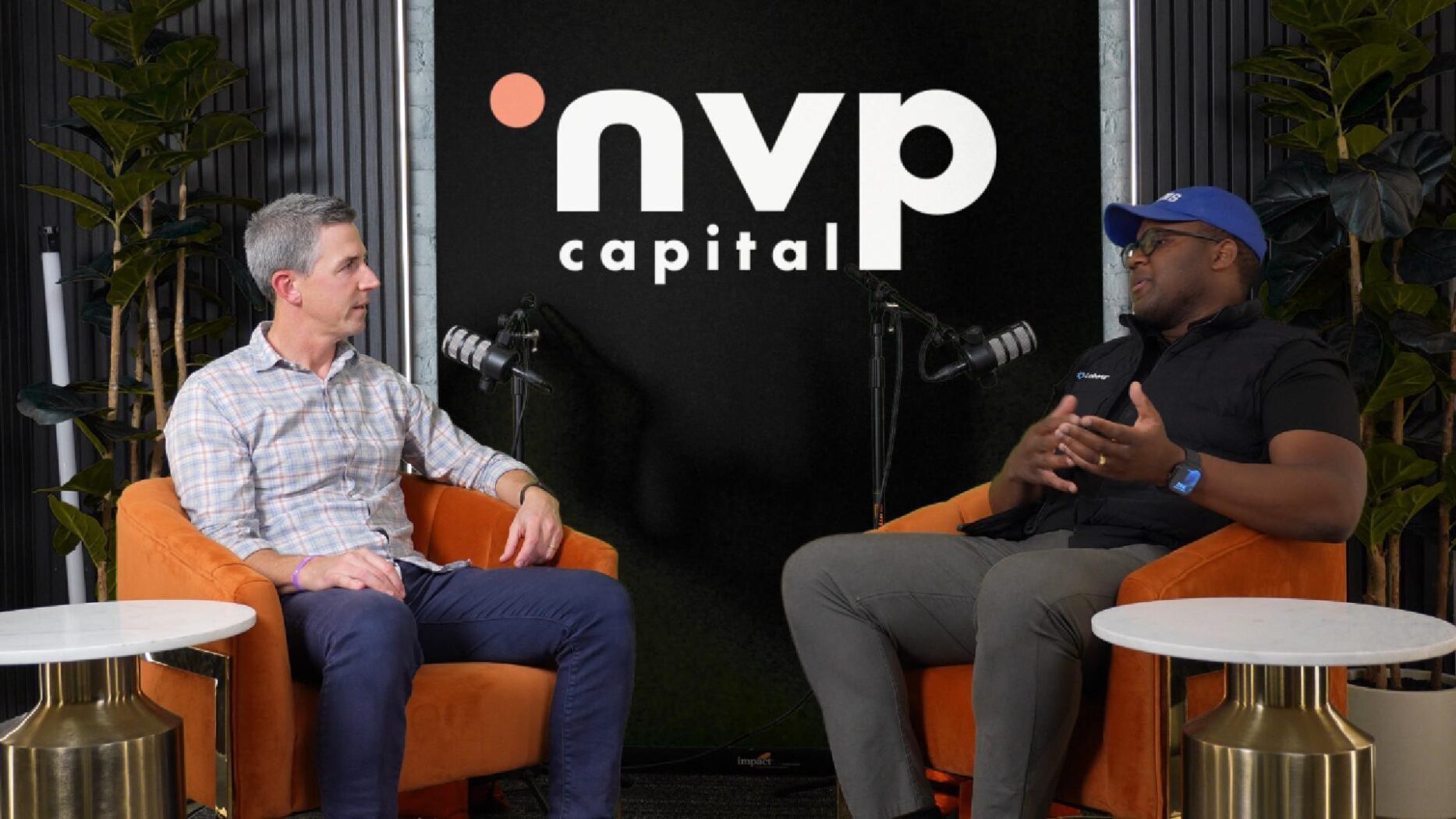
In a December 2025 conversation with investor Dan Borok, Jonga revisited the first customer. A warm referral opened the door. The customer committed before the product fully existed and later explained the decision with a small, old-fashioned compliment: Jonga had gumption.
Laborup also tied payment to outcomes, making the initial commitment easier. That detail matters because a hiring tool has to answer to something beyond a persuasive presentation. An employer needs a person who can do the work. A successful deployment has to establish that connection.
Learning to hear no
Jonga has described the change from being a high-performing student to becoming a founder in unusually direct terms. Good grades had belonged to a world where performance brought a recognizable reward. Starting Laborup meant encountering people who could decline for reasons he could not fully control.
In a public LinkedIn reflection, he recounted a mentor encouraging him to expect rejection and use it as information. He now says he likes hearing no. The younger version of himself, he wrote, would have been startled by that admission.
It is an adjustment that suits the business he is building. Industrial customers have constraints, established practices and limited opportunities to test unfamiliar tools. A founder has to keep asking while earning the right to be taken seriously. The straight-A student’s answer key is little help when the next person across the table has a production schedule.
“When you do get the chance, treat it like the Super Bowl.”
Simba Jonga, on early customer opportunities
His advice about pilots is similarly concrete: deliver on the engagement in front of you. A championship metaphor is rather grand for hiring software, but the responsibility behind it is familiar. Someone gave you a chance. Make the work justify it.
Let the worker talk
Laborup’s conversational approach starts with an inconvenience that is easy to underestimate. Workers can have detailed experience with machines, materials and processes without having an equally detailed online profile. Asking them to translate that experience into polished text creates another task between them and the job.
The platform lets workers speak their history and skills, then creates a profile that employers can evaluate. In 2024, Jonga described the aim as simplifying participation online. The product asks technology to absorb some of the administrative effort, while leaving the worker’s experience at the center.
The design has an employer side, too. A plant needs particular abilities, rather than a collection of agreeable keywords. Skills, certifications and equipment experience help make the conversation more useful. A profile is valuable when it gives a hiring team a better understanding of the person behind it.
By December 2024, Laborup reported more than 10,000 active manufacturing workers across greater Knoxville. The geographic focus gave the company a place to build relationships and test the product. A worker network becomes useful through the opportunities it can connect, not simply through the size of the number printed beside it.
The miles between the offices
In 2025, Laborup reported total financing of about $7.7 million, including a $5.8 million seed round led by NVP. Its backers included investors from technology companies and funds, alongside the East Tennessee relationships that had helped it get started.
Jonga singled out local mentors including Brandon Bruce and John Bruck. The company opened a Nashville office focused on product engineering, while Knoxville remained its sales operations hub. He joked about being a road warrior after a year of driving between markets. Regional expansion has a less glamorous accompaniment: mileage.
The distinction between offices also keeps the work legible. There are people building the software and people working with employers and workers. Growth requires both. Jonga’s problem does not resolve itself because the financing arrives; more customers mean more occasions to deliver on the first promise.
After the training, a way in
By May 2026, Laborup’s partnership with METAL connected manufacturing training with access to its hiring platform. Participants could leave a bootcamp with new skills and a way to put them in front of employers. Laborup reported having connected with more than 100,000 skilled workers. That figure describes reach, rather than people placed in jobs.
Jonga has also spoken about using video and virtual reality to help workers see inside modern foundries. The aspiration fits the question that recurs through his career: how can resources available in one place reach someone elsewhere?
A university career office, a student accelerator and a hiring platform serve different people. They share a practical concern with making a next step possible. For Jonga, the work now brings that concern to machinists, welders and technicians. They have experience to explain, and employers have work to be done. Laborup begins by giving the conversation somewhere to go.