On the Fourth of July in 2017, Tanner Ainge was barbecuing with his family while a basketball decision threatened to become his political problem. Gordon Hayward was choosing where to play. Tanner wanted him to remain with the Utah Jazz. His father, Danny Ainge, wanted him to join the Boston Celtics. The barbecue had acquired two competing investment theses.
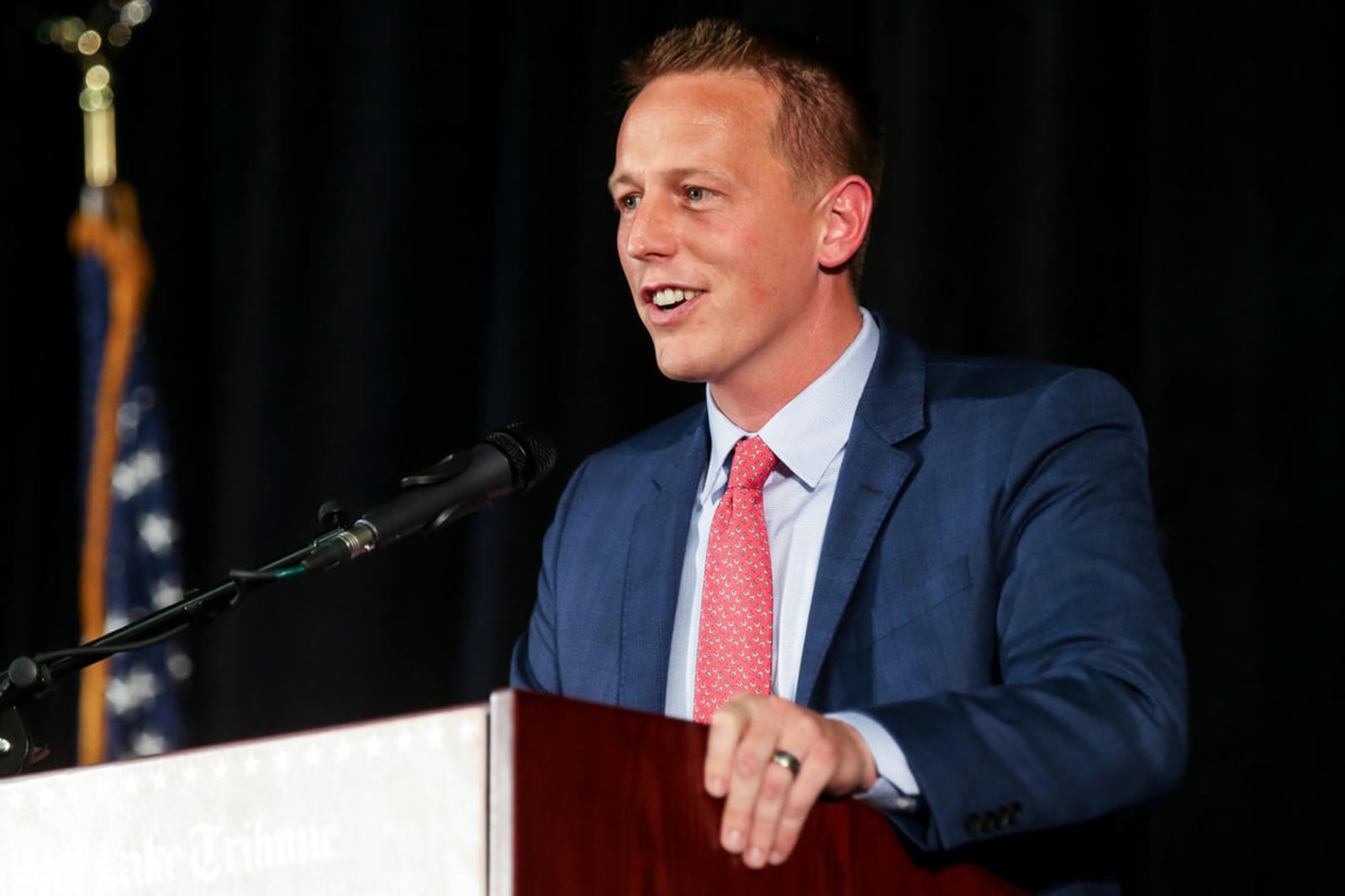
Tanner was running for Congress in Utah’s 3rd District. Danny was running Boston’s basketball operation. When Hayward chose Boston, Tanner went to the Sandy parade and found people ready to tease him. He shook their hands and talked with them anyway. In his account of the day, the voters he met distinguished a candidate’s economic views from his father’s recruiting success.
The episode supplied an excellent joke and an incomplete biography. Ainge’s surname could pull him into the sports pages before he had said much about himself. His own work was already elsewhere: evaluating companies, negotiating acquisitions, and trying to understand what a change in ownership could make possible.
Today, as founder and chief executive of Banner Capital, he works on that question in a particular place. The firm backs founder-led and family-owned businesses across the Western United States, concentrating on the Intermountain West. The story of how he arrived there involves a famous family, an unsuccessful election, public responsibility, and a surprisingly useful subject for an investment conversation: the parking lot.
A surname with its own news cycle
Ainge had good reason to know that sports can occupy rather more conversational space than their square footage warrants. In July 2001, he was a guard for the Arizona Stars at a Las Vegas basketball tournament. His father coached the team. Former NBA players Dan Majerle and Joe Kleine helped keep statistics. Even a teenage game came with a recognizable supporting cast.
Sixteen years later, Utah voters wanted to know whether the younger Ainge could influence the elder one’s pursuit of Hayward. His answer was modest: “I hope he stays.” The wish did not amount to control. Hayward would make his own decision, and Danny had a job to do.
Tanner nevertheless joined the conversation. Before free agency, he drew Hayward’s attention to a proposed Massachusetts tax on high earners. A subsequent appearance on The Dan Patrick Show brought more questions about basketball. He spoke about Utah’s attractions and the pleasure of watching people in his family succeed, then tried to return the discussion to his campaign.
There is something endearingly recognizable about the predicament. A person arrives with a subject he would like to discuss; everyone else arrives with a better anecdote. Ainge could laugh along, but a congressional race still required him to explain his own record. John Curtis won that Republican primary. The family name had provided attention without providing a seat.
Learning what changes hands
His preparation had taken him through both business and law. Ainge earned a bachelor’s degree in international studies at Brigham Young University and a law degree at Northwestern. He completed school early and moved quickly through his legal education. He fell in love with Heidi at 17 and married her after returning from a two-year mission in West Africa.
Ghana remained part of his life after that mission. On a return visit, he met Daniel K. Judd at a church service in Accra. It is a small incident, but it adds another geography to a career often described through Utah and a Boston surname.
Ainge began his investment career at HGGC and later advised private equity clients on buyouts as a lawyer at Kirkland & Ellis. Those jobs placed him on different sides of the same undertaking. An investor considers what a business might become. Acquisition counsel works through the terms under which someone can own it, finance it, and take responsibility for it.
His subsequent work included leading Simplus’s acquisition strategy from July 2018 to March 2020, with deals in Europe and Asia and the company’s eventual transaction with Infosys. He also co-led a $52 million investment in the ecommerce company Pattern. These were experiences in businesses growing through combinations, where an agreement becomes the beginning of another set of decisions.
A different kind of public ownership
The congressional defeat did not end his time in politics. Ainge won election to the Utah County Commission the following year and took office in 2019. He served until 2021, including as chair. County government brought the language of budgets and responsibility into a setting where the people affected could turn up at a meeting.
That chapter ended with an administrative mistake he acknowledged. While attending National Guard training in Virginia, Ainge intended to continue his commission work remotely. He failed to submit a notice required by state law after arriving, creating an effective vacancy. In March 2021, he resigned rather than have the county party fill the position temporarily before he returned and left again.
He said he and Heidi had already decided he would not seek another term. He also pledged to help with the transition. An appointment to Utah’s economic development board followed. The county service and economic development board appointment sit alongside his private-sector experience. The public chapter belongs in the account, including its untidy ending.
The businesses under everyone’s feet
Ainge founded Banner in 2020. Its current focus includes commercial property services, logistics, print and marketing services, infrastructure work, fleet services, and repairs. These are categories with customers, equipment, scheduling problems, and work that must be completed in a particular location. A parking lot can be discussed remotely. Resurfacing it requires attendance.
The portfolio gives the strategy physical form. Western Pavement Services provides paving, seal coating, slurry seal, striping, and maintenance. Its acquisitions include Roadrunner, Post, and Bates. Roof Restoration Group, another Fund II investment, serves commercial, industrial, and institutional property owners through roofing, restoration, coating systems, waterproofing, and maintenance.
Those descriptions matter more than a broad label such as private equity. They tell us what the businesses actually do. A property owner needs a roof repaired or pavement maintained. A company has people and equipment organized to provide that service. An investor then has to assess how that organization can grow and what it needs from a new partner.
“First, the Intermountain West is home.”
Tanner Ainge, June 2026
Banner’s current criteria target businesses with $4 million to $15 million in EBITDA, an earnings measure before interest, taxes, depreciation, and amortization. The firm looks for cash flow, predictable revenue, a competitive advantage, and an established culture. It describes situations such as funding an acquisition, arranging a family ownership transition, or buying out a less involved partner.
Ainge’s own explanation gives the regional focus a personal basis: his ties to Utah and Arizona. In his June 2026 founder interview, he describes treating founders as continuing owners and operating partners. He wants Banner’s institutional capabilities to grow while its attention remains in the lower middle market. That is a stated intention, and a useful way to understand the choices he says the firm will make.
Two funds, two clocks
In June 2025, Banner announced Fund I and Fund II together. The numbering looks peculiar until the different purposes come into view. Fund I was a continuation vehicle with more than $400 million in commitments, acquiring interests in eight existing portfolio companies. Funds managed by Hamilton Lane led the investment.
Existing investors could receive partial liquidity while participating companies gained additional time and capital. Fund II, launched with a $200 million target, was intended for new lower middle market buyouts. Its preliminary closing supported the Western Pavement Services transaction. The announcements described distinct arrangements for assets Banner already managed and businesses it would acquire next.
Continuation fund
More time + partial investor liquidity
Buyout fund
Capital for the next investments
Commitments and a fundraising target describe different measures. Bar lengths illustrate the announced amounts, with Fund I exceeding $400M.
Ainge marked the moment by noting the irony of announcing both funds at once and thanking the people involved. Behind the announcement was a change in the firm itself: a portfolio assembled over time was gaining a different capital structure, while another fund would finance further acquisitions.
An institutional partner, a regional ambition
In June 2026, GCM Grosvenor announced a partnership with Banner through its Elevate strategy. The arrangement supplied anchor capital for Fund II and ongoing strategic support. The announcement identified Ainge and Tyler Price as having worked together since 2021 to build the firm and its portfolio. It also described Western Pavement Services expanding through acquisitions in Arizona, Utah, and Nevada.
The connection extended Banner’s institutional relationships while retaining its regional focus. It fits a recurring question in Ainge’s career: how to bring larger pools of capital and experience into businesses whose operations remain intensely local.
Assets under management reported by the firm.
Banner’s current public figure is $611 million in assets under management as of June 30, 2026. The number measures the firm’s managed assets at that date. For a reader following Ainge’s career, its significance is organizational: the business he founded now manages a pool of capital that carries obligations to investors and companies.
His earlier career covered acquisitions across borders, national legal work, and elected office. Banner has a narrower geographic center. The combination makes him interesting: someone with experience beyond the region who has chosen to build an investment practice around it.
Back at the 2017 barbecue, father and son wanted different outcomes from the same basketball decision. Tanner’s public attention was partly borrowed, and his preferred outcome did not prevail. His work today is easier to describe on its own terms. There are businesses to buy, founders to work with, and investors to answer to. The surname still starts conversations. A parking lot may now be where the useful conversation begins.
Follow the next chapter
Explore Ainge’s work and the interviews behind his public career.