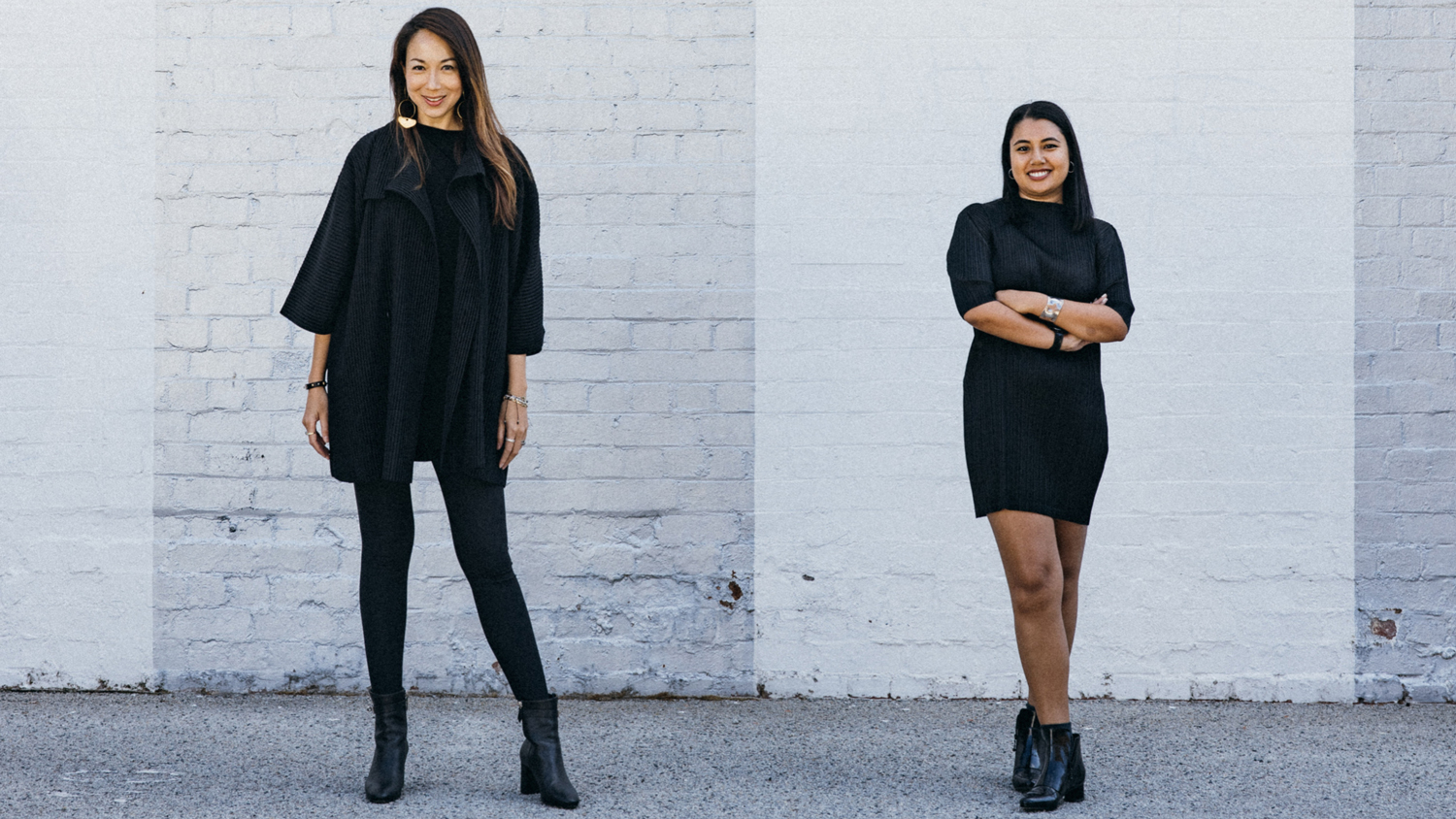
A corridor needed photographs. In the course of designing interiors in London, Talenia Phua Gajardo wanted black-and-white images from around the world, with Asian and Singaporean photographers among them. Finding the work should have been straightforward. Instead, the search exposed an awkward absence: there was no useful regional platform gathering what she wanted to see.
She had been working on projects for hotelier Loh Lik Peng, including a restaurant at the Town Hall Hotel in Bethnal Green and a renovation in Liverpool Street. Sourcing objects and artworks came with the territory. The difficulty was therefore concrete. A designer had rooms to finish and artists to find. The internet, ordinarily so eager to sell things, was being surprisingly unhelpful.
The Artling emerged from that experience in 2013. It began with photography and a small group of photographers she knew. Its founder was bringing the habits of an architect to a different problem: how to connect people making work with people who had a place for it.
The photographs that were hard to find
At the time, Gajardo could see online businesses serving European and American art, while contemporary Asian art lacked the equivalent she was looking for. She secured S$200,000 in seed funding from an art collector and began developing the platform. The premise was legible to anyone who had spent too long looking for something that ought to be easier to discover.
Her customers eventually included corporate buyers, private collectors and younger people beginning to explore art. That range mattered. An online catalogue could offer an entry point to someone without an existing gallery routine, while giving a professional buyer somewhere to begin a search. The same artist might be discovered by people approaching the work with very different questions.
Gajardo’s early thinking was also attentive to how people used their phones. A gallery address reaches those willing and able to visit it. A digital listing can travel further. The practical attraction was exposure: a regional artist could enter a conversation taking place elsewhere, without first acquiring a room in every city.
An education in looking
Her sense of the region was personal. The daughter of a Singaporean Chinese father and a Chilean mother, she grew up in Singapore before leaving at 16 for boarding school in Australia. London followed, with architecture at Central Saint Martins. She returned to Singapore in 2013 after almost twelve years away, retaining a particular attachment to Southeast Asian art.
The travel did not erase the connection. Her own account places Singapore and its neighbours close to her sense of identity. On her portfolio, she uses the compact description “Chileporean”. It is a neat solution to a question that can otherwise consume an entire dinner.
Architecture gave her a working vocabulary for space, material and collaboration. Her BA (Hons) was supported by a Loke Cheng-Kim scholarship. She worked at Zaha Hadid Architects in London; her portfolio also lists Tsao-McKown Architects in New York and Llewelyn Davies Yeang in London. The Artling arrived after experience inside practices where ideas needed other people to become buildings.
Her design interests have remained visible through T+, whose portfolio includes interiors and furniture. The project names run from Keong Saik Snacks to the Town Hall Hotel, alongside desks, benches and tables. Art advisory sits within a wider working interest in how objects and rooms relate. Changing the title on a business card did not require surrendering that interest.
There was an earlier partnership, too. At Zaha Hadid’s office she met Camiel Weijenberg, with whom she formed MAKEMEI, a furniture and interior design practice that preceded T+. Her account of that period emphasises reading spaces, experimenting with materials and testing complex geometries. Those are fairly demanding ways to learn that an appealing sketch still has to be made.
One project carried the idea outdoors. Trees, shown during Singapore Design Week in 2013, combined a canopy with benches beneath it. The material was Valchromat, an engineered material. Part shade, part seating, the installation gave a visitor something to do as well as something to look at. It is an early example of her interest in the territory where a designed object becomes an experience of space.
A dining table is also a headquarters
The Artling’s first office was her mother’s dining table. Initially, the team consisted of Gajardo and a web developer. By a 2016 interview, it had grown to seven people and represented work by more than 850 artists. There is something useful about remembering the table when looking at the company’s later hotel projects. The distance between the two was covered through ordinary work.
Leadership supplied a further education. Having spent three years at Zaha Hadid Architects, she discovered that employing people brought a different set of demands from being employed. Keeping a team motivated required attention of its own. Asked about management books, she described learning through doing. Readiness, in her account, could not be allowed to become a permanent postponement.
Her interests extended into another marketplace. Luxglove, launched in 2015, dealt in pre-owned luxury collectibles, including watches, jewellery and classic cars. One 2016 listing was a red 1961 Ferrari 250 GTE priced at S$1 million. A photograph on a screen could start quite a conversation, even when the object in question required a garage.
The appeal of the model was continuous access for buyers and sellers, beyond the fixed cycles of traditional auctions. Gajardo described the internet as a means of reaching a wider audience. It was a familiar concern in a different category: interesting objects needed a route to the people who might want them.
In 2017, The Artling closed a $2.5 million Series A with Edipresse and acquired the Chinese-focused art platform Artshare. Recognition followed too: Tatler’s Gen.T selection in 2017, then Apollo’s 40 Under 40 Asia Pacific in 2022. The latter described a consultancy reaching across Europe, the United States and Asia, with offices beyond Singapore.
“Be open to other people's ideas. Collaborate. Explore. Make mistakes but recover quickly.”Talenia Phua Gajardo
Her early founder advice has the same briskness as her answers about work. In a short questionnaire, coffee appeared beside the task of preparing another fundraising deck. Her film list stretched from Inception and Into the Wild to Herb & Dorothy, the documentary about collectors. Asked to imagine 2030, she pictured an art, architecture and design hub for professionals and students.
The work has to fit through the door
The later business has two connected faces. People can discover art online; clients can also ask the team to source and commission work for a particular setting. A 2023 industry report described both its consumer marketplace and a professional platform for sourcing and managing projects. The original difficulty experienced by one designer had become a problem the company could help other professionals handle.
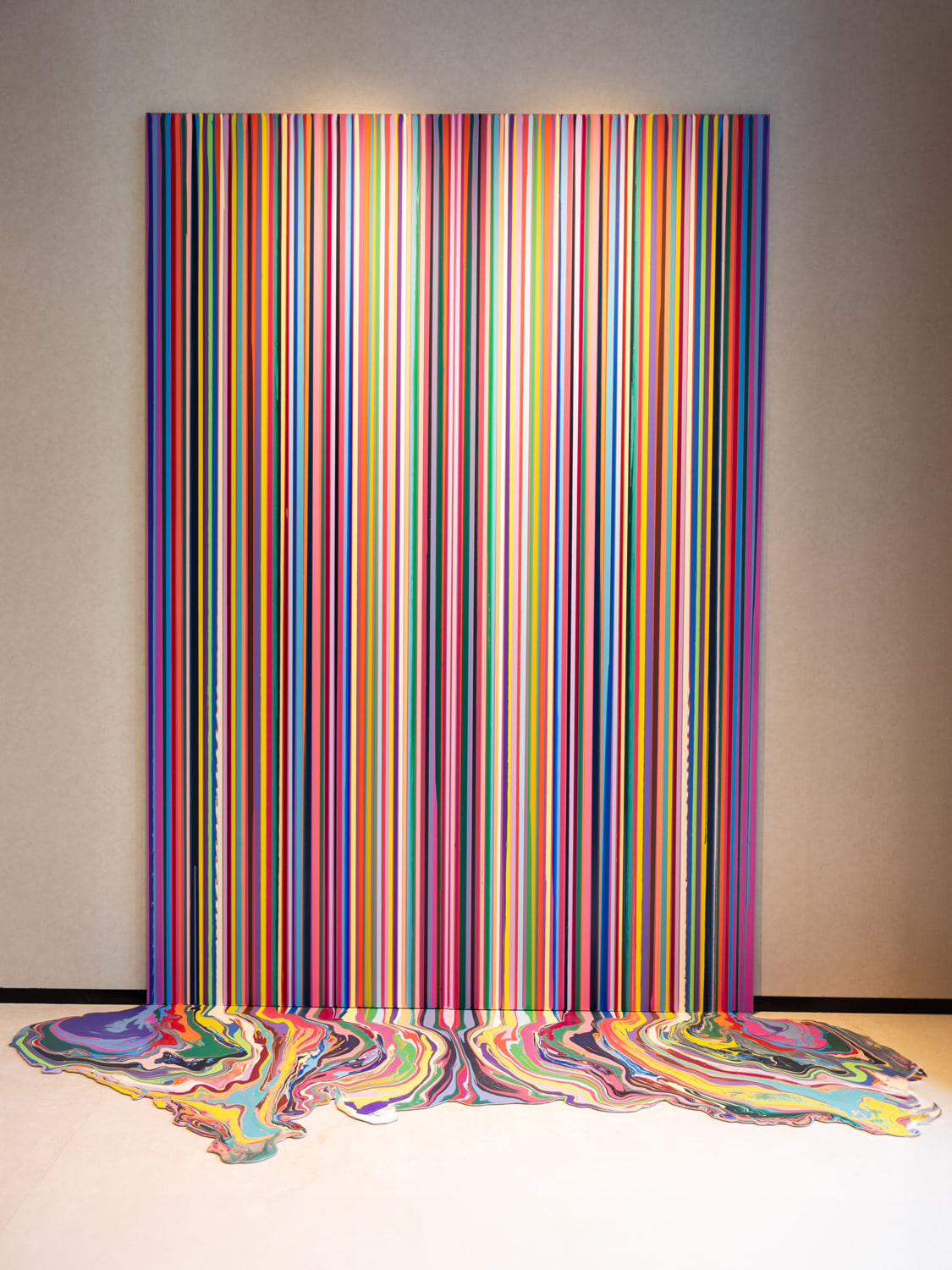
Its commissions make that relationship visible. At Mondrian Singapore Duxton, Ian Davenport’s Deep Magenta, Mirrored sends bands of colour down towards the floor. The Artling’s work at Patina Maldives includes James Turrell’s Skyspace Amarta. Such projects place the encounter with art inside a journey through a building or a landscape. The viewer may have arrived for entirely different reasons.
At Capella Sydney, the assignment involved more than 1,400 artworks. Gajardo has explained that the heritage property’s 192 guestrooms contained 90 room types. Drawings needed individual attention. The numbers suggest why a good eye alone cannot complete the job: every proposed work also has to belong in a particular space.
The working partnership with Kim Tay brings complementary backgrounds together. “Kim is the art history person. I’m the architecture person,” Gajardo has said. It is a concise explanation of why the company’s work involves more than selecting attractive images. Someone must understand the art; someone must understand the room. They need to keep talking.
Her own relationship with art also survives outside the working day. She and her husband, Michael Tay of The Hour Glass, spent part of their honeymoon in Marfa, Texas, looking at large-scale work by artists including Donald Judd and Dan Flavin. Most of the two-and-a-half-week trip went to art. Some couples choose a beach. These two found considerable romance in an installation.
Room for another kind of collector
Collectible design gives her continuing interests another meeting point. On 28 March 2026, she joined artist and designer Duyi Han at Art Basel Hong Kong for a Salone del Mobile discussion moderated by Yoko Choy. The subject was why people collect design, with limited editions, craftsmanship and the Asian market among the questions under discussion.
A chair, a sculpture and a building invite different kinds of attention, yet the people making and collecting them often have reasons to speak to one another. Gajardo’s public work has repeatedly returned to that exchange. Serving on design juries, including the Archiproducts Design Awards, is another expression of a career that keeps crossing the boundaries between creative fields.
Her advice to new buyers remains grounded in personal connection. Technology can help people discover possibilities and organise a search; judgement still involves deciding what someone wants to live with. For Gajardo, the recurring work is bringing people and objects into contact. The corridor in London needed photographs. Years later, there are many more rooms to consider.
Continue looking
Work, conversations and a few further doors to open.