wearable-sensors
(8)
Daniel Weinstein Put a Sensor Where Wearables Rarely Go: Inside the Mouth
A college idea about tracking what people eat became a years-long lesson in miniaturization, manufacturing, and patience. Daniel Weinstein is building Lura Health one tiny constraint at a time.

The Next Health Wearable May Be Hiding in Your Mouth
Lura Health is building a sensor small enough to disappear inside a retainer - and ambitious enough to turn saliva into a continuous stream of health data.
Respiree
Respiree is a Singapore-founded digital health company (an A*STAR spin-off) building clinically validated AI that pairs FDA-cleared cardio-respiratory wearable sensors with software to track lung and heart biomarkers over time. Its 1Bio platform helps hospitals, health systems and biopharma detect patient deterioration - such as COPD flare-ups and heart failure - days in advance, powering remote patient monitoring, clinical decision support and decentralized clinical trials across Asia-Pacific, Australia and the United States.

Sonera
Sonera (Sonera Magnetics) is a Berkeley, California deep-tech company building chip-scale magnetic field sensors that read the body's own biomagnetic signals without touching the skin. Its flagship S1 chip performs magnetic muscle sensing (magnetomyography) at room temperature and in wearable form factors, aiming to make neural and neuromuscular data as easy to capture as a heart rate. Applications range from silent-speech interfaces in earbuds and glasses to gesture control for XR, plus clinical uses like portable brain imaging and neurodegenerative biomarker tracking. Spun out of UC Berkeley research and backed by an $11M seed round, Sonera is turning a lab-grade magnetics breakthrough into a scalable sensing platform.

Bill Near
Bill Near is the founder and CEO of HELIOS, a Portsmouth, New Hampshire sports-technology company that turns hockey development into something you can actually measure. An MIT engineer who captained the school's hockey team, Near pairs an AI-powered sensor that clips to a player's shoulder pads with automated shift video so any skater - youth to pro - can see real numbers on stride speed, acceleration and effort. He built the company in 2018 alongside Hall of Famer Ron Francis, and in October 2025 raised a $2.2M seed round from a syndicate of active NHL executives and players to scale it.

Nishita Deka
Nishita Deka is the co-founder and CEO of Sonera, a Berkeley deep-tech company building chip-scale biomagnetic sensors that read the body's magnetic fields. Trained as a semiconductor-device physicist at USC and UC Berkeley, she partnered with PhD colleague Dominic Labanowski in 2018 to commercialize a room-temperature magnetic sensor that strips brain and muscle imaging of its supercooled, room-sized hardware. Sonera's first product, the S1 chip, brings magnetomyography out of the lab and toward wearables, gaming, AR, prosthetics, and silent-speech interfaces. The company has raised about $20 million and works with partners including the U.S. Air Force Research Laboratory.

Sibel Health
Sibel Health is a Chicago-based digital health company spun out of Northwestern University that builds clinical-grade, fully wireless wearable sensors paired with AI analytics and a cloud platform. Its flagship ANNE One system continuously tracks vital signs - heart rate, respiratory rate, temperature, SpO2, pulse and more - for patients from neonates to adults, in hospitals, at home, and in low-resource settings around the world. The mission is to deliver 'Better Health Data for All.'
Steve Xu
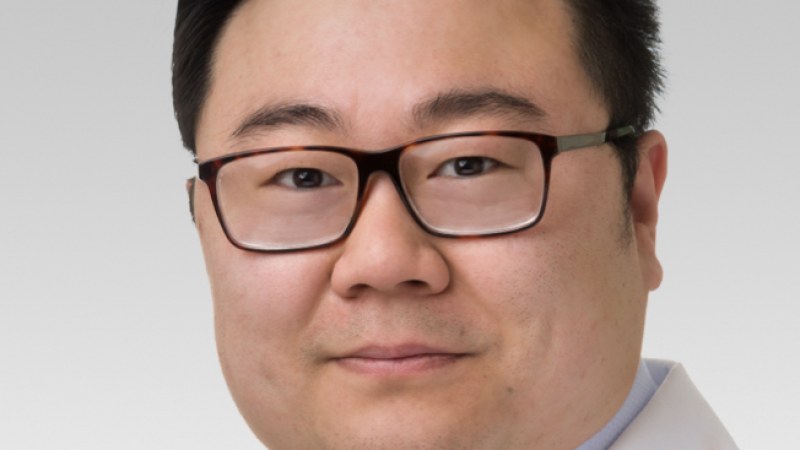
Steve Xu is a board-certified dermatologist turned medtech founder who runs Sibel Health, the Chicago company commercializing ICU-grade wearable sensors that now monitor patients in more than 20 countries. A physician-engineer trained at Rice, Harvard, and the London School of Economics, he splits his life between the clinic, the lab at Northwestern's Querrey Simpson Institute for Bioelectronics, and a startup chasing a single line: Better Health Data for All.