●BREAKING: Sibel Health closes Series C, total funding past $108M●ANNE Maternal earns FDA clearance for fully wireless maternal-fetal monitoring●20+ countries, six continents, one patch●MIT 35 Under 35 innovator & board-certified dermatologist●Mission: Better Health Data for All●BREAKING: Sibel Health closes Series C, total funding past $108M●ANNE Maternal earns FDA clearance for fully wireless maternal-fetal monitoring●20+ countries, six continents, one patch●MIT 35 Under 35 innovator & board-certified dermatologist●Mission: Better Health Data for All
Physician · Engineer · Founder
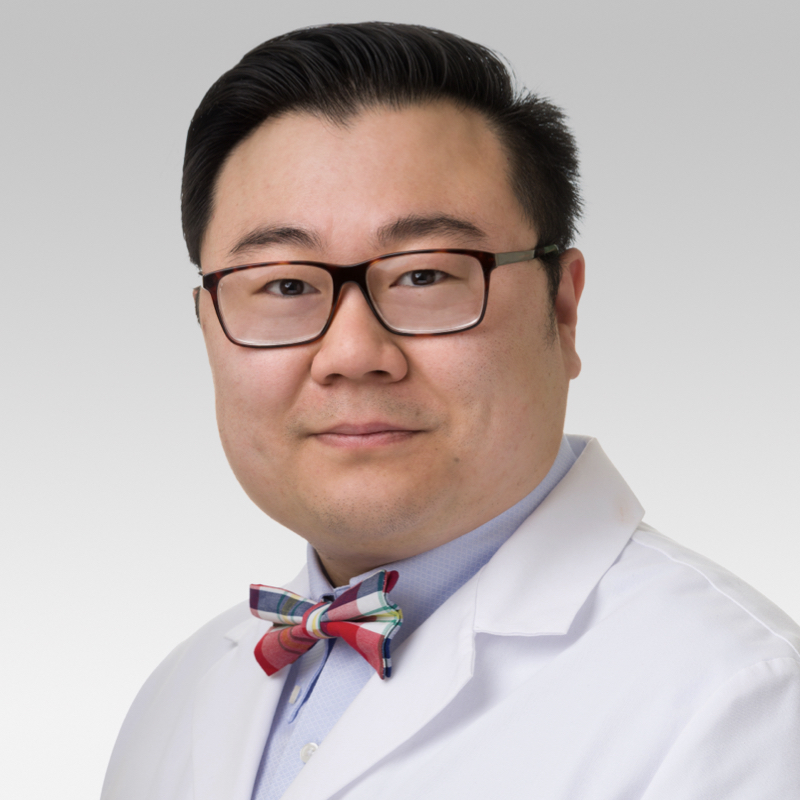
Steve Xu
He prescribes skin creams in the morning and ships ICU-grade wearables by afternoon. The patch he helped invent is thinner than a bandage and now keeps watch over newborns in more than twenty countries.
The doctor who decided monitoring shouldn't end at the hospital door.
The Dispatch
A patch the size of a postage stamp, with the ambitions of a hospital wing.
Steve Xu is mid-stride when you meet him: one foot in a Chicago dermatology clinic, the other in a Northwestern bioelectronics lab, and both hands on a startup called Sibel Health. The thing tying it all together is a soft, wireless sensor that streams heart rate, breathing, oxygen, and more - the kind of numbers that used to require a tangle of cables and a bed in intensive care.
Sibel's flagship, ANNE One, is billed as the first ICU-grade wearable monitoring platform built for every age. The company designed it for the smallest, most fragile patients first - which is why the name nods to maternal, neonatal, and pediatric care - then scaled it outward to adults, hospitals, and the home. Six FDA clearances arrived in roughly four years. The patches have monitored thousands of people across six continents.
What sets Xu apart is the refusal to choose. Most medtech builds for the wealthy hospital or for the global-health grant. Xu insists on the same device doing both: validated to FDA standards and rugged enough for a clinic with unreliable electricity. He calls that the dual mandate. The patients just call it the patch that watches over them.
20+
Countries deployed
6
FDA clearances
120+
Publications
$108M
Total funding
“
Vital signs are vital - and every pregnant person deserves to have their vitals checked.
- Steve Xu
Three Lives, One Person
Doctor. Inventor. CEO. He never picked just one.
THE CLINIC
Still sees patients
Xu remains a board-certified dermatologist. Frustration in the exam room - patients who could not stop scratching - became the seed for an AI sensor that tracks the problem objectively. The clinic feeds the lab.
THE LAB
Soft electronics
As Medical Director of Northwestern's Querrey Simpson Institute for Bioelectronics, he helps translate flexible, skin-mounted sensor research from journals like Nature and Science into hardware a nurse can actually use.
THE COMPANY
Scaling the patch
Sibel Health is the spinout that carries the science to market - FDA filings, manufacturing, partnerships with medtech, pharma, philanthropic, and insurer players. The bridge between a paper and a patient.
The Long Game
From three degrees to six clearances.
EARLY
Bioengineering at Rice University, summa cum laude. The engineering instinct comes first.
MEDICINE
MD from Harvard Medical School as a Soros Fellow - one of the most competitive fellowships in the country.
POLICY
Master's in Health Policy at the London School of Economics as a Marshall Scholar. Now he can argue medicine, money, and machines.
FOUNDING
Co-founds Sibel Health, a Northwestern bioelectronics spinout, and steps in as CEO.
2022
Sibel raises $33M to scale its wearable-based remote patient monitoring platform.
2024
Awarded a major grant to advance maternal monitoring for low- and middle-income countries.
2025
ANNE Maternal earns FDA clearance as a fully wireless maternal-fetal monitoring platform; Sibel wins a $500K FDA grant for an AI scratch-monitoring wearable; Series C pushes total funding past $108M.
The Idea Behind It
Refusing the false choice between rich-world rigor and global reach.
Plenty of founders pick a lane. Xu built a device with two passports. The same wearable that meets the FDA's clinical bar is also engineered for the world's most resource-limited settings - no nest of cables, no fragile monitor cart, just a soft patch and a phone.
He frames it as the thing Sibel has chased since day one: high-income market validation and global health impact in a single platform. It is a bet that good health data should not be a luxury - that a newborn in a low-income clinic and a patient in a US intensive care unit deserve the same standard of watchfulness. The company's registered promise, stamped on its mission, is blunt about it: Better Health Data for All.
What He Actually Builds
Hardware you can stick on a newborn.
Strip away the funding rounds and the fellowships and you are left with a small family of sensors. ANNE One is the headline: a wireless, wearable platform pitched as ICU-grade and built to work across every age group. It tracks the core vital signs - heart rate, respiratory rate, blood oxygenation - plus intermittent blood pressure, patient activity, and fall counts, without binding a patient to a wall.
Then there is ANNE Maternal, cleared by the FDA as a fully wireless maternal-fetal monitoring platform. The pitch is simple and a little radical: a pregnant person should be able to have their vitals - and their baby's - tracked continuously, whether they are in a well-equipped delivery suite or a clinic with almost nothing. Sibel has chased grant funding specifically to push maternal monitoring into low- and middle-income countries, where the gap between need and equipment is widest.
The newest strand comes straight from Xu's day job in dermatology. Sibel's ADAM sensor uses AI to detect scratching with about 99% accuracy - turning a complaint that used to be impossible to quantify into clean, objective data. The FDA backed the direction with a $500,000 Drug Development Tools research grant for an AI-enabled wearable that monitors scratching, the kind of measurement that could reshape how itch-related drugs are tested.
The Translation Problem
Most research dies in the journal. His left the page.
Academic medicine is full of brilliant sensors that never reach a patient. The flexible, skin-mounted electronics behind Sibel started as exactly that kind of research - the sort that lands in Nature and Science and then waits, sometimes forever, for someone willing to do the unglamorous work of clearances, manufacturing, and reimbursement.
Xu made that crossing his job. Sibel Health is a Northwestern spinout, and it won the inaugural Spinoff Prize for doing what spinouts so rarely do well: turning a lab result into a product hospitals can buy. The company has lined up partners across medtech, pharma, philanthropy, and insurance - the unglamorous machinery that decides whether a good idea actually reaches a bedside. Six FDA clearances in roughly four years is the receipt for that work.
It helps that the founder can speak every dialect in the room. The engineer in him understands why a sensor fails; the physician knows what a clinician needs from the data; the policy scholar can read the reimbursement landscape that decides whether any of it survives. That fluency is the quiet reason a research patch became a platform deployed on six continents.
In His Words
Lines worth keeping.
“Our mission here at Sibel Health is to deliver Better Health Data for All.”
“What makes this platform truly unique is its dual mandate: it meets the rigorous clinical standards demanded by the FDA while also being designed for the world's most resource-limited settings.”
“That convergence - high-income market validation and global health impact in a single platform - is what we've been building toward since day one.”
“I am always looking for new ways to help my patients manage itch.”
The Reception
When the establishment notices a patch.
Recognition has come from two directions that rarely agree: the academy and the press. MIT Technology Review named Xu to its 35 Innovators Under 35, the field's shorthand for people worth watching. At the same time, his research has surfaced in The New York Times, CNN, The Washington Post, and the Los Angeles Times - outlets that do not usually run sensor specs, but will run a story about technology that changes how the most vulnerable patients are watched over.
Inside Northwestern, he carries the title of Ruth K. Freinkel, MD Professor and serves as Medical Director of the Querrey Simpson Institute for Bioelectronics, the lab ecosystem that gave the sensors their start. The dual identity - tenured-track academic and venture-backed CEO - is unusual, and Xu treats it less as a balancing act than as a single project viewed from two angles. The lab proves what is possible. The company proves it can ship. Both answer to the same line stamped on Sibel's mission: Better Health Data for All.
It is a tidy summary of an untidy career. He did not pick medicine over engineering, or research over business, or the rich world over the poor one. He kept all of them, and pointed them at the same small, soft, watchful patch.
Footnotes & Flourishes
The things that don't fit on a business card.
He is both a Soros Fellow and a Marshall Scholar - a rare double in the fellowship world.
His research has drawn coverage from The New York Times, CNN, The Washington Post, and the Los Angeles Times.
Sibel's ADAM sensor uses AI to detect scratching with roughly 99% accuracy.
He has published in Nature, Science, PNAS, and the New England Journal of Medicine.
His work has been funded by the NIH, the Gates Foundation, the FDA, and the Department of Defense.
He carries a clinical doctorate, an economics master's, and a stack of engineering patents - fluent in medicine, money, and machines.