wearable-robotics
(7)
Rob Palfreyman Keeps Building for the Places Technology Cannot Quite Reach
First he helped software find people when GPS disappeared indoors. Then he took on a more tactile problem: helping powered clothing understand how a body moves at work.

Wandercraft
Wandercraft is a French robotics company that builds self-balancing walking exoskeletons and, more recently, industrial humanoid robots. Founded in Paris in 2012 by engineers - some with personal ties to degenerative mobility disease - it created Atalante X, a hands-free clinical exoskeleton now used in more than 100 rehabilitation centers, and Eve, the first self-balancing personal exoskeleton designed for home use without crutches. In 2025 the company extended its gait-control expertise into Calvin, a family of industrial humanoids developed with Renault Group and NVIDIA. Wandercraft's stated aim is to blend frontier AI with high-performance hardware to help people work and walk.

ATDev
ATDev (Assistive Technology Development, Inc.) is a UC Berkeley spinout building an ecosystem of robotic devices that help people stay independent. Its flagship product, Reflex, is a smart, under-5-pound robotic knee brace that delivers personalized, telehealth-enabled physical therapy at home and streams progress data back to clinicians. Founded by engineer Todd Roberts and disability-rights advocate Owen Kent, the company designs 'for users, by users' and is scaling after a $3M seed round while also serving as a subcontractor on a $41M ARPA-H robotic mobility program.

Amaury Ciurana
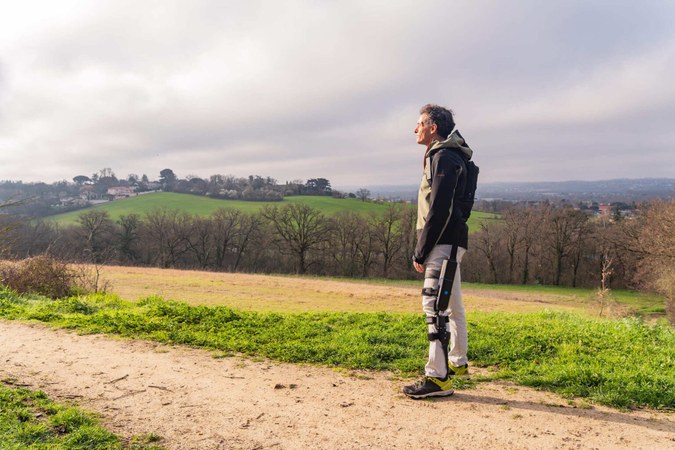
Amaury Ciurana is the co-founder and CEO of REEV, a wearable-robotics company building intelligent motorized orthoses for people with neurological gait disorders. A French aerospace engineer trained at ISAE-SUPAERO and the X-HEC entrepreneurship track, he relocated to Boston in 2023 to lead REEV's US expansion. The company pairs DREEVEN, an AI-powered robotic knee orthosis, with REEV SENSE, a wearable gait-analysis system, and has raised roughly $14M total including a $9.2M round in 2025.
REEV
REEV is a medical robotics company building AI-powered wearable robotics to restore everyday mobility for people with neurological gait disorders after stroke, multiple sclerosis or paraplegia. Its flagship DREEVEN is a lightweight (about 3kg) motorized knee orthosis driven by electro-hydraulic actuation and real-time gait sensing, paired with REEV SENSE, an IMU wearable that turns a person's walking pattern into clinical-grade gait reports. Founded in 2021 and split between Boston and Toulouse, REEV raised $9.2M in February 2025 to finalize DREEVEN, run a clinical study at Boston University and prepare for FDA trials.
Roam Robotics
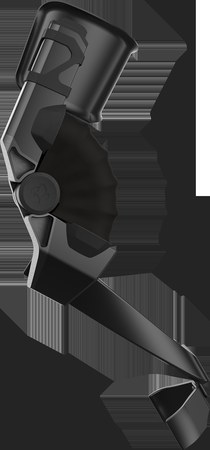
Roam Robotics builds lightweight, air-powered wearable exoskeletons that augment human strength, endurance and mobility. Founded by Ekso Bionics veteran Dr. Tim Swift, the San Francisco company replaced the heavy metal of traditional exoskeletons with plastic, fabric and pneumatic actuators - making robotic assistance cheap and light enough to wear all day. Its products span consumer skiing (Elevate), medical knee osteoarthritis relief (Ascend), and military performance (Forge), with clinical data showing 46% average knee-pain reduction and up to 2x strength and endurance gains.
Tim Swift
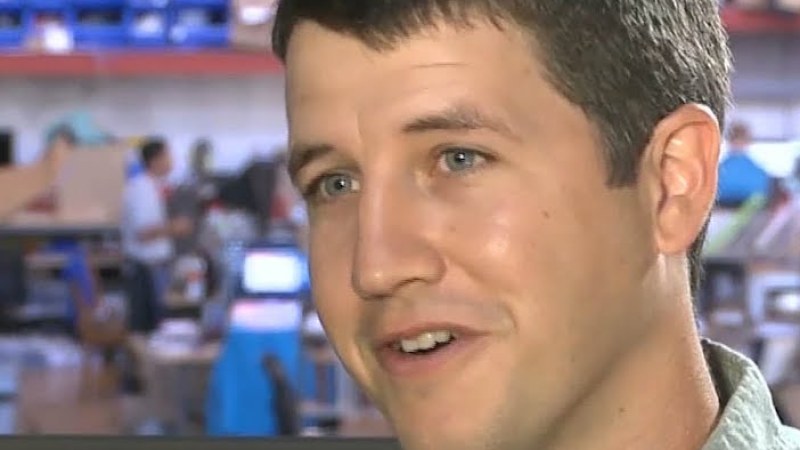
Tim Swift is the founder and CEO of Roam Robotics, the San Francisco company building lightweight exoskeletons out of high-strength fabric and compressed air instead of heavy steel and motors. A UC Berkeley mechanical engineering PhD, he was one of the original three-person team that invented the Ekso exoskeleton at Ekso Bionics, then went to Otherlab before starting Roam in 2014. His bet: that wearable robots can weigh five pounds, cost a few thousand dollars, and be something a regular person buys to ski longer, hike farther, or move with less pain - not a tens-of-thousands-of-dollars hospital machine.