wearable-medical-device
(5)
Attune Neurosciences, Inc.
Attune Neurosciences is a San Francisco-based, clinical-stage medical device company building what it calls the first wearable, non-invasive focused-ultrasound system for deep brain therapy. Its investigational headband, ATTN201, uses low-intensity transcranial focused ultrasound (tFUS) to reach precise deep-brain targets - like the central medial thalamus - while recording EEG and head movement, aiming to treat sleep and wake disorders, depression, addiction recovery, and other neurological and psychiatric conditions without drugs or surgery.

JuneBrain Inc.
JuneBrain Inc. is a Baltimore medtech startup building a wearable, AI-powered eye-scanning system that brings optical coherence tomography (OCT) out of the eye clinic and into neurology, primary care, and the home. Its flagship Neuro-i SS-OCT captures high-resolution retinal images without a technician, and its AI software turns those images into quantitative biomarkers clinicians can use to monitor diseases like multiple sclerosis, Alzheimer's, and Parkinson's between visits. Founded in 2017 by neuroscientist Samantha Scott after her own diagnosis with a neuromuscular disorder, the company is a WBENC-certified women-owned business on track for FDA submission in 2026.

Rajiv Mahadevan
Rajiv Mahadevan is the co-founder and CEO of Attune Neurosciences, a San Francisco neurotechnology company building what it calls the world's first wearable, non-invasive ultrasound system for deep brain therapy. A UC Berkeley molecular biologist turned Stanford MBA, he spent two decades inside biotech and precision-medicine companies - 23andMe, Novo Nordisk, and his own venture Applied Immunology, which was acquired by Precision Medicine Group - before turning his attention to the skull. Attune's headband-shaped device aims low-intensity focused ultrasound at deep brain structures with MRI-guided precision, and it is backed by venture investors, the NIH, and the U.S. Special Operations Command.

Samantha Scott
Samantha Scott, PhD is the founder and CEO of JuneBrain, a Baltimore medtech startup building the first wearable, technician-free retinal scanning system. Trained as a biomedical engineer at Stanford and USC, she is turning high-resolution eye imaging plus AI into a way to detect and monitor brain and eye conditions far outside the walls of a clinic. JuneBrain has raised more than $3 million in private capital, won $3 million in NSF grants, holds four issued patents, and is on track for an FDA submission.
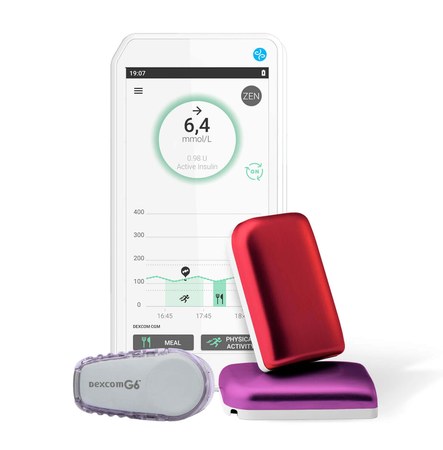
Kaleido
Kaleido is a small, discreet, customizable insulin patch pump built by Dutch medtech company ViCentra to make living with diabetes less of a burden. Designed to look and feel like a lifestyle product rather than a clinical device, Kaleido pairs with Diabeloop's self-learning algorithm and the Dexcom CGM to enable hybrid closed-loop, app-controlled insulin delivery. With more than 3,500 users in Europe and an $85M+ Series D raised in 2025, the company is scaling manufacturing of its next-generation Kaleido 2 and preparing for entry into the United States.