translational-medicine
(9)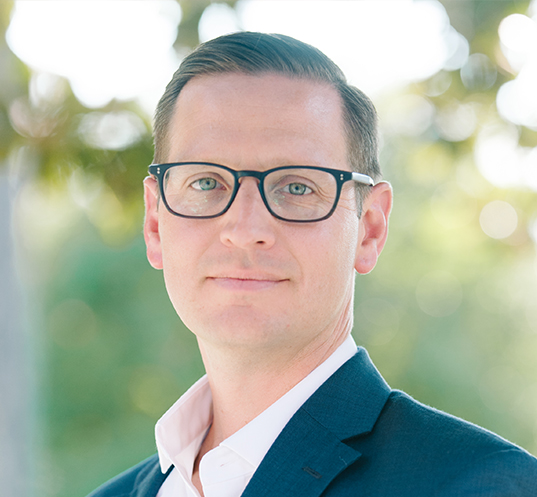
Patrick Roberts Is Betting the Cell Cycle Has Another Door
After helping a small North Carolina biotech move a cell-cycle drug from discovery toward patients, Patrick Roberts reunited with longtime colleagues to pursue a harder target: CDK2. The wager behind Incyclix Bio is that precision, patience and the right biomarkers can reopen a route that resistant cancers have learned to use.

The Biotech Betting That Cancer Drugs Fail Because Nobody Looked at the Proteins
80% of cancer compounds that reach clinical trials fail. Yatiri Bio thinks the problem is that drug developers have been reading the wrong molecules - and it built a proteomics platform to prove it.
The Durham Investor That Treats Venture Capital Like a Clinical Program
Pappas Capital has spent three decades turning laboratory risk into investable milestones. Its edge is less about chasing crowded hubs than combining drug-development judgment, company-building work and patient capital from a base in Research Triangle Park.
Scorpion Therapeutics
Scorpion Therapeutics was a Boston-based, clinical-stage precision oncology company built to advance what it called "Precision Oncology 2.0" - pairing cancer biology, computational chemistry, medicinal chemistry and genomics to design small-molecule drugs against cancer targets that had resisted earlier approaches. Founded in 2020 by a group of prominent scientists and biotech operators, it raised more than $440 million and built a pipeline of mutant-selective inhibitors, most notably the PI3K-alpha inhibitor STX-478 and a franchise of fourth-generation EGFR inhibitors. In January 2025 Eli Lilly agreed to acquire the company and its PI3K-alpha program in a deal worth up to $2.5 billion, while Scorpion's remaining pipeline and staff were spun into a new independent company, Antares Therapeutics.

NeoPhore Ltd
NeoPhore is a UK small-molecule immuno-oncology company developing first-in-class inhibitors of the DNA mismatch repair (MMR) pathway. By temporarily switching off MMR, its drugs are designed to make tumours generate fresh neoantigens, become visible to the immune system, and respond to checkpoint immunotherapy - extending the benefit of drugs like Keytruda to patients whose cancers are otherwise immune-cold. A 2017 spin-out of Cambridge's PhoreMost, NeoPhore has raised roughly $47M and counts Bristol Myers Squibb and Memorial Sloan Kettering among its backers and collaborators.

Tom Large
Tom Large is the CEO and co-founder of Blue Oak Pharmaceuticals, a Waltham, Massachusetts startup hunting for the next generation of medicines for brain disorders. A neurobiologist by training, he spent two decades inside big pharma - leading neuroscience research at Eli Lilly and running preclinical research and translational medicine at Sunovion - before launching Blue Oak in 2016 to chase drugs with genuinely new mechanisms for bipolar depression, schizophrenia and treatment-resistant depression. His teams pioneered a target-agnostic approach to CNS drug discovery, and he later partnered with AI specialist Exscientia to design 'bispecific' small molecules that hit two targets at once.

Superfluid Dx, Inc.
Superfluid Dx is a South San Francisco diagnostics company building a blood-based test for Alzheimer's disease and other neurodegenerative conditions. Its platform isolates cell-free messenger RNA (cf-mRNA) from a single tube of blood and pairs next-generation sequencing with RNA deconvolution and machine-learning analysis to read out organ-level biology - aiming to detect disease years earlier than conventional methods and to guide therapy. The company was formed in late 2023 when WRQ Sciences acquired and renamed Molecular Stethoscope, and is led by Fluidigm co-founder Gajus Worthington alongside Stanford bioengineer and serial founder Steve Quake.
Verge Genomics
Verge Genomics is a South San Francisco biotech that builds drugs from human biology instead of mouse models. By assembling one of the largest proprietary multi-omics datasets drawn directly from human brain and tissue samples, then mining it with machine learning, its CONVERGE platform identifies disease targets and drug candidates for neurodegenerative diseases like ALS, ALS-FTD and Parkinson's. Founded in 2015 by Alice Zhang and Jason Chen, the company famously moved its first AI-discovered drug from research to the clinic in four years. After that ALS candidate failed its early trial, Verge has refocused on its core asset, the platform, repositioning to supply other drug developers with human-grounded target data.

Srini Akkaraju
Srini Akkaraju, MD/PhD, is the Founder and Managing General Partner of Samsara BioCapital, a Palo Alto-based venture capital firm he founded in 2016 to translate cutting-edge biology into transformative therapeutics. With a Stanford MD/PhD in Immunology and a computer science foundation from Rice University, Akkaraju has spent over 25 years at the intersection of science and capital - from corporate development at Genentech to partnership roles at J.P. Morgan Partners, Panorama Capital, New Leaf Venture Partners, and Sofinnova Ventures. Samsara has built a portfolio of 93+ companies with 32 IPO exits, backing breakthroughs in immunotherapy, cell therapy, kidney disease, and gene therapy. His conviction-driven approach is evident in moves like a $19M personal stake in Scholar Rock, and his belief that biotech is entering an 'unbelievable innovation cycle' over the next two to three decades.