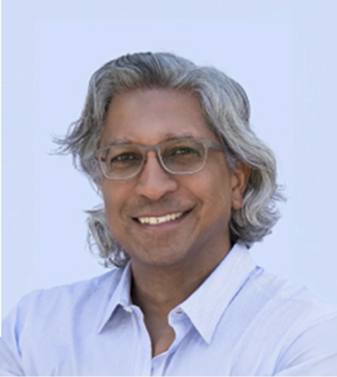
Profile
The Long Bet on Biology
There's a particular kind of investor who makes two or three big calls and rides them into legend. Srini Akkaraju is a different species entirely. He makes dozens of bets per decade, holds them through brutal public markets and clinical disappointments, and does it with the composure of someone who spent years at Stanford learning exactly how difficult the science actually is.
Akkaraju earned both an MD and a PhD in Immunology from Stanford University - dual credentials that most people choose between, not accumulate. Before that, he studied Biochemistry and Computer Science at Rice University, an unusual pairing in an era when bioinformatics wasn't yet a field. It looks prescient now. At the time, it was just curiosity.
That scientific foundation is what separates Akkaraju from the purely financial VCs who migrated into biotech chasing pharma multiples. When he reviews a drug candidate, he's not relying on a scientific advisory board to translate. He's the one doing the translating - and the interrogating.
"We are in an unbelievable innovation cycle right now. Over the next two or three decades, biotech will be the source of multiple, really important new therapies that will have an absolutely transformative effect on a lot of people's lives."
- Srini Akkaraju, Managing General Partner, Samsara BioCapitalFrom Genentech's Deal Desk to Sand Hill's Top Table
In 1998, Akkaraju joined Genentech's corporate development team as a Senior Manager. At the time, Genentech was already the gold standard of biotech - a company that had turned monoclonal antibodies from academic curiosity into commercial reality. He managed worldwide partnering activities, in-licensing early and late-stage therapeutics, and learning the mechanics of how the industry actually valued science.
That operational apprenticeship was brief but formative. By 2001, Akkaraju had made the move that defines careers in his field: he joined J.P. Morgan Partners' Healthcare Group Life Sciences team. He became a Partner in 2005. From there the arc accelerates - co-founder of Panorama Capital in 2006, Managing Director at New Leaf Venture Partners in 2009, General Partner at Sofinnova Ventures in 2013.
Fortune Magazine covered the Sofinnova appointment. It was notable enough to merit the headline. Three years later, he left to build something of his own.
Career Path
Samsara: A Sanskrit Word for a Biotech Thesis
When Akkaraju chose the name Samsara for his new firm, he was making a statement that extends beyond branding. Samsara is a Sanskrit concept - the continuous cycle of life, death, and rebirth. For a firm dedicated to turning biological research into medicines, the metaphor is precise: molecules fail, companies pivot, and from that churn emerges something that changes lives.
Samsara BioCapital launched in Palo Alto in 2016 with a mandate to back transformative therapeutics from earliest inception through the full arc of company-building. Akkaraju's approach is stage-agnostic, which is rarer than it sounds in venture: most firms are either early-stage specialists or late-stage crossover funds. Samsara crosses those lines deliberately, following conviction rather than stage denomination.
The team now numbers 22 people with, as the firm puts it, over 500 years of combined experience spanning science, medicine, drug development, and business leadership. It's a number that invites skepticism until you read the roster - researchers who ran clinical development programs, operators who scaled commercial-stage biotechs, and scientists who have actually moved atoms around on a bench.
Companies
Exits
Exits
Members
Experience
The Portfolio: Where Conviction Lives
Akkaraju's conviction in his portfolio companies is unusually literal. In 2025, he made a personal purchase of approximately $19 million in Scholar Rock shares at an average price of $37.58 - boosting his personal holdings by 3,707%. It was the largest insider purchase of Scholar Rock shares in the preceding 12 months. When a managing general partner writes a nine-figure check from their own account, it answers a lot of questions about how they actually feel about the science.
Scholar Rock is one of several public biotech board positions Akkaraju holds, alongside Mineralys Therapeutics and vTv Therapeutics. The private portfolio is equally dense with conviction plays: Ottimo Pharma, Alumis Inc., OrsoBio, Dewpoint Therapeutics, EyeBiotech, A2 Biotherapeutics, and Link Cell Therapies are among the companies where he serves on the board or advisory board.
The exit record is what makes the thesis coherent rather than merely ambitious. Chinook Therapeutics - a precision medicine play in kidney disease - was acquired by Novartis in 2023. CARGO Therapeutics is advancing clinically validated CD22 CAR-T cell therapy for lymphoma into the clinic. SpringWorks Therapeutics, Recursion Pharmaceuticals, and Fulcrum Therapeutics have all crossed into the public markets from the Samsara portfolio. Nkarta is developing allogeneic NK cell therapies for cancer and autoimmune disease - an area Akkaraju entered when most investors were still debating whether allogeneic cell therapy was feasible.
Notable Portfolio
On Immunotherapy: Honest About the Hard Parts
Akkaraju is unusual among vocal biotech investors for the candor with which he discusses failure. Asked about the search for immunotherapies that outperform current standards like Keytruda, he said it has been "one disappointment, honestly, after another."
That's a striking admission from someone whose entire firm is built on belief in biological innovation. But it's also the kind of honesty that comes from actually knowing the science - understanding why PD-1 inhibitors work, why combination approaches have struggled, why the tumor microenvironment is genuinely difficult rather than merely unsolved.
The same rigor shows up in his commentary on Chinese pharmaceutical programs. He has noted that licensing assets from Chinese pharma companies - which have already completed early human trials - lets Western developers "skip all of this, four years of toiling away to get to a drug and prove that it does something in humans." That's a specific, operational view of where value is being created in the pipeline, not a high-level talking point about innovation.
Investment Focus Areas
Cell & Gene Therapy
Early backer of CAR-T and allogeneic NK cell approaches - from CARGO Therapeutics to Nkarta - before clinical proof-of-concept was established.
Immunotherapy
Honest about the field's disappointments, yet continues to back next-generation approaches. Stanford immunology training informs every diligence call.
Epigenetic Modulators
A frontier Akkaraju has named publicly as one of the areas expected to generate multiple important therapies in the coming decade.
Mitochondrial Biology
Another emerging area he tracks closely - where the biology is established but the translational path remains early and undercrowded.
Kidney Disease
Chinook Therapeutics (acquired by Novartis) demonstrated what precision medicine approaches can accomplish in nephrology.
Metabolic & Ocular
OrsoBio ($60M Series A) and EyeBiotech ($65M) show Samsara's appetite for organ-specific precision therapeutic platforms.
The Long View, Literally
Akkaraju has been consistent and specific about timeline. His view is that biotech will produce some of the most important medicines in human history over the next two to three decades - and that this innovation deserves capital that matches its timescale. That's not a pitch; it's a constraint on how he structures investments and manages portfolio companies.
He has made his concern about the talent gap explicit: "Younger companies should pull in more experienced managers to minimize the risk of expensive mistakes. The balance of how many great opportunities there are, versus experienced people to move them forward, is already out of whack." The argument is that great science fails more often for execution reasons than scientific ones - and that experience is a scarce, undervalued input.
At Samsara, the response to that concern is structural: the venture partners and principals are not generalists with science credentials, but operators and scientists who have run programs, recruited teams, and navigated the FDA. The 500-years-of-experience claim is specific enough to be testable. Scroll the team page and you'll find it checks out.
"Younger companies should pull in more experienced managers to minimize the risk of expensive mistakes. The balance of how many great opportunities there are, versus experienced people to move them forward, is already out of whack."
- Srini AkkarajuPhilanthropy and Global Health
Akkaraju's orientation toward patient impact extends into the nonprofit world. He is associated with The George Institute for Global Health, one of the world's leading independent medical research institutes. His work there connects the investment thesis to a broader framework: that the same principles of evidence-based medicine and scientific rigor that drive good biotech investing also apply to global health challenges where commercial incentives are weaker.
It's an unusual pairing - venture capitalist and global health advocate - but a coherent one for someone who trained as a physician. The question of which patients get which medicines, and when, is not just an investing question.
In His Own Words
"30 years from now, we'll look back on this period as a time that transformed many lives, and this innovation deserves backing."
On the biotech innovation cycle"Finding new immunotherapies that work better than current standards has been one disappointment, honestly, after another."
On the challenge of next-gen immuno-oncology"You skip all of this, four years of toiling away to get to a drug and prove that it does something in humans."
On licensing Chinese pharma assets to accelerate development"We are in an unbelievable innovation cycle right now."
On the current biotech era - BIO Investor Forum 2024Fast Facts
Career Timeline