seed
(16)
RH Capital bets on the patient everyone missed
A women’s health fund built a $43.5 million platform around overlooked needs. Its harder question: can the innovation reach the people who need it most?

NEXT VENTŪRES bets on the space between visits.
A frozen waffle, a smart ring, a route into cancer trials. This venture firm sees a common problem: making better health easier to reach.

The Cyber-Only Fund That Bets on the People Who Built the Industry
A firm run entirely by cybersecurity operators, backing the founders trying to defend everything from cloud workloads to synthetic media - one narrow thesis, executed at scale.
The Fund That Runs Your Marketing Before It Writes You a Check
Fiat Ventures started as a fintech growth shop, not a checkbook. That order - consulting first, capital second - is the whole pitch, and it is why founders let the firm into the room before the term sheet.

Half a Billion Dollars, One Zip Code, and a Bet That Talent Is Everywhere
Atento Capital deployed more than $500 million from a single Oklahoma foundation - and started flying Latin American deep-tech founders to Tulsa to prove the next big company doesn't have to come from California.

The Fund Betting That 60% of the Economy Will Soon Be Grown, Not Made
Jennifer Kan spent years at a Nobel laureate's bench teaching enzymes new tricks. Now her fund backs the founders trying to grow the physical economy - chocolate, copper, chemicals, even data - one engineered cell at a time.

The Fund That Only Swings at the Ones It Can Hit
A Boston venture firm borrowed its name from the last man to hit .400 in baseball - and built a discipline of only swinging at cybersecurity, healthcare, and data + AI deals where it holds an unfair advantage.
The Venture Fund Where the Partners Used to Run the Missions
New North Ventures backs founders building for both the Pentagon and the marketplace - a dual-use bet led by former intelligence operators and the entrepreneur who built Dyn.

The London VC That Would Rather Fund a Database Than a Dating App
Krishna Visvanathan and Scott Sage have spent two decades funding the plumbing beneath enterprise software. With a fresh $135M APAC fund and about $450M under management, Crane is betting the next category leaders start with infrastructure, not pitch decks.

The VC Who Sells Before He Wires
Jordan Wan spent ten years staffing the sales teams of a thousand startups. Now he invests in the founders before they have one - and helps them figure out how to sell.
The Orlando Fund Betting That the Next Big Startup Won't Come From Silicon Valley
A venture firm in Orlando is wagering that the founders worth backing are the ones nobody in Silicon Valley has a flight booked to meet - and it wants to be the first money in.

The VC Who Bet Against Unicorns - and Started Posting
Erica Wenger raised $4.3 million from 130 backers to fund 'elephants, not unicorns.' The unusual part isn't the thesis - it's that she built a following first.

The VC That Thinks Your Moonshot Has a Marketing Problem
Spacecadet writes $100K-$500K checks into frontier science, then hands founders a creative studio built to sell the impossible. Marc Andreessen and Chris Dixon are along for the ride.
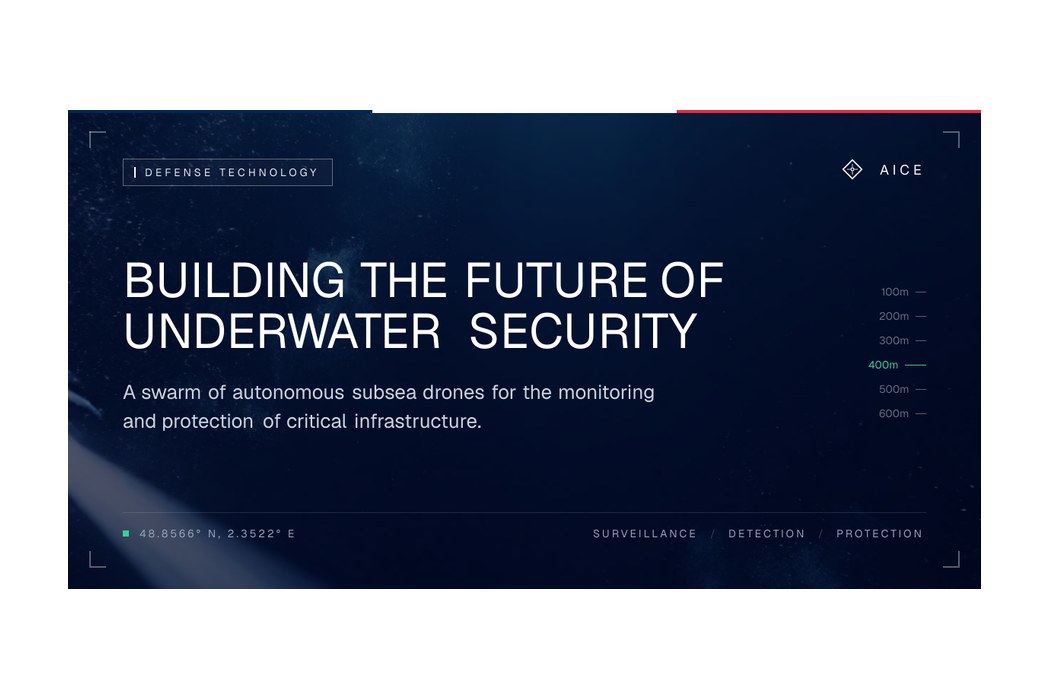
AICE
AICE is a San Francisco defense-tech startup building autonomous swarms of modular underwater drones to monitor and protect naval assets and coastal infrastructure. Backed by Y Combinator (P26), the company was founded by ex-NASA MIT aerospace engineer Gregoire Chomette and European robotics champion Remi Bouteiller, who pivoted from commercial-building energy sensors to subsea defense after talking to submariners about the gaps in current underwater robotics.

Long Wall
Long Wall is a Long Beach, California defense manufacturer building cost-effective, mass-producible missile defense systems. Founded in 2017 as the rocket startup ABL Space Systems, it rebranded to Long Wall in February 2025 and pivoted from commercial satellite launch to defense, repurposing years of launch-vehicle engineering into interceptors, target rockets, and deployable ground infrastructure. Its lineup includes Cyclops, a surface-launched exoatmospheric interceptor; RSX, a low-cost liquid booster for flight testing and threat replication; and Ironwood, rapidly deployable ground support equipment. The company's thesis is that modern threats - hypersonic weapons, growing nuclear arsenals, and raid sizes in the hundreds - have outrun the price and production volume of legacy interceptors, so defense needs magazine depth measured in thousands, not dozens.

Mandolin
Mandolin is a San Francisco healthcare AI company building agents that handle the paperwork blocking patients from specialty drugs. Its software automates intake, benefits verification, prior authorization, and claims work for infusion providers, specialty pharmacies, and health systems - the back office that decides how quickly a cancer or Alzheimer's patient actually gets treated.