monoclonal-antibody
(15)
Tara Nickerson
Tara Nickerson, PhD, is President, CEO and Director of Therini Bio, a clinical-stage biopharmaceutical company developing fibrin-targeting immunotherapies for neurological and retinal diseases. A biopharma executive with more than 20 years of experience, she was a founding-team member and Chief Business Officer at both Maze Therapeutics and Prothena Corporation before taking the top job at Therini in 2024. She combines a research background from McGill University with an MBA from UC Berkeley's Haas School and a long track record of company-building, financing and dealmaking in the life sciences.

AmMax Bio., Inc.
AmMax Bio is a clinical-stage biotechnology company in Redwood City, California, developing first-in-class cancer therapeutics built on a CSF1R-targeting antibody platform. Founded in 2020 by pharmaceutical veteran Larry Hsu, PhD, in partnership with Amgen, the company advances a pipeline that spans a monoclonal antibody for tenosynovial giant cell tumor (TGCT), a therapy for colorectal cancer minimal residual disease (in partnership with MD Anderson), and a lead antibody-drug conjugate, AMB-104, for acute myeloid leukemia. AmMax's strategy is to de-risk development by combining clinically validated antibodies with established linker-payload technology.

Aulos Bioscience
Aulos Bioscience is a Larkspur, California, clinical-stage immuno-oncology company using artificial intelligence to design antibody therapeutics that unlock the anti-cancer power of interleukin-2 (IL-2). Its lead candidate, imneskibart (AU-007) - described as the first AI-designed human monoclonal antibody to enter human clinical trials - redirects IL-2 away from immune-suppressing regulatory T cells and toward immune-activating effector T cells and NK cells, aiming to treat solid tumors such as melanoma and non-small cell lung cancer while avoiding the toxicity that has limited earlier IL-2 therapies.

Lyvgen Biopharma
Lyvgen Biopharma is a Shanghai-based clinical-stage immuno-oncology company founded in 2016 by veteran oncology scientist Dr. Jieyi Wang. It builds agonist antibodies - drugs that switch the immune system on rather than release its brakes - using a proprietary xLinkAb platform designed to concentrate immune activation inside tumors while limiting toxicity elsewhere. Its lead program, the CD137/4-1BB agonist antibody LVGN6051 (exlinkibart), is in Phase Ib/II trials in the US and China, including combinations with Merck's Keytruda, alongside a CD40 agonist (LVGN7409), a PD-1 blocker (LVGN3616), and bispecific candidates. Backed by IDG Capital and others through a Series C, Lyvgen runs R&D in Shanghai, a CMC/manufacturing center in Suzhou, and clinical and business development teams spanning China and the US.
Therini Bio, Inc.
Therini Bio is a clinical-stage biotechnology company developing fibrin-targeting immunotherapies for neurodegenerative and retinal diseases driven by vascular dysfunction. Founded in 2019 on the neurovascular research of Dr. Katerina Akassoglou at UCSF and the Gladstone Institutes, the company's lead antibody THN391 selectively blocks fibrin's inflammatory epitope to halt chronic neuroinflammation without interfering with normal blood clotting. Backed by roughly $145M in total funding from investors including Eli Lilly, Sanofi Ventures, Merck's MRL Ventures and the Dementia Discovery Fund, Therini is advancing THN391 into Phase 1b trials for Alzheimer's disease and diabetic macular edema.

Marea Therapeutics
Marea Therapeutics is a clinical-stage biotechnology company in San Francisco developing first-in-class medicines for cardioendocrine and cardiometabolic diseases. Incubated by Third Rock Ventures and led by Dr. Josh Lehrer, Marea uses human genetics insights to drive its pipeline, headlined by MAR001, an ANGPTL4-targeting antibody aimed at residual cardiovascular risk, and MAR002 for acromegaly.

Abcuro, Inc.
Abcuro is a clinical-stage biotechnology company in Newton, Massachusetts developing first-in-class immunotherapies that selectively deplete highly cytotoxic T cells implicated in autoimmune tissue damage and certain cancers. Its lead program, ulviprubart (ABC008), is a monoclonal antibody targeting the KLRG1 receptor, advanced primarily for inclusion body myositis (IBM) - a progressive muscle-wasting disease with no approved treatments - alongside pipeline work in T-cell large granular lymphocytic leukemia and T/NK-cell lymphomas.

Helicore Biopharma
Helicore Biopharma is a South San Francisco clinical-stage biopharmaceutical company building first-in-class GIP (glucose-dependent insulinotropic polypeptide) antagonists for obesity and cardiometabolic disease. Its lead candidate, HCR-188, is a humanized monoclonal antibody that binds circulating GIP ligand rather than the GIP receptor, a mechanism designed to improve the quality of weight loss - favoring fat loss over lean mass when paired with GLP-1 - and to restore leptin sensitivity. Incubated by Versant Ventures, the company emerged from stealth in January 2025 with a $65 million Series A and is advancing a pipeline of long-acting antibody-peptide conjugates aimed at quarterly dosing.

Kira Biotech Pty Ltd
Kira Biotech is a Brisbane-based clinical-stage immunology company developing first-in-class antibody therapeutics that retrain the immune system instead of broadly suppressing it. Its lead candidate, KB312, selectively depletes activated immune cells to restore immune tolerance, aiming to treat difficult autoimmune and inflammatory conditions such as rheumatoid arthritis, lupus, type 1 diabetes, and graft-versus-host disease. Built on decades of dendritic-cell research from Australian institutes and led by US rheumatologist Dr Dan Baker, the company launched with a A$20 million Series A in 2019 led by OneVentures and IP Group.

Blaine McKee
Blaine McKee is the president and CEO of Walden Biosciences, a Cambridge, Massachusetts biotech building first-in-class medicines that go after the kidney itself instead of just slowing the road to dialysis. A chemist turned dealmaker turned operator, he launched Walden with a $51 million Series A in 2020 and now steers two clinical-stage programs: WAL0921, an anti-suPAR antibody, and WAL0623, a small-molecule dynamin stabilizer. Before Walden he spent 15 years at Genzyme and held top corporate-development roles at Shire and ImmunoGen, pairing an MIT organic-chemistry PhD with an MIT Sloan finance MBA.
Dan Baker
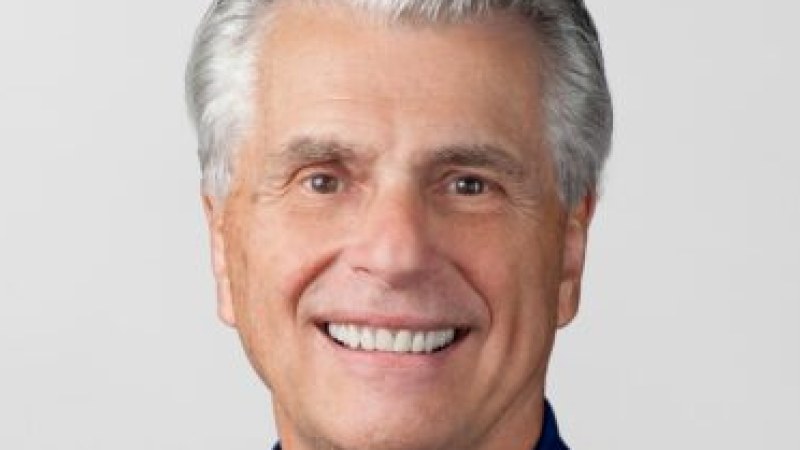
Dan Baker is a physician-scientist turned biotech founder who spent two decades at Johnson & Johnson's Janssen division helping bring immunology blockbusters Remicade, Simponi and Stelara to patients, before launching Brisbane-based Kira Biotech in 2019 as its founding CEO. Kira is developing KB312, a first-in-class antibody designed to selectively retrain the immune system rather than broadly suppress it, aimed at autoimmune diseases such as rheumatoid arthritis, lupus and type 1 diabetes. A rheumatologist who taught at the University of Pennsylvania for 18 years, Baker also advises drug-development organisations and serves as a healthcare venture partner.

Walden Biosciences
Walden Biosciences is a Cambridge, Massachusetts clinical-stage biotech building first-in-class, disease-modifying medicines that target the kidney directly instead of just delaying the slide toward dialysis. Founded in 2020 on the podocyte and suPAR research of renal scientist Jochen Reiser and colleagues, Walden pairs an antibody program (WAL0921, against soluble urokinase plasminogen activator receptor) with a small-molecule program (WAL0623, a dynamin stabilizer) to protect and restore the kidney's filtration cells. Backed by ARCH Venture Partners, UCB Ventures, Mass General Brigham Ventures and ATEM Capital, the company is advancing WAL0921 through a Phase 2 basket study across common and rare glomerular kidney diseases.

CatalYm GmbH
CatalYm is a German clinical-stage biotech developing visugromab, a GDF-15 neutralizing monoclonal antibody designed to reverse immunotherapy resistance in solid tumors and address cancer cachexia.

Star Therapeutics
Star Therapeutics is a South San Francisco clinical-stage biotech building first-in-class antibody medicines for serious diseases, with a 'pipeline-in-a-product' approach. Its lead asset VGA039, developed through subsidiary Vega Therapeutics, is a once-monthly subcutaneous monoclonal antibody targeting Protein S, now in Phase 3 for von Willebrand disease.

Scott Clarke
Scott Clarke is the CEO of CatalYm GmbH, a Munich-based biotech company developing visugromab, a monoclonal antibody targeting GDF-15 to reverse cancer immunotherapy resistance. With over 20 years in biopharmaceuticals - spanning Roche's global oncology partnering, BioMarin, Tizona Therapeutics, and Ambagon Therapeutics - Clarke joined CatalYm in January 2025 to lead the company's $319M-funded push through Phase 2b clinical trials, building on visugromab's striking Phase 1/2a results published in Nature showing durable responses lasting 28-32+ months in multiple solid tumor types.