BREAKING Janssen veteran founds Brisbane biotech KB312 targets immune tolerance, not suppression A$20M Series A led by OneVentures Remicade · Simponi · Stelara on the resume 18 years on the Penn faculty 15+ drug approvals across 3 continents BREAKING Janssen veteran founds Brisbane biotech KB312 targets immune tolerance, not suppression A$20M Series A led by OneVentures Remicade · Simponi · Stelara on the resume 18 years on the Penn faculty 15+ drug approvals across 3 continents
Person / Founder & CEO

DanBaker

He helped build immunology's biggest sellers. Then he started a four-person company on the far side of the planet.

ImmunologyRheumatologyFounderPhysician-Scientist
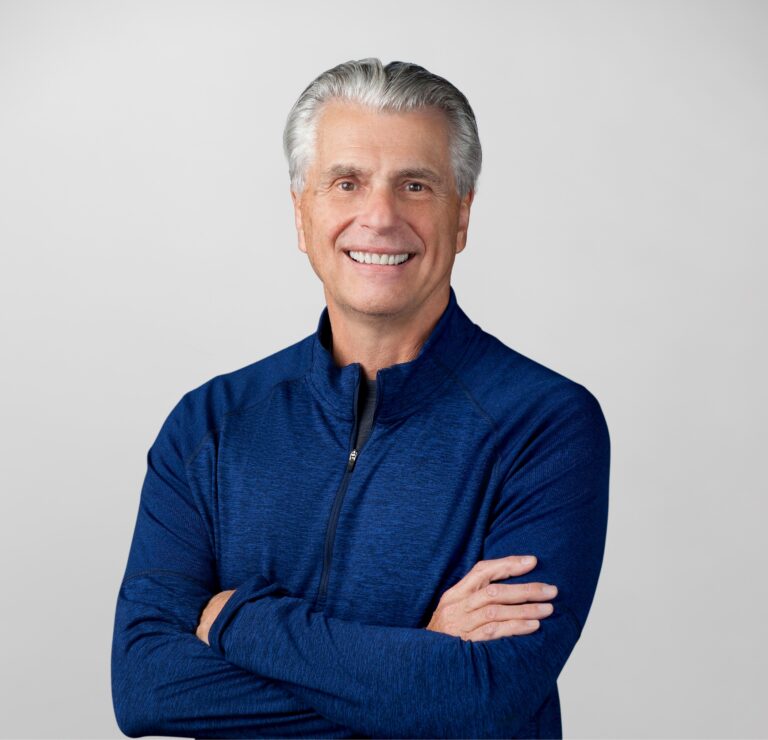
Dan Baker, founder and CEO of Kira Biotech

Dan Baker - rheumatologist, drug developer, and the man who decided retirement could wait.

The Headline

Selective, not sweeping.

Most drugs for autoimmune disease work by turning the immune system down. Dan Baker's company is chasing a harder idea: teaching it to stand down only where it has gone wrong. That distinction - selective over sweeping - is the whole thesis of Kira Biotech, the Brisbane company he founded and runs as CEO.

Kira's lead candidate, KB312, is a first-in-class monoclonal antibody designed to deplete the activated immune cells that drive diseases like rheumatoid arthritis, lupus and type 1 diabetes, while sparing the cells that keep you safe from infection and cancer. It is a bet that the immune system can be retrained rather than blunted. Restore tolerance, the thinking goes, and you treat the cause instead of muffling the symptom.

Baker is not a first-timer guessing at how hard this gets. He spent close to two decades inside Johnson & Johnson's Janssen division shepherding immunology drugs from concept to clinic to pharmacy. He knows the odds. He started Kira anyway.

"Kira's research program focuses on immune tolerance and targets cells and pathways that are key activators of the immune response in patients with autoimmune diseases."

- Dan Baker, Founder & CEO, Kira Biotech

A$20M
Series A raised, 2019
18
Years on Penn faculty
15+
Drug approvals shipped
3
Blockbusters: Remicade, Simponi, Stelara

The Long Game

Bedside. Bench. Boardroom.

Before he was a CEO, Baker was a rheumatologist. He earned a B.A. in Biology from Gettysburg College and an M.D. from the University of Pennsylvania, then trained through a residency at Hershey Medical Center, a rheumatology fellowship back at Penn, and a research fellowship at Massachusetts General Hospital. For 18 years he stayed on the Penn faculty - treating patients with the very diseases he would later spend his career trying to drug.

In 2000 he crossed over to industry, joining Centocor, which became part of Janssen and Johnson & Johnson. There the academic became an architect. As Vice President of Immunology R&D he led the clinical development of Remicade, Simponi and Stelara - names that became fixtures in rheumatology and dermatology clinics worldwide. By 2018 the immunology portfolio he helped steer was generating sales measured in the tens of billions.

In 2015 he took on the role of Disease Area Stronghold Leader, owning Phase II and III development plans for rheumatology and setting overall portfolio strategy. He also co-led RTCure, an IMI2-backed academic-industry collaboration researching tolerogenic therapies for rheumatoid arthritis - the same immune-tolerance idea that now sits at the heart of Kira.

When he retired from Janssen in 2019, the obvious move was a quiet exit. Instead, Baker took the tolerance thesis he had been circling for years and built a company around it - half a world away, anchored to an antibody program with roots at the University of Queensland.

His training shows in how Kira frames the problem. Conventional treatments for autoimmune disease tend to dampen immune activity across the board, which can leave patients more vulnerable to infection and certain cancers. Kira's program is built on the opposite instinct - identify the cells and pathways that are key activators of the immune response, then act on those specifically. It is a strategy that reads less like a blunt instrument and more like a scalpel, and it carries the fingerprints of a career spent in rheumatology clinics and immunology labs.
The Route

A career, in steps.

1982-2000
Academic rheumatologist and immunologist on the faculty of the University of Pennsylvania for 18 years.
2000
Crosses into industry, joining Centocor - the future Janssen, part of Johnson & Johnson.
2000-2019
Vice President of Immunology R&D. Leads clinical development of Remicade, Simponi and Stelara.
2015-2019
Disease Area Stronghold Leader, owning Phase II & III rheumatology development and immunology portfolio strategy.
2019
Retires from Janssen, then founds Kira Biotech in Brisbane and launches with A$20M in Series A funding.
2020
Kira appoints an independent global-pharma board chair as it scales toward the clinic.

The Bet

Why start over at all?

The Science

Tolerance over suppression

Broad immunosuppression leaves patients exposed. KB312 aims to switch off only the cells that started the autoimmune fight, leaving the rest of the immune system intact.

The Pedigree

He has done this before

Remicade, Simponi, Stelara - three of immunology's most recognizable drugs went through teams Baker led. Few founders bring that much shipped product to a first pitch.

The Origin

An antibody with a home lab

Kira's lead program traces back to antibody research at the University of Queensland, advanced toward the clinic with A$20M from OneVentures, IP Group and Advance Queensland.

The Backing

Who bet on the bet.

Kira Biotech did not launch quietly. In October 2019 the company announced an A$20 million Series A - a substantial round for an emerging Australian immunology player. The raise was led by OneVentures, one of the country's most active deep-tech and healthcare investors, with significant participation from IP Group and support from the Advance Queensland Business Development Fund. The capital was earmarked for a clear objective: pushing KB312 through Phase 1 human studies, the first real-world test of the tolerance thesis.

The science underneath the round came out of the University of Queensland, where the antibody work began before Kira formed around it to carry it into the clinic. That arc - academic discovery, venture capital, clinical translation - is exactly the kind of pipeline Baker spent his Janssen years navigating, only this time from the founder's chair rather than the corner office of a multinational.

Baker has not narrowed his world to a single company either. Since leaving Janssen he has worked as a healthcare venture partner and a scientific advisor, lending the pattern recognition of a 20-year drug developer to organisations trying to move therapies toward patients. It is the quieter half of a portfolio career - the part that does not make headlines but keeps a veteran close to the frontier.

Diseases In The Crosshairs

RA
Rheumatoid arthritis
SLE
Systemic lupus erythematosus
T1D
Type 1 diabetes
+
Transplant complications

After helping build one of the most valuable immunology portfolios in pharma history, he could have stopped. He chose a four-person startup an ocean away instead.

The encore nobody asked for - and exactly the one he wanted

The Thesis

Teach the immune system. Don't just mute it.

To understand why Baker built Kira, it helps to understand what immune tolerance actually means. A healthy immune system attacks invaders and ignores the body's own tissue. In autoimmune disease that boundary breaks down - the system turns on its host, attacking joints in rheumatoid arthritis, organs in lupus, insulin-producing cells in type 1 diabetes. The standard pharmaceutical answer has been to lower the volume on the whole system. It works, but it comes with a cost: a body less able to defend itself.

Kira's KB312 is designed around a more surgical premise. As a selective, immune-cell-depleting monoclonal antibody, it goes after the activated cells that are driving the attack and aims to restore the body's natural state of balance - what immunologists call homeostasis - by inducing tolerance. The hope is that the immune system, freed of the cells that have gone rogue, relearns where the line is and stays on the right side of it. The company has also pointed to transplant complications as another setting where re-establishing tolerance matters.

This is not a fashionable idea Baker picked up on the way out the door. He co-led RTCure, a major academic-industry consortium funded under Europe's IMI2 program, dedicated to tolerogenic approaches in rheumatoid arthritis. The tolerance question has been a throughline of his work for years. Kira is the place he gets to chase it without the gravitational pull of a multinational's existing portfolio.

There is a certain symmetry to it. Baker began his career at a patient's bedside, listening to the daily reality of autoimmune disease. He spent the middle of it inside one of the largest pharmaceutical companies on earth, learning exactly how a molecule becomes a medicine - and how often it does not. Now, in a small company in Brisbane, he is trying to close the loop he opened decades ago, drawing on everything the bench and the boardroom taught him. The job description fits on a business card. The ambition does not.

Worth Knowing

Field notes.

01

He started as a doctor treating rheumatology patients - then went on to help create the drugs prescribed for them.

02

An American physician-scientist who picked Brisbane, Australia, as the launchpad for his founding venture.

03

His Janssen immunology portfolio reached the kind of scale measured in tens of billions of dollars in sales.

04

Beyond Kira, he has stayed in the game as a healthcare venture partner and scientific advisor to drug-development organisations.

All facts drawn from public sources: company materials, OneVentures, IP Group, University of Queensland, FinSMEs and BusinessWire.

The Links

Follow the trail.