metabolic-engineering
(7)
Charles Denby Put the Brewery’s Smallest Worker in Charge
A yeast geneticist followed a homebrewing annoyance into a new kind of ingredients company. His real breakthrough was learning that a clever organism still has to answer to the brewer holding the glass.

Ajikumar Parayil
He spent years teaching bacteria to build molecules that used to take entire fields of plants. Then he bet a company on getting those microbes out of the lab and into million-liter tanks.
Manus
Manus (Manus Bio) is an MIT-born industrial biotechnology company that engineers microbial cell factories and precision fermentation to produce natural ingredients - sweeteners, flavors, fragrances and pharmaceutical building blocks - that are normally extracted from plants or made from petrochemicals. Branded as 'The BioAlternatives Company,' Manus runs an R&D hub in Boston and a commercial-scale biomanufacturing plant in Augusta, Georgia, where it makes products such as monk fruit sweetener and stevia Reb M for partners including Givaudan and Tate & Lyle.
Berkeley Yeast
Berkeley Yeast is an Oakland-based biotechnology company that bioengineers specialized yeast strains for brewers, winemakers, and beverage makers, giving fermented drinks new flavors, greater consistency, and lower resource use without changing a brewery's existing equipment or process.

Noah Helman
Noah Helman is the co-founder and CEO of Industrial Microbes (iMicrobes), an Alameda, California synthetic biology company that engineers the central metabolism of microbes so they can eat cheap, renewable feedstocks - ethanol and methane - and spit out the chemicals normally pumped from petroleum. A Stanford applied-physics PhD who spent roughly a decade in physics labs before crossing into biology, Helman co-founded the company in 2014 with two fellow alumni of the biofuels startup LS9. iMicrobes targets drop-in, cost-competitive, net-zero versions of acrylic acid (for paints and adhesives) and acrylonitrile (for carbon fiber). The company went through Y Combinator's W15 batch, holds more than 20 patents, raised a $10M+ seed round in late 2024, and in 2025 announced it had scaled production of 100% bio-based, high-purity acrylic acid.

Antheia, Inc.
Antheia is a Menlo Park biotech using engineered yeast to brew the active ingredients behind essential medicines - replacing slow, weather-dependent poppy farming with industrial-scale fermentation. Founded out of Stanford's Smolke Lab, the company aims to end pharmaceutical shortages by turning sugar into complex molecules like thebaine in weeks instead of years.
Christina Smolke
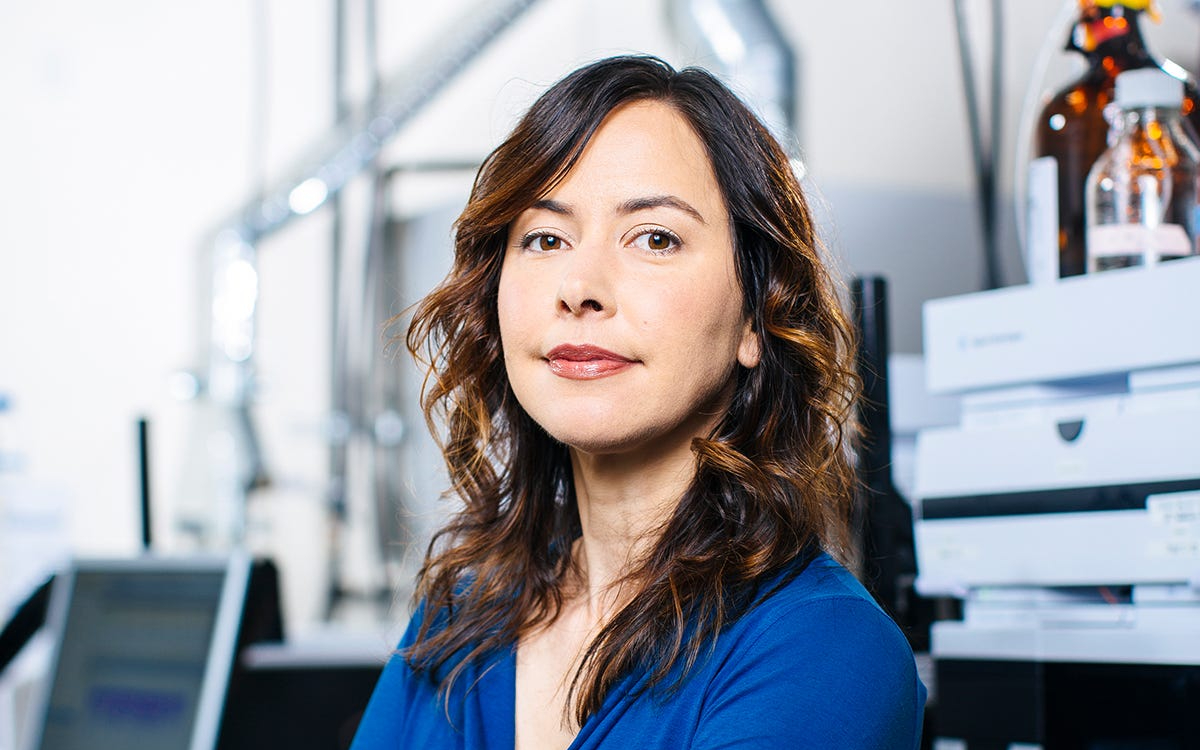
Christina Smolke is the CEO and Co-Founder of Antheia, Inc., a Menlo Park-based synthetic biology company programming yeast to manufacture complex pharmaceutical ingredients — including the active ingredient in Narcan — in days rather than the years required by traditional plant cultivation. A Stanford professor turned biotech entrepreneur, she pioneered the engineering of baker's yeast to produce opioids and other plant-derived medicines, raising over $175 million to bring her lab breakthroughs to global pharmaceutical supply chains.