lipid-nanoparticles
(6)
The $1 Billion Bet on Editing Cholesterol Once - Then Never Again
Verve Therapeutics spent seven years turning a genetic observation into a one-infusion cholesterol treatment. Its first delivery system stumbled; the replacement helped sell the company to Lilly and may redraw the boundary between a drug and a permanent decision.

Axelyf
Axelyf is a Brookline, Massachusetts biotech (with an R&D subsidiary in Iceland) building next-generation lipid nanoparticle delivery systems for RNA medicines. Founded by former Moderna drug-delivery leaders, it pairs a proprietary AXL ionizable-lipid library with an AI model called ANNA to make RNA and gene-editing payloads reach the right tissue with higher potency and less toxicity. In mouse liver studies its AXL LNPs showed roughly 4-5x higher gene-editing efficiency than the LP-01 clinical benchmark at equivalent doses, without evidence of liver toxicity. The company closed $2.6M in seed funding in August 2025 to push its lead autoimmune program and lipid library toward preclinical and non-human-primate studies.

Rejuvenation Technologies Inc.
Rejuvenation Technologies is a Stanford-spun biotech developing modified-mRNA therapeutics that temporarily switch on telomerase to lengthen telomeres and reverse cellular aging in specific tissues. Its lead programs target fibrotic and age-related diseases such as pulmonary fibrosis, chronic liver disease and bone-marrow failure, delivered by proprietary tissue-targeted lipid nanoparticles. Backed by Khosla Ventures and Y Combinator, the company holds 50+ patents and is advancing toward Phase I clinical readouts.
Aera Therapeutics
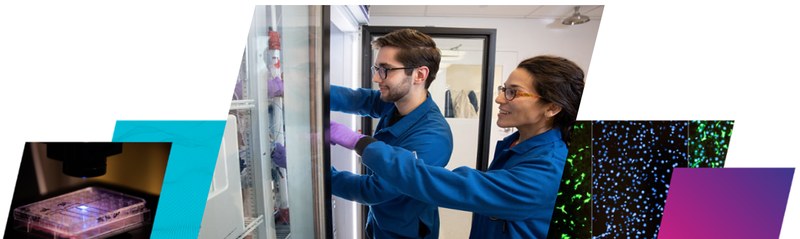
Aera Therapeutics is a Cambridge, Massachusetts biotech founded on a discovery from CRISPR pioneer Feng Zhang: human proteins that can self-assemble into capsid-like shells and ferry genetic cargo into cells. The company is building delivery platforms - protein nanoparticles, targeted lipid nanoparticles, and antibody-oligonucleotide conjugates - to solve the field's most stubborn problem: getting genetic medicines to the right tissue. Launched publicly in 2023 with $193M and led by Alnylam veteran Akin Akinc, Aera is betting that delivery, not the drug itself, is the bottleneck holding back the next generation of genetic medicine.

ONI
ONI (Oxford Nanoimaging) is an Oxford University spinout that shrank the super-resolution microscope from a room-sized, six-figure instrument into a desktop box the size of a sheet of A4 paper. Its flagship Nanoimager resolves single molecules down to 20 nm and pairs with the cloud-based CODI platform for analysis and collaboration, opening single-molecule science to labs studying everything from extracellular vesicles to lipid nanoparticles and cancer.
ReCode Therapeutics
ReCode Therapeutics is a clinical-stage genetic medicines company using its Selective Organ Targeting (SORT) lipid nanoparticle platform to deliver mRNA and gene-correction therapies beyond the liver. Its lead programs target cystic fibrosis and primary ciliary dyskinesia - rare respiratory diseases where existing modulators leave many patients without options.