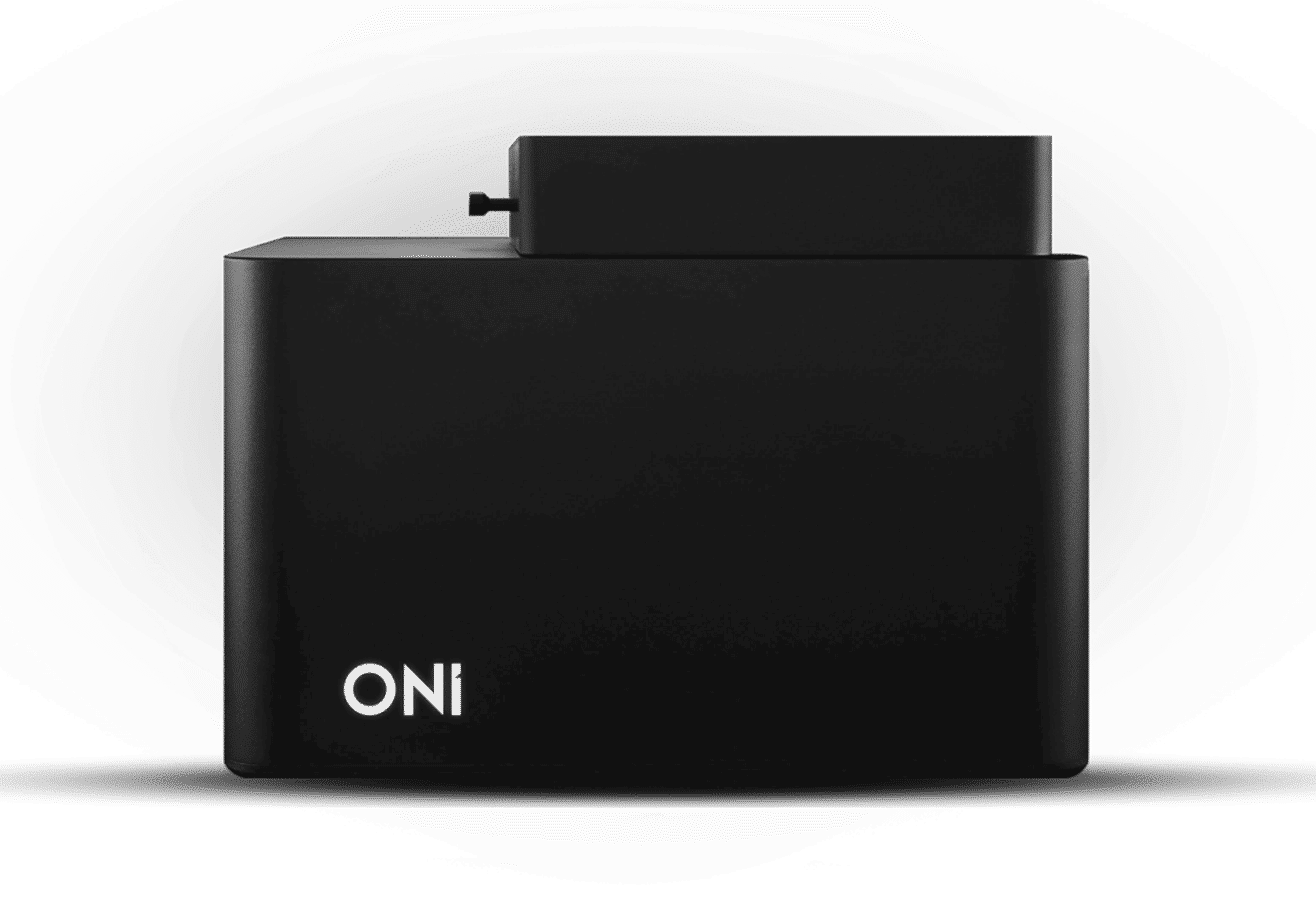
Somewhere on a lab bench right now, between a pipette box and a half-finished coffee, sits a black box about the size of a sheet of paper. Inside it, a single protein is being watched as it moves. No dedicated room. No vibration-isolated table the size of a dining table. No specialist on call. That box is a Nanoimager, and the company that built it is ONI.
Who they are nowA microscope that refused to stay in the basement
For most of its history, super-resolution microscopy lived in a particular kind of room: dim, temperature-controlled, often underground, built around an instrument that cost as much as a house and demanded a PhD just to switch on. The science it unlocked - watching individual molecules instead of blurry averages - won a Nobel Prize in 2014. The access to it stayed stubbornly narrow.
ONI, short for Oxford Nanoimaging, decided that was a design problem, not a law of physics. Today the company employs roughly 160 people, sells its desktop Nanoimager into labs across Europe, the US and Asia, and runs a cloud platform called CODI that does the analysis your laptop used to choke on. It is, in the polite phrasing of its investors, a microscopy platform. In plainer terms: they made the impossibly precise thing small enough to share.
Super-resolution used to require a room. ONI made it require a desk.
- The pitch, in one sentenceMost biology is decided below 200 nanometers
Here is the awkward truth that ONI exists to fix. The light microscope - that workhorse of every biology lab for four centuries - simply cannot resolve two objects closer together than about half the wavelength of light, roughly 200 to 250 nanometers. Below that, everything blurs into a smear. The trouble is that a great deal of biology happens well below that line: how proteins cluster, how viruses assemble, how a drug-carrying nanoparticle is actually built.
Super-resolution techniques cracked the blur. But cracking it required instruments so large, expensive, and finicky that only well-funded core facilities owned one. A graduate student with a sharp question often had to join a waiting list to ask it. The science had outrun its own plumbing.
ONI's founders looked at that gap and saw a market hiding behind a cost curve. If the price of seeing the very small dropped by two-thirds, who would suddenly be able to look? The answer turned out to be: a lot of people.
The science was democratized in theory. The price tag kept it aristocratic in practice.
- The tension ONI was built onA professor, a PhD student, and a hunch about size
The company began in 2016 as a spinout from the University of Oxford, built on work from the lab of Achillefs Kapanidis, a professor of biological physics, and his then-PhD student Bo Jing. Jeremy Warren joined as the first CEO. The bet was specific and slightly heretical: that you could collapse a room of optics into a shoebox without throwing away the precision, and that researchers would happily trade a little raw flexibility for something they could actually own.
Heresy, in hardware, is expensive. The optics had to be re-engineered, the vibration problem solved at small scale, the software made friendly enough that a biologist - not an optical engineer - could drive it. Bo Jing led the company through that grind until 2023, raising more than $110 million along the way, before Paul Scagnetti stepped in as CEO to run the next phase of growth.
The ONI milestone reel
From Oxford lab notebook to global install base
- 2016Spun out of the University of Oxford; closes £1.2M seed funding
- 2017Raises a further £3M to commercialize the Nanoimager
- 2018$25M Series A; wins the Institute of Physics Business Start-up Award; named a Fast Track "Disruptor to Watch"
- 2021Releases dedicated extracellular vesicle imaging kits and pushes CODI cloud analysis
- 2022Closes $75M Series B led by ARCH Venture Partners and Casdin Capital
- 2023Paul Scagnetti appointed CEO; founder Bo Jing transitions from the role
- 2025Launches Aplo Scope, extending the single-molecule imaging portfolio
Twenty nanometers, on a desk, before lunch
The Nanoimager has roughly the footprint of an A4 page - about 21 cm wide - and resolves structures down to 20 nanometers, pinning the location of a single molecule with around 2 nm precision. For scale: that is finer than the width of a DNA double helix. It runs several modes from one box: single-molecule localization microscopy (dSTORM and friends) for super-resolution images, single-particle tracking in living cells, confocal imaging, and smFRET for measuring molecular interactions in the 2-10 nm range.
Then there is CODI, the part that quietly matters most. Microscopy generates absurd quantities of data, and the analysis traditionally happened on a groaning workstation bolted to the same room as the scope. CODI moves it to the cloud, so a researcher in one country can share a dataset and an analysis workflow with a collaborator in another. The instrument got smaller; the reach got larger.
Nanoimager
Desktop super-resolution single-molecule microscope. 20 nm resolution, ~2 nm localization precision, multiple imaging modes in one A4-sized box.
CODI
Browser-based analysis and collaboration platform. Runs heavy microscopy workflows in the cloud and lets teams share data from anywhere.
Aplo Scope & Aplo Flow
Launched in 2025, extending single-molecule imaging and adding flow-based single-particle analysis for higher throughput.
Reagent kits + free CODI tools
Sample-prep and EV imaging kits, plus open-source EVP2 Axis and LNP Axis tools for nanoparticle analysis - given away, not gated.
They gave away the analysis tools. Sometimes the smartest moat is the one you let everyone cross.
- On ONI's open-source EVP2 and LNP toolsMoney, machines, and the people who buy them
Conviction is cheap; capital is the receipt. ONI has raised over $110 million across its rounds, capped by a $75 million Series B in January 2022 led by ARCH Venture Partners and Casdin Capital, with Section 32, ARTIS Ventures, Vertical Venture Partners, Axon Ventures and Oxford Science Enterprises along for the ride. The stated use of funds was telling: grow commercial and R&D teams in the US and Asia, and expand the consumables and cloud-software business. In other words, lean into the razor-and-blades model rather than just selling more boxes.
Funding, round by round
Disclosed amounts, normalized to USD
Approximate. Early UK rounds converted from GBP for comparison. Bars scaled to the largest disclosed round.
The customers are the rest of the proof. The Nanoimager and CODI have found a home wherever the interesting biology hides below 200 nm: cell biologists watching proteins cluster, neuroscientists imaging synapses, virologists tracking particles, and - increasingly - drug-delivery teams. ONI built dedicated workflows for extracellular vesicles, the tiny cargo carriers cells use to talk to each other, and for lipid nanoparticles, the delivery vehicles that became famous overnight as the shell around mRNA vaccines. When your nanoparticle has to be the right size, the right composition, and loaded correctly, being able to see it one particle at a time stops being academic.
If your medicine is built at the nanoscale, "trust me, it looks fine" is not a quality control plan.
- Why drug-delivery teams careAccessible by design, not by accident
ONI frames its purpose as accelerating discovery by making single-molecule imaging accessible, affordable and collaborative. It is the kind of mission statement that could be wallpaper, except that the company actually built its business around it: a cheaper instrument, a cloud platform that travels, and free open-source analysis tools handed to researchers who do not even own the hardware. The strategy and the slogan, for once, point the same direction.
That alignment is the quiet reason to take ONI seriously. Plenty of companies promise to democratize something and mean "sell more units." ONI's revenue model - hardware at perhaps a third of legacy prices, plus recurring consumables and software - only works if a lot of new people actually start doing single-molecule science. The incentive and the mission are, conveniently, the same thing.
Why it matters tomorrowThe next medicines are being built where you can't see
The therapies drawing the most attention now - mRNA platforms, gene therapies, engineered vesicles, targeted nanoparticles - all live at the scale ONI was built to image. As those move from labs into clinics, the questions get sharper: Is this batch the same as the last one? Is the cargo where it should be? Why did this formulation work and that one fail? Those are not theoretical questions. They are manufacturing and regulatory ones, and they need an instrument that can answer them without a dedicated facility and a six-month queue.
So return to that bench, the one with the pipette box and the cooling coffee. A graduate student loads a sample into a box the size of a sheet of paper, and a few minutes later watches a single molecule move across the screen - then sends the data to a collaborator three time zones away before lunch. A decade ago that sentence would have required a basement, a budget, and a waiting list. ONI's whole argument is that it now requires a desk. The blur, it turns out, was never about physics. It was about who got to look.