grocery
(17)
The Retail World Runs on Guesses. MarketDial Sells Proof.
A pair of Salt Lake City founders - one ex-VC, one ex-McKinsey - built software that lets chains like Kum & Go, Dick's, and Woolworths test a store idea in a few dozen locations before betting the whole business on it. Then they took the incumbent to court.
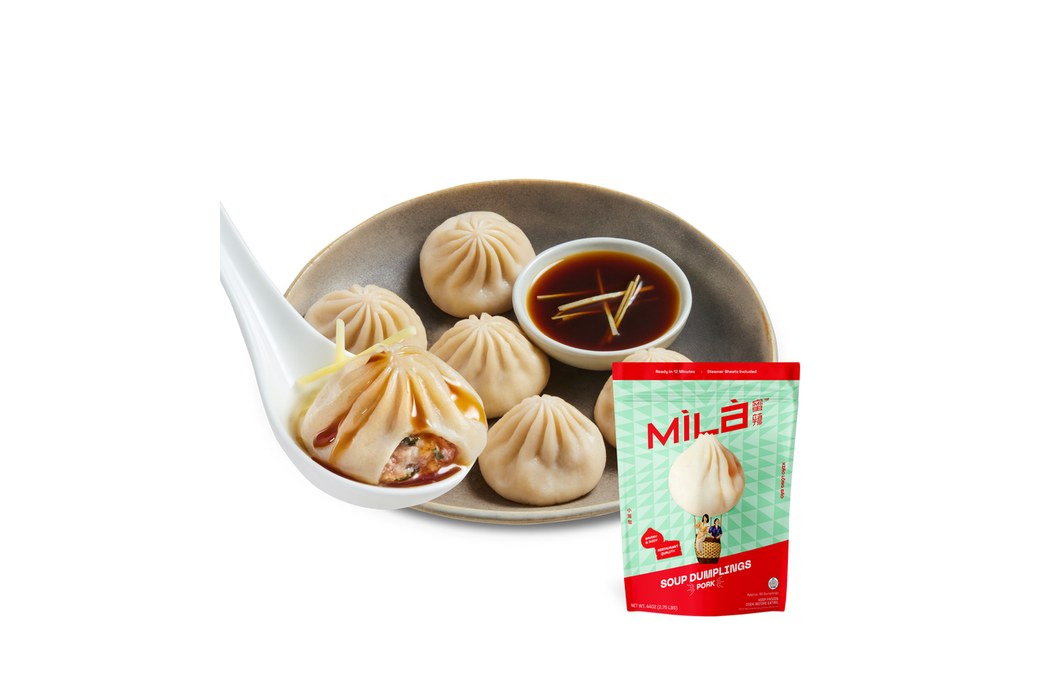
The Soup Dumpling That Escaped the Restaurant
Jen Liao and Caleb Wang couldn't find a good soup dumpling in Bellevue, so they built one you can keep in your freezer - and turned 500 test recipes into a grocery-aisle brand with Simu Liu on the payroll.
The 20,000-store machine hiding in plain sight
Reliance Retail looks like a collection of stores. Look closer and it is a shared operating system for how India shops - online, around the corner and at almost every price point.
The Grocery Chain That Bet Small Stores Could Win the Health Aisle
Founded by a fruit-stand family, Sprouts skips the premium-organic playbook - smaller stores, produce up front, and shelves sorted by diet instead of brand.
The $4.4 Billion Grocery Chain That Still Makes Its Own Ice Cream
Brookshire Grocery Company has run stores across the Ark-La-Tex for nearly a century - baking its own bread, bottling its own milk, and betting that owning the whole supply chain beats renting it.
Post Consumer Brands
The maker behind Grape-Nuts, PEBBLES and Malt-O-Meal has quietly become something broader: a $4 billion portfolio spanning breakfast, peanut butter, pet food and private label. Its advantage is less one blockbuster product than a shelf-wide system built for both nostalgia and value.
Mama's Creations
The only publicly traded company built entirely around the deli case turned a grandmother's Sunday sauce into a $171 million bet on the least glamorous corner of the grocery store.
Giant Food
For 90 years Giant Food has run the same play in the same four zip-code clusters: know the Beltway shopper better than anyone from out of town ever could.

Dollar General
Dollar General is one of the largest discount retailers in the United States, operating more than 21,000 small-box stores that sell everyday essentials - food, cleaning supplies, health and beauty aids, paper products, apparel and seasonal goods - at low price points. Founded in 1939 in Tennessee, the company built its business by placing convenient, value-focused stores in small towns and rural communities that larger chains often overlook, and roughly 75% of the U.S. population lives within five miles of a Dollar General store.
Walmart
Walmart is the world's largest retailer by revenue, operating a global network of supercenters, discount stores, neighborhood markets, Sam's Club warehouse clubs and a fast-growing e-commerce business. Founded in 1962 by Sam Walton in Rogers, Arkansas, the company built its scale on an 'everyday low prices' model powered by a highly efficient supply chain. Today it blends roughly 10,500 stores worldwide with digital commerce, retail advertising, a growing marketplace and AI-driven shopping tools, serving hundreds of millions of customers each week while employing about 2.1 million people.
Omnistream
Omnistream is an AI-powered category-management platform that helps retailers build consumer-centric, store-level planograms in minutes. Founded in 2018 by former quant trader Wendy Chen, the company integrates a retailer's sales and product data to generate assortment and shelf-space recommendations tuned to each store's local demand. Its software is deployed across 8,500+ retail locations in convenience, grocery and health & beauty, serving names like 7-Eleven, Watsons and FairPrice, and reports incremental sales gains of roughly 4-11% alongside sharp reductions in waste.

Forage
Forage is a San Francisco payments company that makes it easy for retailers and online platforms to accept government benefits like SNAP EBT, WIC, and HSA/FSA. It is one of only a handful of third-party processors approved by the USDA to handle online EBT, pairing a unified merchant API with hands-on certification support. On the consumer side, its Forage app helps low-income families check their EBT balance, find discounts, and earn rewards. The technology runs at more than 100,000 stores across all 50 states, including Dollar General, Save A Lot, Gopuff, DoorDash, and Uber Eats.

Homesome
Homesome is an AI-first grocery commerce (g-commerce) platform that helps independent and regional grocers compete online. It packages a branded website, a unified mobile app, AI-driven personalization and search, a pick-and-pack fulfillment app, and a headless API suite into one system that plugs into a store's existing POS and loyalty programs. Founded by former Microsoft engineer Rahul Chabukswar, the company pivoted from running its own grocery-delivery service to powering the digital storefronts of chains like Strack & Van Til, Erewhon, Caputo's and Berkot's Super Foods.

Public Goods
Public Goods is a New York-based, membership-driven direct-to-consumer brand that sells its own line of healthy, sustainable everyday essentials - personal care, household, cleaning, grocery, and supplements - at near-wholesale prices. Pitched by co-founder Morgan Hirsh as 'Amazon with a soul,' the company launched on Kickstarter in 2017, built a single house brand with minimalist design and clean ingredients, and ties purchases to reforestation and food-bank donations.
Axiom Cloud
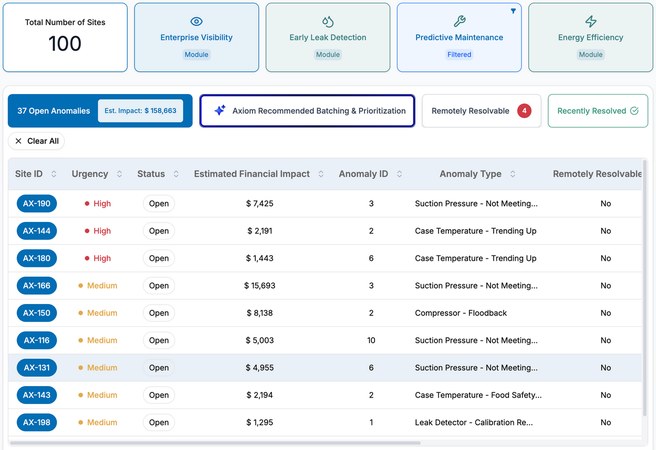
Axiom Cloud builds AI software that makes commercial refrigeration systems cheaper to run, easier to maintain, and dramatically less polluting. Its cloud platform plugs into existing refrigeration controllers at grocery stores and cold-storage facilities to spot refrigerant leaks early, shift energy use off-peak, and automate work orders - cutting both costs and the climate impact of supermarket cooling.

Vori
Vori is a San Francisco-based SaaS company building the all-in-one operating system for independent grocery stores. Their platform, VoriOS, combines AI-powered point-of-sale, inventory management, automated ordering, pricing automation, loyalty programs, and back-office analytics into a single system — giving independent grocers the same technological leverage that Walmart and Amazon use against them. Founded in 2019 by a third-generation grocer and Stanford/Cornell engineers with backgrounds at SpaceX, Lyft, and Stripe, Vori has processed over $500 million in payments across 140+ stores in 55+ cities, and raised $50 million total including a $22M Series B in May 2026.
Foodsmart
Foodsmart (formerly Zipongo) is a San Francisco-based telenutrition company that pairs registered dietitians with a food benefits marketplace to treat diet-related chronic disease and food insecurity. It serves more than 2.2 million members across employer plans, Medicaid managed care, Medicare Advantage and commercial insurers, and in 2024 raised $200M led by TPG's The Rise Fund to expand its 'Foodscripts' food-as-medicine programs with major U.S. health systems.