exoskeleton
(4)
Matthieu Masselin
Matthieu Masselin is the CEO and co-founder of Wandercraft, the Paris-based robotics company behind Atalante, the Eve personal exoskeleton, and the Calvin-40 humanoid robot. Trained as an engineer at Ecole Polytechnique, he took over as CEO in 2018 and led the company through FDA clearances, a Renault manufacturing partnership, and a Series D that brought total funding to about $169M.
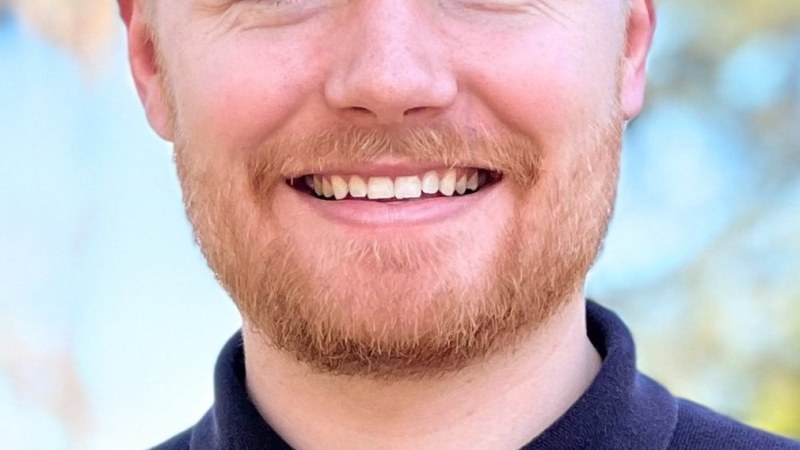
Todd Roberts
Todd Roberts is the CEO and co-founder of ATDev (Assistive Technology Development, Inc.), a robotics company building an ecosystem of devices that help people stay independent regardless of physical ability. A mechanical engineer trained at Northeastern and UC Berkeley, where he researched exoskeletons, Roberts met his co-founder Owen Kent through a Craigslist housing ad and discovered they shared both a roof and a biomechanics class. Their company's first product, Reflex, is a sub-five-pound at-home knee rehabilitation robot that pairs guided exercises with remote clinician monitoring. ATDev raised a $3M seed round in October 2025 and is a partner in the $41M ARPA-H RAMMP robotic mobility initiative.

Amaury Ciurana
Amaury Ciurana is the co-founder and CEO of REEV, a wearable-robotics company building intelligent motorized orthoses for people with neurological gait disorders. A French aerospace engineer trained at ISAE-SUPAERO and the X-HEC entrepreneurship track, he relocated to Boston in 2023 to lead REEV's US expansion. The company pairs DREEVEN, an AI-powered robotic knee orthosis, with REEV SENSE, a wearable gait-analysis system, and has raised roughly $14M total including a $9.2M round in 2025.
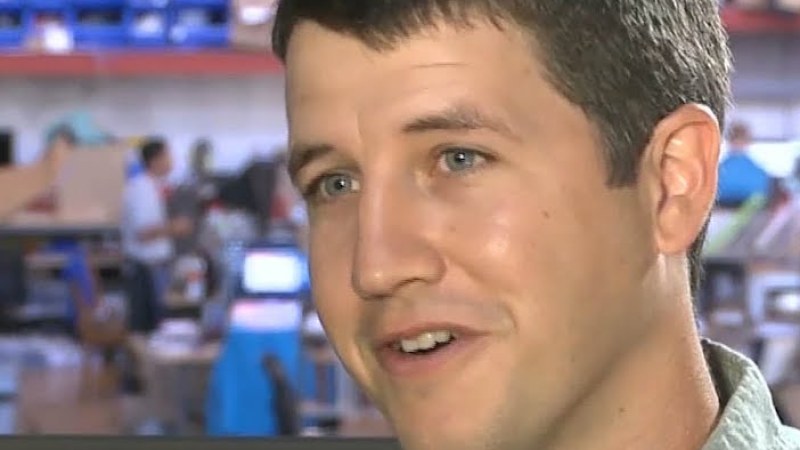
Tim Swift
Tim Swift is the founder and CEO of Roam Robotics, the San Francisco company building lightweight exoskeletons out of high-strength fabric and compressed air instead of heavy steel and motors. A UC Berkeley mechanical engineering PhD, he was one of the original three-person team that invented the Ekso exoskeleton at Ekso Bionics, then went to Otherlab before starting Roam in 2014. His bet: that wearable robots can weigh five pounds, cost a few thousand dollars, and be something a regular person buys to ski longer, hike farther, or move with less pain - not a tens-of-thousands-of-dollars hospital machine.