energy-efficient-ai
(7)
CyberSwarm Inc.
CyberSwarm is a neuromorphic engineering company building brain-inspired, memristor-based hardware that lets machines learn and adapt locally, at the edge, without the cloud. Founded in 2017 by Mihai Raneti and headquartered in San Mateo, California with R&D roots in Ploiesti, Romania, the company is developing a neuromorphic System-on-a-Chip for cybersecurity and energy-efficient AI, positioning its architecture as a new computational layer between conventional digital systems and quantum computing. In May 2026 it raised a $50 million Series A to scale toward commercial deployment across automotive, aerospace, defense, healthcare and robotics.
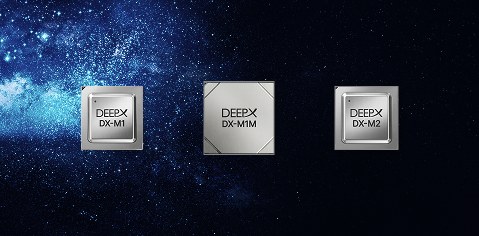
DEEPX
DEEPX is a South Korean fabless semiconductor startup building ultra-low-power neural processing units (NPUs) for on-device and edge AI. Founded in 2018 by former Apple chip designer Lokwon Kim, the company designs AI accelerators - led by its 25 TOPS DX-M1 chip - that run vision and generative AI models at under 5 watts, aiming to move intelligence out of the data center and into robots, cameras, factories, mobility and everyday devices. It raised an $80.5M Series C in 2024 at a $529M valuation and positions itself as a 'Physical AI infrastructure company.'
Tensordyne
Tensordyne is a Sunnyvale- and Munich-based AI hardware company building inference systems that use a hardware-native logarithmic number system to cut the cost and power of running large AI models. Formerly the computer-vision startup Recogni, it rebranded in September 2025 and in June 2026 unveiled Napier (TDN), a 3nm, air-cooled inference platform it claims delivers roughly 13x the throughput and 17x the efficiency of Nvidia's GB300 NVL72 rack. The company positions itself as a direct challenger to Nvidia in the market for profitable, high-throughput generative-AI inference.

Integral AI
Integral AI is a Japan-US startup building foundation world models - AI systems meant to learn, plan, and act in the real world the way people do, with an emphasis on energy efficiency and continuous, autonomous skill learning. Founded in 2021 by ex-Google AI leaders Jad Tarifi and Nima Asgharbeygi, the company positions its interactive world models as infrastructure for an AI-based economy, spanning robotics, universal simulators, and multimodal interfaces. In December 2025 it made headlines by claiming to have tested the world's first AGI-capable model, TOWA.

Opticore
Opticore is a photonic computing startup building optical processing units (OPUs) - chips that run AI workloads with light and waveguides instead of electrons. Spun out of research at MIT, USC and UC Berkeley, the company claims its photonic chips are up to 100x more energy efficient and offer roughly 25x the computing density of leading GPUs, using time-multiplexed computing to encode as many as a trillion parameters on a single chip. Opticore has raised about $14.5M to date to attack the energy and 'memory wall' bottlenecks of AI data centers.

Arago
Arago is a Paris and Palo Alto deeptech startup building a photonic AI accelerator that uses light instead of electrons to run AI workloads, targeting 10x lower energy consumption than today's leading GPUs at equivalent performance and cost while staying compatible with PyTorch and standard hardware ecosystems.
EnCharge AI
EnCharge AI is a Santa Clara semiconductor startup, spun out of Princeton University, building AI accelerator chips based on analog in-memory computing. Its charge-based architecture runs heavy AI workloads on laptops, workstations and edge devices at roughly 20x the energy efficiency of conventional GPUs. Its first product, the EN100 accelerator, delivers 200+ TOPS within an 8.25W power budget, aiming to move generative AI out of the data center and onto the devices people actually hold.