directed-evolution
(3)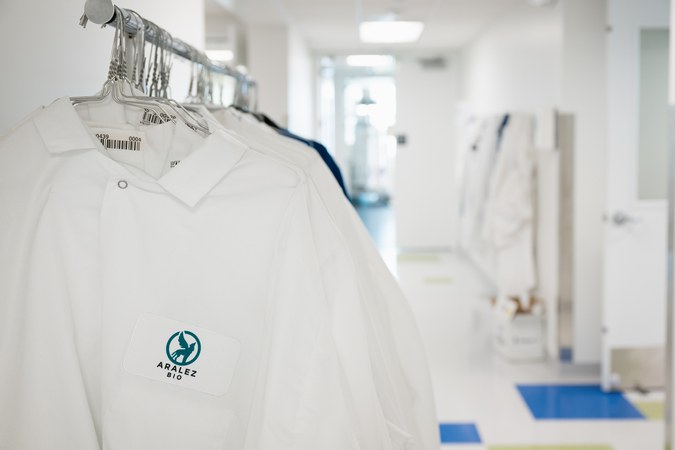
Aralez Bio
Aralez Bio is a Berkeley, California biotechnology company that uses engineered enzymes and directed evolution to manufacture noncanonical amino acids (ncAAs) - the specialized building blocks used in peptide drugs and other pharmaceuticals. Spun out of Nobel Laureate Frances Arnold's Caltech lab in 2019, the company runs biocatalytic reactions that produce enantiopure ncAAs in a single step with water as the main byproduct, expanding the amino acid toolbox roughly 1,000-fold. Aralez sells a catalog of thousands of exclusive amino acids and offers custom synthesis and ton-scale production for pharmaceutical customers, including partners among the world's largest drug companies.

Triplebar
Triplebar is an Emeryville, California biotech company that pairs a high-throughput microfluidic screening platform with AI genomic models to run evolution at hyper-speed. By packing tens of millions of picoliter microreactors onto a palm-sized chip and testing thousands per second, it generates matched genotype-phenotype datasets that let partners optimize cell lines and microbial strains far faster and cheaper than conventional lab work. The platform powers products across food (precision fermentation, cultivated meat) and biopharma (biologics, cell-engaging cancer therapies).

Simcha Therapeutics
Simcha Therapeutics is a clinical-stage biopharmaceutical company in New Haven, Connecticut that uses directed evolution to engineer next-generation cytokine immunotherapies for cancer. Its lead program, ST-067, is a first-in-class 'decoy-resistant' interleukin-18 (IL-18) variant engineered to evade the natural decoy protein (IL-18BP) that tumors exploit to silence the immune system. Spun out of Aaron Ring's lab at Yale School of Medicine and backed by $40M in Series B financing, Simcha is advancing ST-067 through Phase 1/2 trials in solid tumors and partnering with Janssen to armor CAR T cell therapies.