digital-out-of-home
(11)
Urban Creator Turns Korean Culture Into an American Crowd
A 16-person Costa Mesa agency has found a practical way to translate Korean brands for America: give the internet a real place to gather, then give the gathering a reason to travel online.

Intersection’s pitch: let the ads pay for the city
The company behind LinkNYC advertising turns sidewalks, stations and bike docks into media. Its history shows both the appeal and the hard limits of getting brands to fund public conveniences.

HYPERVSN Put a Screen on a Bicycle. Then It Made the Screen Disappear.
The London company turned a rejected bicycle-wheel ad into spinning LED displays used by Nike, Coca-Cola and the Sphere. Its real product is not a hologram so much as a carefully engineered interruption.

PATTISON Outdoor Put Canada on the Map. Now It Wants to Turn Every Commute Into Data.
The billboard incumbent is pairing a century-old physical network with 20 billion data points, 3D previews and its first U.S. airport. The clever part is not the screen - it is making outdoor media easier to plan, buy and defend in a spreadsheet.
The Bus Shelter That Became a Global Media Machine
JCDecaux turned a piece of civic furniture into a 60-year business model. Now its hardest trick is making a million physical advertising panels behave like software without making cities feel like websites.

StackAdapt
StackAdapt spent a decade turning the demand-side platform into something closer to a marketing control room. Its bet is that the next advantage in advertising will come from connecting the channels marketers already use - and making the machinery easier to operate.

Perion Network
The Israeli adtech company spent a decade buying its way across every screen. Now, after Microsoft pulled the rug on its search business, Perion is betting the whole company on one AI platform - and on the screens Google can't own.
OUTFRONT Media
The billboard business used to sell rectangles by the roadside. OUTFRONT is turning those rectangles - and thousands of screens below the street - into a measurable, programmable media network built for the real world.

Big Happy
Big Happy is a New York-based advertising technology company that turns everyday screens into immersive, cinematic brand experiences. Founded in 2019 by adtech and media-buying veterans, it operates an end-to-end platform spanning creative development, media activation and campaign measurement across high-impact mobile formats and 3D digital out-of-home (DOOH). The company works with 300+ brands including Coca-Cola, Verizon, Samsung and the U.S. Army, reaching 7,000+ premium mobile publishers and over one million DOOH screens across North America.
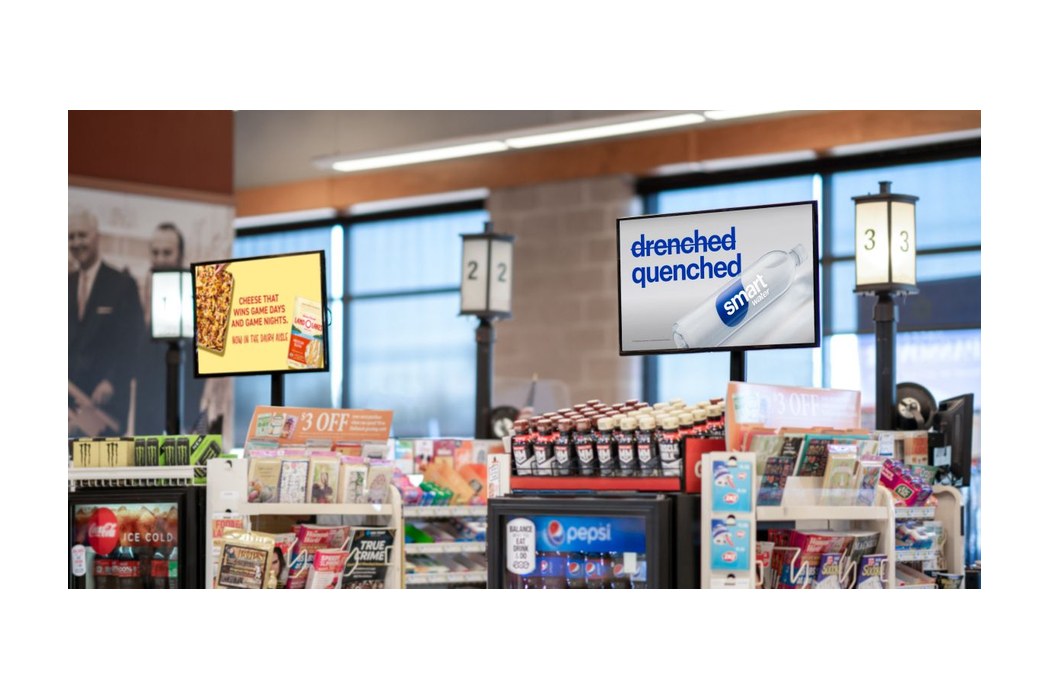
Grocery TV
Grocery TV is an in-store retail media platform that helps grocery retailers build, run and monetize digital screen networks at the front end and throughout the store. Operating the largest in-store retail media network for grocery in the U.S., it powers screens across 6,500+ stores through 120+ retailer partners, reaching roughly 1 in 4 Americans (95M+ shoppers weekly). Brands buy campaigns that run at the point of purchase, retailers earn incremental revenue, and Grocery TV supplies the hardware, content management system and measurement tying ad exposure to sales lift.

Screenverse
Screenverse is a New York-based digital out-of-home (DOOH) advertising company that helps mid-tier screen networks - from bar jukeboxes to Walmart health kiosks and luxury elevator panels - tap into programmatic ad demand. Founded in 2020 by DOOH veterans David Weinfeld and Adam Malone, it acts as an outsourced ad-sales and network-management partner, standardizing inventory, running ad operations, and optimizing pricing so media owners can earn revenue from platforms like The Trade Desk and DV360. The company operates one of the most diverse real-world screen networks, surpassing 100,000 digital screens across all 210 U.S. markets, and raised a $10.5M Series A from Volition Capital in April 2024.